Loading...
Done
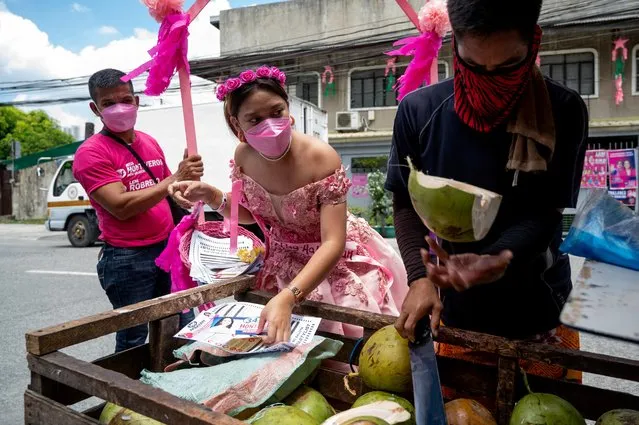
A woman wearing a gown hands out campaign leaflets to a coconut juice vendor during a Santacruzan-themed house-to-house campaign for Philippine Vice President and presidential candidate Leni Robredo, in Quezon City, Metro Manila, Philippines, May 5, 2022. (Photo by Lisa Marie David/Reuters)

A woman wearing a gown hands out campaign leaflets to a coconut juice vendor during a Santacruzan-themed house-to-house campaign for Philippine Vice President and presidential candidate Leni Robredo, in Quezon City, Metro Manila, Philippines, May 5, 2022. (Photo by Lisa Marie David/Reuters)
Details
12 May 2022 05:34:00
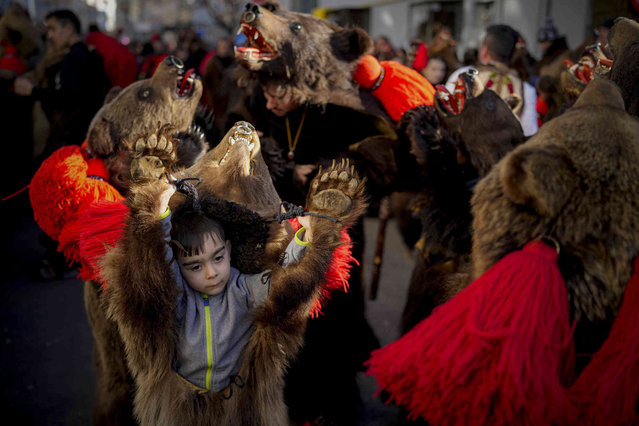
Children wearing bear fur costumes dance during a parade in Comanesti, Romania, Friday, December 30, 2022. In pre-Christian rural traditions, dancers wearing colored costumes or animal furs, toured from house to house in villages singing and dancing to ward off evil. (Photo by Vadim Ghirda/AP Photo)

Children wearing bear fur costumes dance during a parade in Comanesti, Romania, Friday, December 30, 2022. In pre-Christian rural traditions, dancers wearing colored costumes or animal furs, toured from house to house in villages singing and dancing to ward off evil. (Photo by Vadim Ghirda/AP Photo)
Details
20 Jan 2023 03:58:00
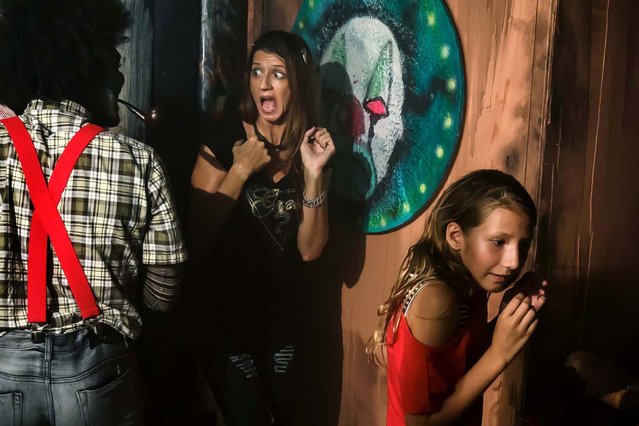
Fright Nights attendees make a turn through one of four haunted houses at this year's spooking season setup at the South Florida Fairgrounds. This house is named The Smiths and was created by Craig McInnis. (Photo by The Palm Beach Post)

America’s Haunts, a trade association, estimates there are 1,200 for-profit haunted attractions in the U.S. plus another 3,000 haunted houses operated by charities that open for only a day or two every year. The commercial attractions collectively bring in from $300 million to $500 million annually. Fright Nights attendees make a turn through one of four haunted houses at this year's spooking season setup at the South Florida Fairgrounds. This house is named The Smiths and was created by Craig McInnis. (Photo by The Palm Beach Post)
Details
22 Oct 2013 08:59:00
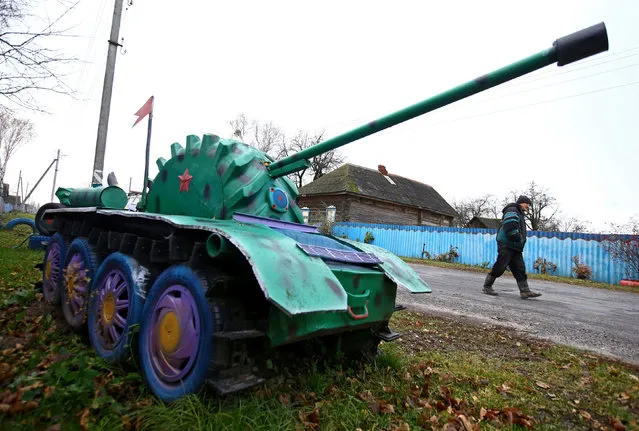
An installation with a copy of a tank is seen at a villager's house in the village of Vits, Belarus November 8, 2016. (Photo by Vasily Fedosenko/Reuters)

An installation with a copy of a tank is seen at a villager's house in the village of Vits, Belarus November 8, 2016. (Photo by Vasily Fedosenko/Reuters)
Details
09 Nov 2016 06:32:00
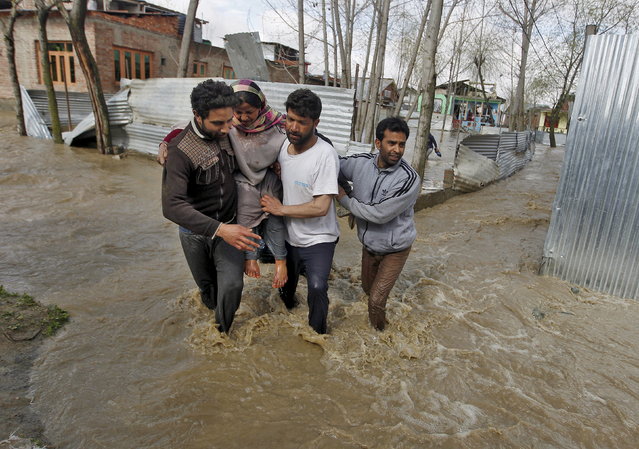
A woman is carried to a safer place from her partially submerged house after incessant rains in Srinagar March 30, 2015. (Photo by Danish Ismail/Reuters)

A woman is carried to a safer place from her partially submerged house after incessant rains in Srinagar March 30, 2015. (Photo by Danish Ismail/Reuters)
Details
31 Mar 2015 12:34:00
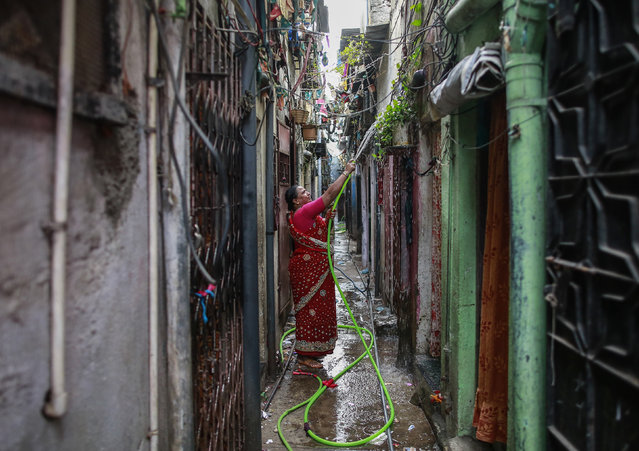
A woman waters the plants outside her house in an alley at a slum in Mumbai October 28, 2014. (Photo by Danish Siddiqui/Reuters)

A woman waters the plants outside her house in an alley at a slum in Mumbai October 28, 2014. (Photo by Danish Siddiqui/Reuters)
Details
29 Oct 2014 11:55:00
Fireworks explode over Elizabeth Tower housing the Big Ben clock in London. (Photo by Kirsty Wigglesworth/Associated Press)

Fireworks explode over Elizabeth Tower housing the Big Ben clock in London. (Photo by Kirsty Wigglesworth/Associated Press)
Details
01 Jan 2013 10:27:00
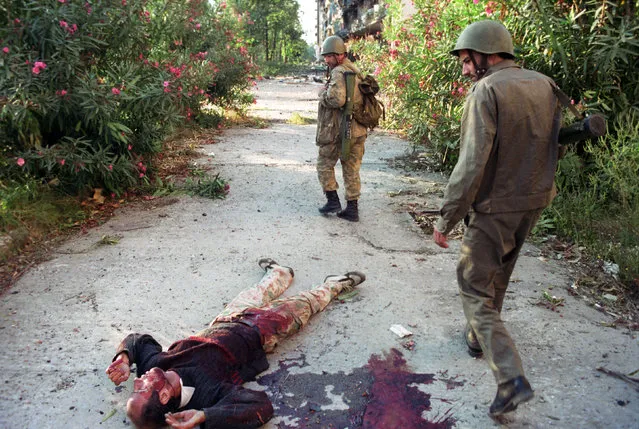
Abkhazia. Sukhumi, 1993. A house-to-house combat. (Photo by Andrei Solovyov/ITAR-TASS)

The War in Abkhazia from 1992 to 1993 was fought between Georgian government forces for the most part, and Abkhaz separatist forces, Russian armed forces and North Caucasian militants. Ethnic Georgians who lived in Abkhazia fought largely on the side of Georgian government forces. Ethnic Armenians and Russians within Abkhazia's population largely supported the Abkhazians, and many fought on their side. The separatists received support from thousands of North Caucasus and Cossack militants and from the Russian Federation forces stationed in and near Abkhazia. Here: Abkhazia. Sukhumi, 1993. A house-to-house combat. (Photo by Andrei Solovyov/ITAR-TASS)
Details
29 Sep 2017 07:31:00