Loading...
Done
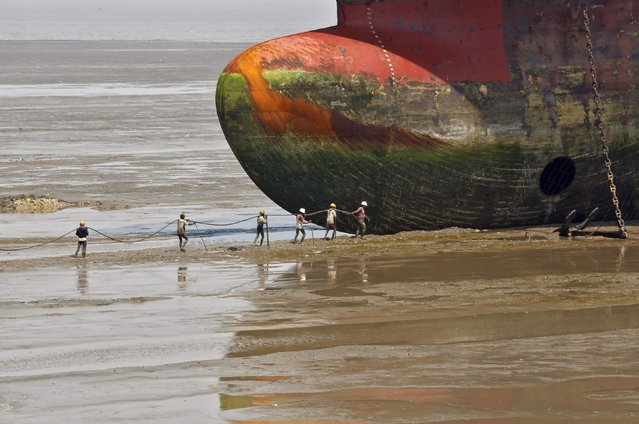
Workers carry a rope line to fasten a decommissioned ship at the Alang shipyard in the western Indian state of Gujarat, March 27, 2015. The European Union plans to impose strict new rules on how companies scrap old tankers and cruise liners, run aground and dismantled on beaches in South Asia. (Photo by Amit Dave/Reuters)

Workers carry a rope line to fasten a decommissioned ship at the Alang shipyard in the western Indian state of Gujarat, March 27, 2015. The European Union plans to impose strict new rules on how companies scrap old tankers and cruise liners, run aground and dismantled on beaches in South Asia. However the practice in India, Bangladesh and Pakistan, hazardous for humans and the environment, will still be hard to stop. European, Turkish and Chinese recyclers are set to benefit from the revamped standards. Depending on raw material prices, ship owners can make up to $500 per tonne of steel from an Indian yard, compared with $300 in China and just $150 in Europe. (Photo by Amit Dave/Reuters)
Details
01 Apr 2015 11:40:00
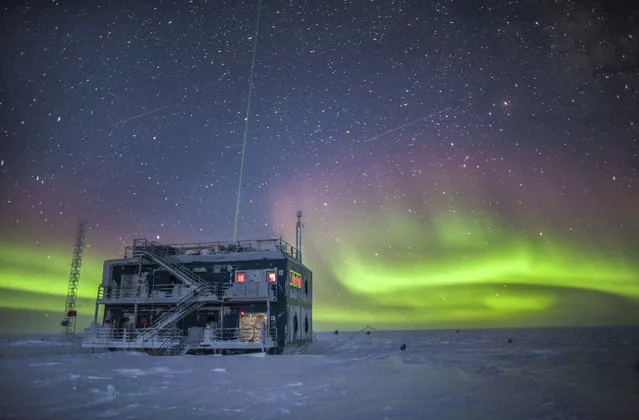
This undated photo provided by NOAA in May 2018 shows aurora australis near the South Pole Atmospheric Research Observatory in Antarctica. When a hole in the ozone formed over Antarctica, countries around the world in 1987 agreed to phase out several types of ozone-depleting chemicals called chlorofluorocarbons (CFCs). Production was banned, emissions fell and the hole shriveled. But according to a study released on Wednesday, May 16, 2018, scientists say since 2013, there’s more of a banned CFC going into the atmosphere. (Photo by Patrick Cullis/NOAA via AP Photo)

This undated photo provided by NOAA in May 2018 shows aurora australis near the South Pole Atmospheric Research Observatory in Antarctica. When a hole in the ozone formed over Antarctica, countries around the world in 1987 agreed to phase out several types of ozone-depleting chemicals called chlorofluorocarbons (CFCs). Production was banned, emissions fell and the hole shriveled. But according to a study released on Wednesday, May 16, 2018, scientists say since 2013, there’s more of a banned CFC going into the atmosphere. (Photo by Patrick Cullis/NOAA via AP Photo)
Details
15 Aug 2018 00:05:00
A dancer attends the final rehearsal for the new “VIVID Grand Show” at Friedrichstadt-Palast in Berlin, Germany, September 26, 2018. (Photo by Hannibal Hanschke/Reuters)

A dancer attends the final rehearsal for the new “VIVID Grand Show” at Friedrichstadt-Palast in Berlin, Germany, September 26, 2018. (Photo by Hannibal Hanschke/Reuters)
Details
28 Sep 2018 07:25:00
Members of the China Disabled People’s Performing Art Troupe take part in the thousand-hand Bodhisattva dance in Mississauga, Canada on November 8, 2018. (Photo by Zou Zheng/Xinhua News Agency/Barcroft Images)

Members of the China Disabled People’s Performing Art Troupe take part in the thousand-hand Bodhisattva dance in Mississauga, Canada on November 8, 2018. (Photo by Zou Zheng/Xinhua News Agency/Barcroft Images)
Details
11 Nov 2018 00:09:00
A youth skates next to a road in Palembang, South Sumatra, Indonesia on August 15, 2018. (Photo by Edgar Su/Reuters)

A youth skates next to a road in Palembang, South Sumatra, Indonesia on August 15, 2018. (Photo by Edgar Su/Reuters)
Details
27 Nov 2018 00:05:00
A swarm of starlings flies over the Altare della Patria monument (Unknown soldier) in the city centre of Rome during sunset, on November 27, 2018. (Photo by Vincenzo Pinto/AFP Photo)

A swarm of starlings flies over the Altare della Patria monument (Unknown soldier) in the city centre of Rome during sunset, on November 27, 2018. (Photo by Vincenzo Pinto/AFP Photo)
Details
29 Nov 2018 00:03:00
The town hall with the Mangia tower is seen in Siena, central Italy, January 29, 2016. (Photo by Max Rossi/Reuters)

The town hall with the Mangia tower is seen in Siena, central Italy, January 29, 2016. (Photo by Max Rossi/Reuters)
Details
03 Dec 2018 00:03:00
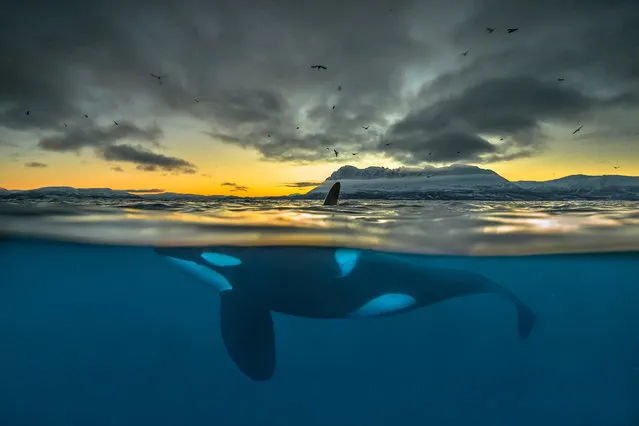
Split-view of a killer whale at sunrise off the coast of Northern Norway. At least half of the world’s killer whale populations are doomed to extinction due to pollution of the oceans, a new study says. (Photo by Audun Rikardsen/Science)

Split-view of a killer whale at sunrise off the coast of Northern Norway. At least half of the world’s killer whale populations are doomed to extinction due to pollution of the oceans, a new study says. (Photo by Audun Rikardsen/Science)
Details
16 Dec 2018 00:03:00