Loading...
Done
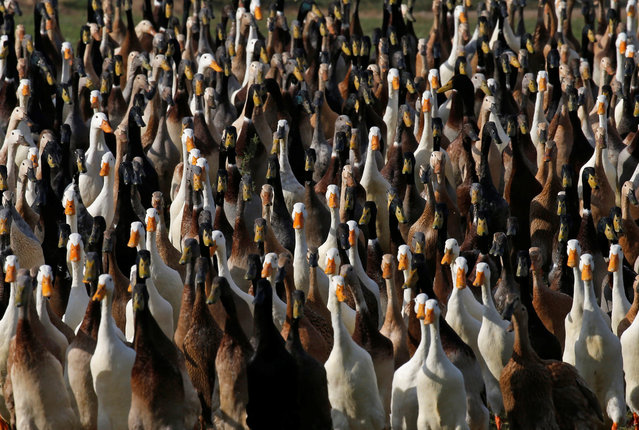
Indian Runner ducks march past farm buildings at the Vergenoegd wine estate near Cape Town, South Africa, May 16, 2016. (Photo by Mike Hutchings/Reuters)

Indian Runner ducks march past farm buildings at the Vergenoegd wine estate near Cape Town, South Africa, May 16, 2016. Each day, a quack squad of killer ducks are released for the first of two sorties at South Africa's Vergenoegd wine farm in Stellenbosch. Their mission – seek and destroy thousands of pests out to ruin the season's harvest. Fanning out across the vineyards, some 1,000 Indian Runner ducks hone in on their hidden targets with uncanny precision, locating the tiny white dune snails feasting on budding vines. (Photo by Mike Hutchings/Reuters)
Details
27 May 2016 13:06:00
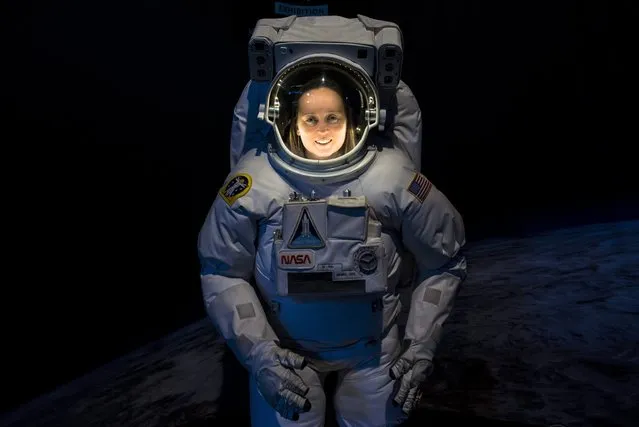
Astronomer, space scientist and meteorologist Andrea Opitz, senior research associate of the Space Physics and Space Technology Department of Hungarian Academy of Sciences (MTA) Wigner Research Centre for Physics (2R) wears a space suit during a cosmology exhibition in Budapest, Hungary, 03 March 2016. (Photo by Bea Kallos/EPA)

Astronomer, space scientist and meteorologist Andrea Opitz, senior research associate of the Space Physics and Space Technology Department of Hungarian Academy of Sciences (MTA) Wigner Research Centre for Physics (2R) wears a space suit during a cosmology exhibition in Budapest, Hungary, 03 March 2016. The photo series was created to mark the International Women's Day (IWD), which was marked for the first time in 1911 and is celebrated on 08 March since 1913. (Photo by Bea Kallos/EPA)
Details
20 Mar 2016 11:15:00
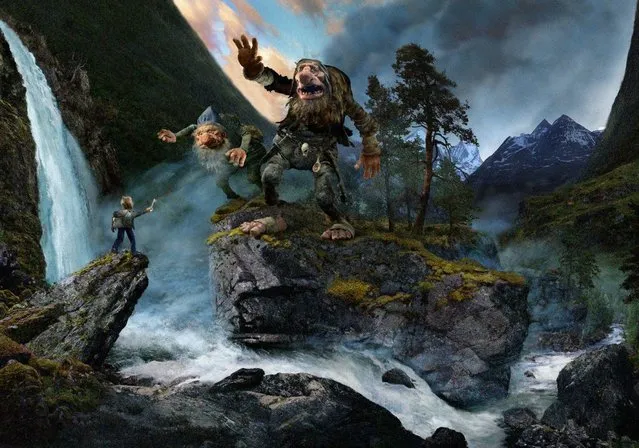
Norwegian Trolls By Ivar Rodningen Part 1

Ivar Rodningem is a professional illustrator, whose imaginative mind transports us into a parallel world where trolls roam the lands. These creatures might seem scary at first sight, but in reality they are very docile and friendly, help each other and humans that they happen to meet. One of their characteristic features is of course their large noses and long tails. They are one with the nature, which is why it is almost impossible to see a troll if he doesn’t want to be found. Just like you and I they love having fun, though it is hard thing to do, considering their size.


See also:Part 2
Details
26 Feb 2015 20:03:00
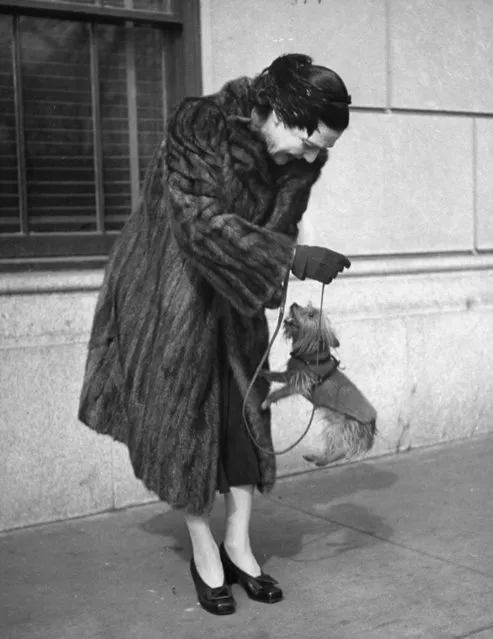
Author Fannie Hurst clad in mink coat, enjoying the jumping antics of her Yorkshire terrier Orphan Annie on the street. (Photo by Nina Leen/Pix Inc./The LIFE Picture Collection/Getty Images)

Nina Leen, one of the first female photographers to work for Life, took pictures for the magazine from 1940 to 1972. In the mid-1940s, her essay, “City Dogs”, featured actors and artists with their pets on the streets of New York City. In late-March, Daniel Cooney Fine Art in New York City, is opening a solo exhibition of Leen’s work that features images from that essay and others. Here: author Fannie Hurst clad in mink coat, enjoying the jumping antics of her Yorkshire terrier Orphan Annie on the street. (Photo by Nina Leen/Pix Inc./The LIFE Picture Collection/Getty Images)
Details
30 Mar 2015 12:48:00
Number 10. BELL H-13 SIOUX was a two-bladed, single engine, light helicopter built by Bell Helicopter. Westland Aircraft manufactured the Sioux under license for the British military as the Sioux AH.1 and HT. (Photo by AP Photo)

Number 10. BELL H-13 SIOUX was a two-bladed, single engine, light helicopter built by Bell Helicopter. Westland Aircraft manufactured the Sioux under license for the British military as the Sioux AH.1 and HT. In 1947, the United States Air Force ordered the improved Bell Model 47A. Most were designated YR-13 and three winterized versions were designated YR-13A. The United States Army first ordered Bell 47s in 1948 under the designation H-13. These would later receive the name Sioux. The Bell-built H-13 B is seen airborne in this April 29, 1951 photo. The helicopter is equipped with a 173 horsepower engine, cruises at 85 miles per hour, climbs 900 feet in a minute and has a service ceiling of 11,500 feet. (Photo by AP Photo)
Details
08 Aug 2014 11:59:00
Image from Camille Seamans new book, “Melting Away”. (Photo by Camille Seaman/Barcroft Media)

Documenting the effects of climate change first hand over the past eight years, Camille Seaman fears we may be on the road to the last iceberg. Photographing the enormous frozen floats at both poles for the past eight years, the Californian adventurer has seen the receding ice shelves and experienced the changing warmer weather. Feeling that her intimate and emotional work documents a snapshot of history, Camille presents her series “The Last Iceberg” as a study of what she sees as the personality of each huge iceberg. Drawing parallels with the famous novel, “The Last of the Mohicans”, Camille, 42, wonders whether these unique, almost alien natural features will become a thing of the past or part of nature's renewal process. (Photo by Camille Seaman/Barcroft Media)
Details
02 Dec 2014 12:10:00
Super Hero Minimalist Posters By Michael Turner Part 1

Have you ever heard of a psychological phenomenon which lets us easily understand words, even if the order of letters is mixed up, as long as the first and last letters remain in their rightful place? Similarly, the art works of Michael Turner use only two colors to highlight the main futures of well-recognized superheroes, allowing our imagination to create the rest of the picture. The colors used in the pictures weren’t chosen at random. They perfectly reflect the key characteristics of the superheroes that they depict. For example, the picture of Flash uses red and yellow colors, which are exactly the colors of his costume. While the picture of Green Lantern is, you’ve guessed it, green and black. (Photo by Michael Turner)
Details
10 Dec 2014 11:38:00
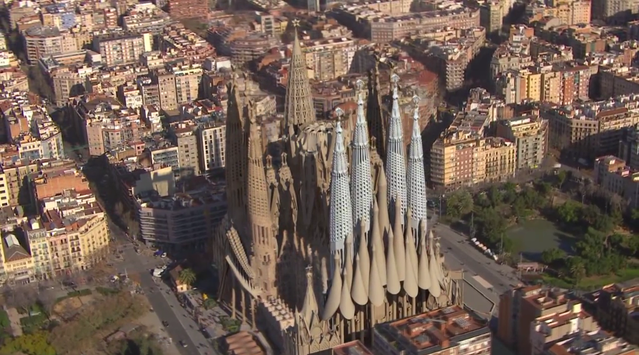
We Build Tomorrow – Sagrada Familia 2026 ( VIDEO )

For more than a century, the Barcelona skyline has been graced (or marred, depending on who’s talking) by the spectacle of the Basilica designed by Anton Gaudi, first started in 1882. If you want to know what it’ll look like when finished, don’t fret — 2026 is right around the corner. Or you can watch this video, released last week on YouTube by Basílica de la Sagrada Família and titled simply “2026 We Build Tomorrow,” a 3-D artists’ rendering of the building stages through completion.
(If 144 years sounds like a long time to finish a cathedral, keep in mind that there were decades that they didn’t work on it — and that Notre Dame de Paris took 182 years, although the 13th century Parisians didn’t have diesel-powered industrial cranes.) Now, if only the video could show us what the admission and hours will be in 2026 (and how to avoid the inevitable long lines).
Details
11 Jan 2014 10:59:00