Loading...
Done
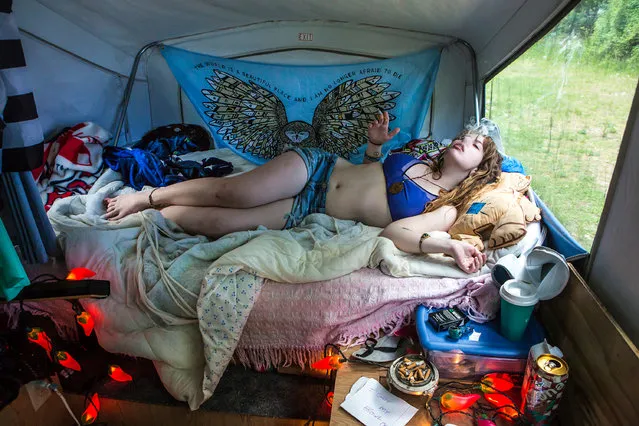
Jessica, Milford, New Hampshire: “Sometimes life throws you in all sorts of directions. The most important part about life is to remember you are exactly where you need to be”. (Photo by Barbara Peacock/Recipient of the Getty Images Grant for Editorial Photography 2017)

Barbara Peacock is one of five recipients of the Getty Images annual Grants for Editorial Photography programme, which gives photojournalists an award of $10,000 as well as the agency’s support in pursuing projects of their choosing. American Bedroom is an ongoing series of portraits in which she explores the complexities and idiosyncrasies of contemporary American life. Here: Jessica, Milford, New Hampshire: “Sometimes life throws you in all sorts of directions. The most important part about life is to remember you are exactly where you need to be”. (Photo by Barbara Peacock/Recipient of the Getty Images Grant for Editorial Photography 2017)
Details
19 Sep 2017 07:44:00
Bouwe Brouwer: Postcards from Fryslân (series finalist). “People from Fryslân are looked upon by the rest of the Netherlands as stubborn people. Going back as far as the Spanish occupation, they have a history of resisting authority. Postcards from Fryslân is still an ongoing project – hopefully a lifelong one. When it started, it represented only a collection of places that seemed interesting. Currently, the hope is to cover most of the province, as you never know in advance where the best narratives are. But still, it is all candid, unposed and in the public realm”. (Photo by Bouwe Brouwer/Street Photographers Awards 2021)

Bouwe Brouwer: Postcards from Fryslân (series finalist). “People from Fryslân are looked upon by the rest of the Netherlands as stubborn people. Going back as far as the Spanish occupation, they have a history of resisting authority. Postcards from Fryslân is still an ongoing project – hopefully a lifelong one. When it started, it represented only a collection of places that seemed interesting. Currently, the hope is to cover most of the province, as you never know in advance where the best narratives are. But still, it is all candid, unposed and in the public realm”. (Photo by Bouwe Brouwer/Street Photographers Awards 2021)
Details
17 Oct 2021 07:54:00
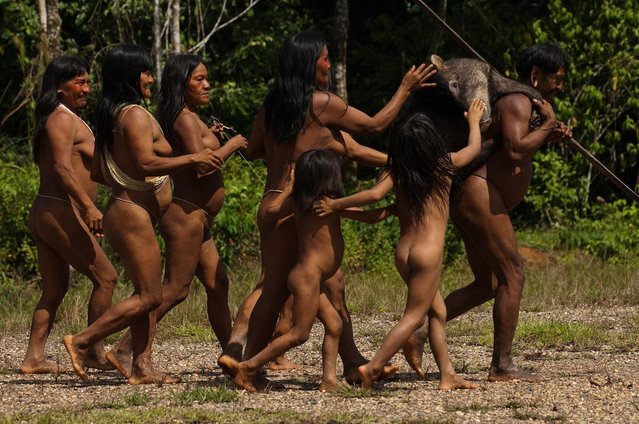
Spectacular images offering insight into the lives of the Huaorani people in the Ecuadorian Amazon have been revealed showing how they use traditional methods to hunt monkeys for food. The stunning pictures were taken by conservation photographer Pete Oxford from Torquay, Devon in the Ecuadorian Amazon. “The Huaorani Indians are a forest people highly in tune with their environment. Many are now totally acculturated since the 1950s by missionaries”, said Pete. “Today they face radical change to their culture to the proximity of oil exploration within their territory and the Yasuni National Park and Biosphere Reserve, they are vastly changed. Some still live very traditionally and for this shoot, through my Huaorani friend, a direct relative of those photographed he wanted to depict them as close to their original culture as possible. They still largely hunt with blow pipes and spears eating a lot of monkeys and peccaries”. The Huaorani are also known as the Waorani, Waodani or the Waos and are native Amerindians. Their lands are located between the Curaray and Napo rivers and speak the Huaorani language. Pete says that during his visit he was welcomed into the group and hopes that ancient cultures can be saved. Here: The tribe were seen celebrating after a hunter returned to camp with a wild pig. (Photo by Pete Oxford/Mediadrumworld.com)

Spectacular images offering insight into the lives of the Huaorani people in the Ecuadorian Amazon have been revealed showing how they use traditional methods to hunt monkeys for food. The stunning pictures were taken by conservation photographer Pete Oxford from Torquay, Devon in the Ecuadorian Amazon. Here: The tribe were seen celebrating after a hunter returned to camp with a wild pig. (Photo by Pete Oxford/Mediadrumworld.com)
Details
20 Jan 2017 07:58:00
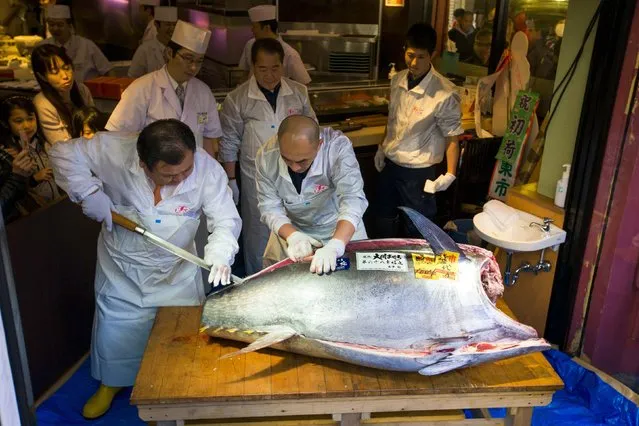
The President of the sushi restaurant chain Sushi Zanmai, Kiyoshi Kimura, cuts a blue fin tuna outside his main restaurant at the outer Tsukiji market in Tokyo January 5, 2015. The 180 kg blue fin tuna traded at a price of 4.5 million yen (37,500 USD) and was the most expensive fish at this year's New Year auction at the Tsukiji market, local media reported. (Photo by Thomas Peter/Reuters)

The President of the sushi restaurant chain Sushi Zanmai, Kiyoshi Kimura, cuts a blue fin tuna outside his main restaurant at the outer Tsukiji market in Tokyo January 5, 2015. The 180 kg blue fin tuna traded at a price of 4.5 million yen (37,500 USD) and was the most expensive fish at this year's New Year auction at the Tsukiji market, local media reported. (Photo by Thomas Peter/Reuters)
Details
06 Jan 2015 11:39:00
A woman takes her souvenir picture with a white fox in front of ice sculptures illuminated by coloured lights during the opening day of the 31st Harbin International Ice and Snow Festival in the northern city of Harbin, Heilongjiang province, January 5, 2015. The annual Ice and Snow Festival, organized by China National Tourism Administration and local governments, kicked off on Monday in Harbin. (Photo by Kim Kyung-Hoon/Reuters)

A woman takes her souvenir picture with a white fox in front of ice sculptures illuminated by coloured lights during the opening day of the 31st Harbin International Ice and Snow Festival in the northern city of Harbin, Heilongjiang province, January 5, 2015. The annual Ice and Snow Festival, organized by China National Tourism Administration and local governments, kicked off on Monday in Harbin, one of the coldest cities in China. (Photo by Kim Kyung-Hoon/Reuters)
Details
10 Jan 2015 13:07:00
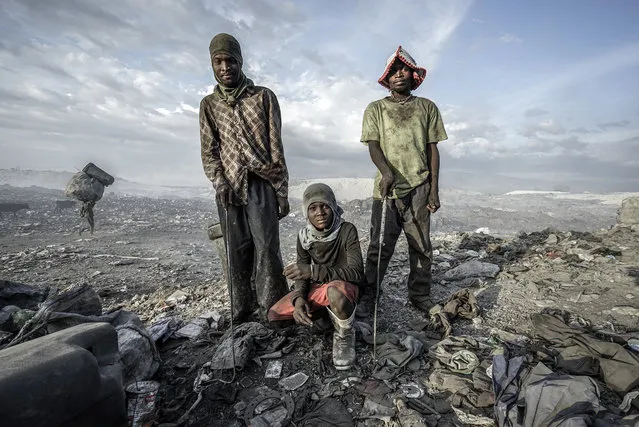
In a 200-acre-plus dump 5 kilometers north of Haiti’s capital, Port-au-Prince, hundreds of men, women and children scavenge day and night through the burning wasteland. They earn $12 to $15 a day – on a good day – for recycling plastics as well as clothing, household items and aluminum (for smelting). Some 5,000 tons of waste is created each day in the Port-au-Prince area. (Photo and caption by Giles Clarke/Getty Images Reportage)

In a 200-acre-plus dump 5 kilometers north of Haiti’s capital, Port-au-Prince, hundreds of men, women and children scavenge day and night through the burning wasteland. They earn $12 to $15 a day – on a good day – for recycling plastics as well as clothing, household items and aluminum (for smelting). Some 5,000 tons of waste is created each day in the Port-au-Prince area. (Photo and caption by Giles Clarke/Getty Images Reportage)
Details
02 Feb 2015 11:21:00
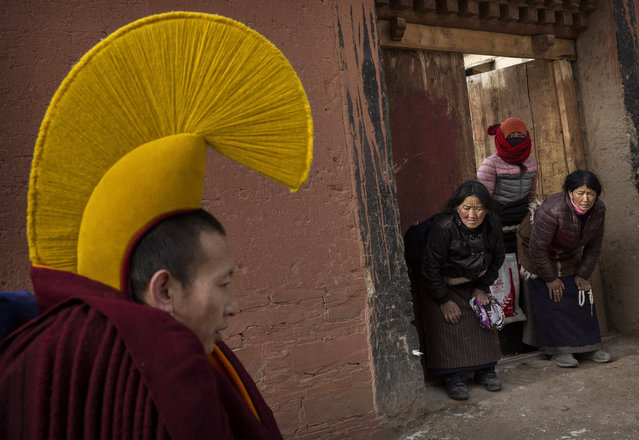
Devotees bow to a passingTibetan Buddhist monk on his way to take part in a special prayer during Monlam or the Great Prayer rituals on March 5, 2015 at the Labrang Monastery, Xiahe County, Amdo, Tibetan Autonomous Prefecture, Gansu Province, China. (Photo by Kevin Frayer/Getty Images)

Devotees bow to a passingTibetan Buddhist monk on his way to take part in a special prayer during Monlam or the Great Prayer rituals on March 5, 2015 at the Labrang Monastery, Xiahe County, Amdo, Tibetan Autonomous Prefecture, Gansu Province, China. Labrang Monastery is one of the six great monasteries of the Gelug school of Tibetan Buddhism and one of the largest outside of the Tibetan Autonomous Region. Monlam, the most important prayer event for many Tibetans was banned during the Cultural Revolution in China but once again in recent years it is celebrated in many areas. (Photo by Kevin Frayer/Getty Images)
Details
14 Mar 2015 14:37:00
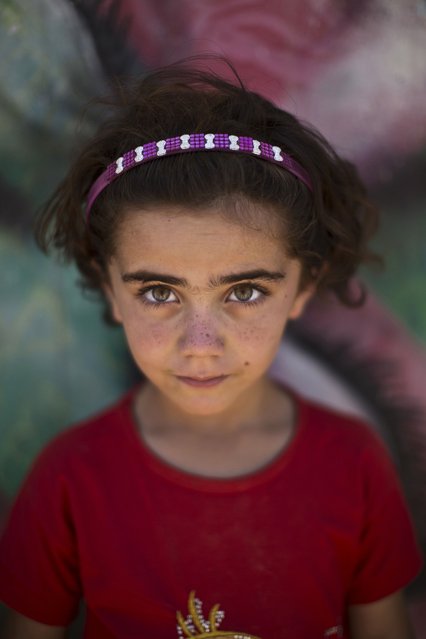
In this Tuesday, July 29, 2014, photo, Syrian refugee Samah, 5, poses for a picture at Zaatari refugee camp, near the Syrian border, in Mafraq, Jordan. More than 2.8 million Syrian children inside and outside the country – nearly half the school-aged population – cannot get an education because of the devastation from the civil war, according to the U.N. children's agency, UNICEF. (Photo by Muhammed Muheisen/AP Photo)

In this Tuesday, July 29, 2014, photo, Syrian refugee Samah, 5, poses for a picture at Zaatari refugee camp, near the Syrian border, in Mafraq, Jordan. More than 2.8 million Syrian children inside and outside the country – nearly half the school-aged population – cannot get an education because of the devastation from the civil war, according to the U.N. children's agency, UNICEF. That number is likely higher, as UNICEF can't count the children whose parents didn't register with the United Nations refugee agency. (Photo by Muhammed Muheisen/AP Photo)
Details
03 Aug 2014 07:46:00