Loading...
Done
FILE- In this Sept. 9, 2013 file photo, grave digger Juan Luis Cabrera takes a break from his work at the "Nueva Esperanza" cemetery in Lima, Peru. (AP Photo/Rodrigo Abd, File)

Cemetery overcrowding is an issue that resonates around the world, particularly in its most cramped cities and among religions that forbid or discourage cremation. The reality of relying on finite land resources to cope with the endless stream of the dying has brought about creative solutions... (Photo by Rodrigo Abd/AP Photo)
Details
17 Oct 2014 12:16:00
Dancers attend a dress rehearsal. (Photo by Hannibal Hanschke/Reuters)

Dancers attend a dress rehearsal for the new grand show “THE WYLD” at Friedrichstadt-Palast in Berlin October 2, 2014. Ten choreographers are working with 60 dancers from the world's largest show ballet company to create the flamboyant stage spectacle. The show's name, “THE WYLD”, represents human nature in its diversity and the wilderness of the big city – in this case, Berlin. The premiere of the 10.6 million euro ($13.5 million) show, the largest production budget in the 95-year history of Friedrichstadt-Palast, is on October 23, 2014. (Photo by Hannibal Hanschke/Reuters)
Details
24 Oct 2014 12:03:00
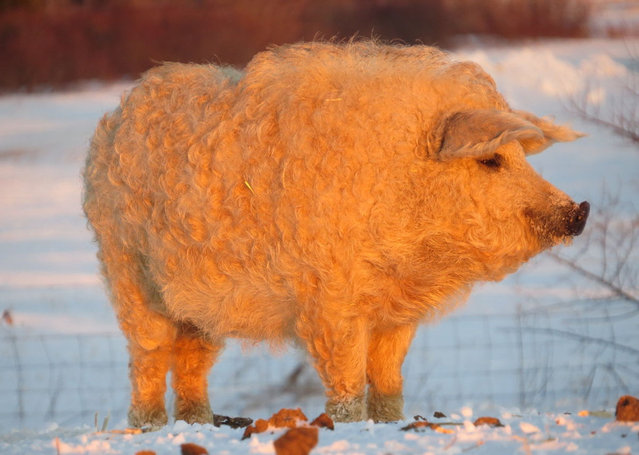
Mangalitsa The Hairy Pig

When you look at the picture of a furry pig that resembles a sheep from a distance, you may think that this may be the result of the work of some crazy scientist that tinkered with the pig’s genome. However, in this case, this is not true. Mangalica is a natural breed of pigs, which were bred in Europe for their lard. This breed of pigs is very unique, since the only other breed of pigs which had a long coat was Loncolnshire Curly Coat, which is now extinct. In the past, these pigs were quite popular, since they were able to produce a lot of lard. However, when the demand for pig lard dwindled, the population of these pigs rapidly decreased, making it a “rare breed”.
Details
01 Dec 2014 13:42:00
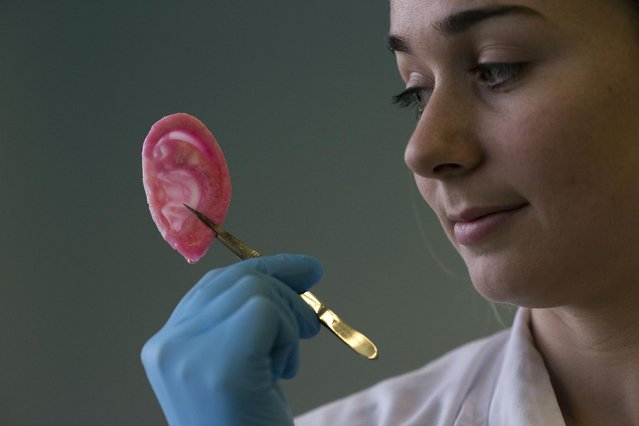
Dr Michelle Griffin, a plastic research fellow, poses for photographs with a synthetic polymer ear at her research facility in the Royal Free Hospital in London, Monday, March 31, 2014. (Photo by Matt Dunham/AP Photo)

In a north London hospital, scientists are growing noses, ears and blood vessels in the laboratory in a bold attempt to make body parts using stem cells. It is among several labs around the world, including in the U.S., that are working on the futuristic idea of growing custom-made organs in the lab. (Photo by Matt Dunham/AP Photo)
Details
10 Apr 2014 09:21:00
Turkish army, including cavalry, infantry and artillery. (Photo by Dr. P.A. Smithe/National World War I Museum, Kansas City, Mo.)

Dr. P.A. Smithe was sent by the American Red Cross as a doctor and surgeon to work at a hospital in Vienna. He sailed to Europe in December 1915 and returned home in August 1916, according to his daughter, who donated his images to the National World War I Museum. Photo: Turkish army, including cavalry, infantry and artillery. (Photo by Dr. P.A. Smithe/National World War I Museum, Kansas City, Mo.)
Details
29 Jul 2014 11:53:00
Game Of Thrones: Season 4 Visual Effects

The characters fighting for Westeros in Game of Thrones are fighting mostly for CGI backdrops. Like many others TV series and movies, visual effects is a huge part of the production process as it handles details both great and small. A great credit to Game of Thrones is that the story is so good that we forget about the effects, and another great credit goes to the VFX team because their work is seamless. If you want to see the seams, you have to get a visual breakdown of how the shots are put together.
Details
30 Jul 2014 18:47:00
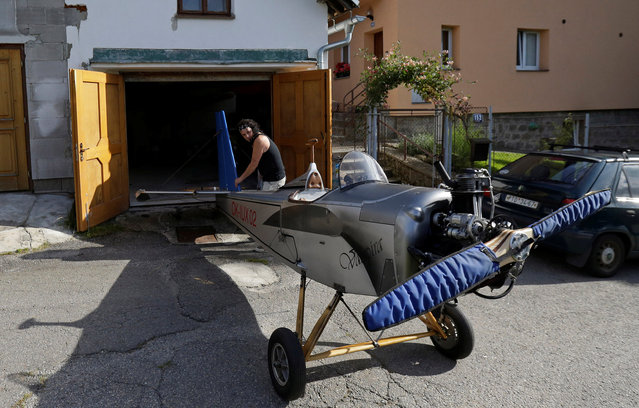
Aviator Frantisek Hadrava moves Vampira, an ultralight plane based on the U.S.-design of light planes called Mini-Max, out of a garage in the village of Zdikov, Czech Republic, August 23, 2016. (Photo by David W. Cerny/Reuters)

Aviator Frantisek Hadrava moves Vampira, an ultralight plane based on the U.S.-design of light planes called Mini-Max, out of a garage in the village of Zdikov, Czech Republic, August 23, 2016. Frantisek thought driving to work for 14 minutes was too much, so he built an plane to cut the commute by half. (Photo by David W. Cerny/Reuters)
Details
25 Aug 2016 09:59:00
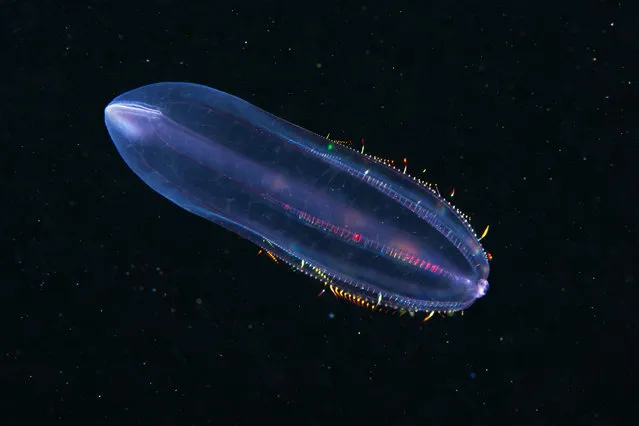
A Comb jelly – Beroe cucumis. (Photo by Alexander Semenovs/Caters News)

Underwater photographer Alexander Semenovs has snapped some of the most stunning, fragile life forms anywhere on planet Earth. Shot in deep, dark conditions, the images continue to provide an insight into what lies beneath, with glowing creatures appearing a lot like aliens in the pitch-black water. Semenovs has shot the likes of bioluminescent jellyfish, aggressive-looking worms and many species that leave a lot to the imagination. The 30-year-old from Moscow does the majority of his work in the White Sea, near the Arctic Circle. Here: A Comb jelly – Beroe cucumis. (Photo by Alexander Semenovs/Caters News)
Details
23 Nov 2015 08:06:00