Loading...
Done
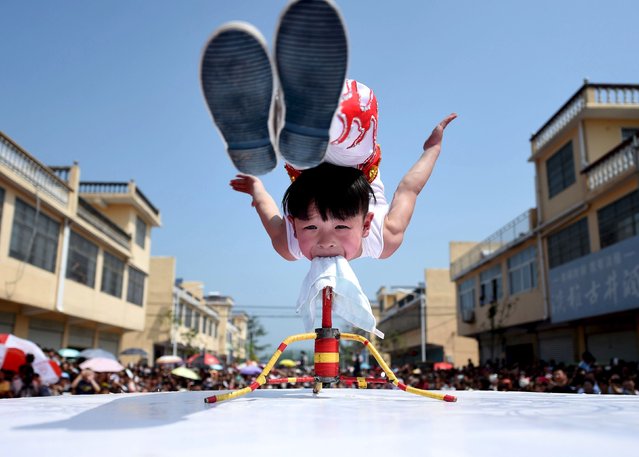
A six-year-old acrobat performs on the opening of a tourist festival in Bozhou, Anhui province, China May 3, 2015. (Photo by Reuters/China Daily)

A six-year-old acrobat performs on the opening of a tourist festival in Bozhou, Anhui province, China May 3, 2015. (Photo by Reuters/China Daily)
Details
05 May 2015 11:04:00
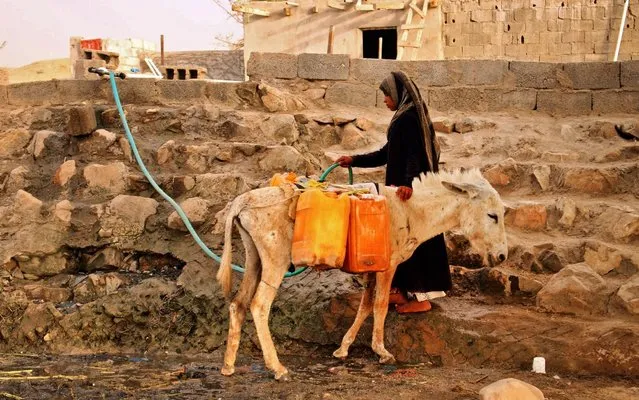
A displaced Yemeni woman from Hodeida fills water containers at a make-shift camp in a village in the northern district of Abs in the country's Hajjah province, on May 9, 2019. The Yemeni conflict has triggered what the United Nations describes as the world's worst humanitarian crisis, with 3.3 million people still displaced and 24.1 million in need of aid. (Photo by Essa Ahmed/AFP Photo)

A displaced Yemeni woman from Hodeida fills water containers at a make-shift camp in a village in the northern district of Abs in the country's Hajjah province, on May 9, 2019. The Yemeni conflict has triggered what the United Nations describes as the world's worst humanitarian crisis, with 3.3 million people still displaced and 24.1 million in need of aid. (Photo by Essa Ahmed/AFP Photo)
Details
13 May 2019 00:03:00
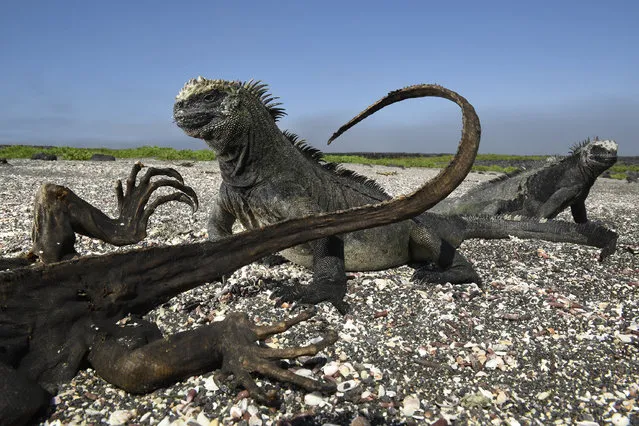
Galapagos – Rocking the Cradle: Four major ocean currents converge along the Galapagos archipelago, creating the conditions for an extraordinary diversity of animal life, April 25, 2016. The islands are home to at least 7,000 flora and fauna species, of which 97 percent of the reptiles, 80 percent of the land birds, 50 percent of the insects and 30 percent of the plants are endemic. The local ecosystem is highly sensitive to the changes in temperature, rainfall and ocean currents that characterize the climatic events known as El Niño and La Niña. These changes cause marked fluctuations in weather and food availability. Many scientists expect the frequency of El Niño and La Niña to increase as a result of climate change, making the Galapagos a possible early-warning location for its effects. (Photo by Thomas P. Peschak for National Geographic/World Press Photo)

Galapagos – Rocking the Cradle: Four major ocean currents converge along the Galapagos archipelago, creating the conditions for an extraordinary diversity of animal life, April 25, 2016. The islands are home to at least 7,000 flora and fauna species, of which 97 percent of the reptiles, 80 percent of the land birds, 50 percent of the insects and 30 percent of the plants are endemic. (Photo by Thomas P. Peschak for National Geographic/World Press Photo)
Details
16 Apr 2018 00:01:00
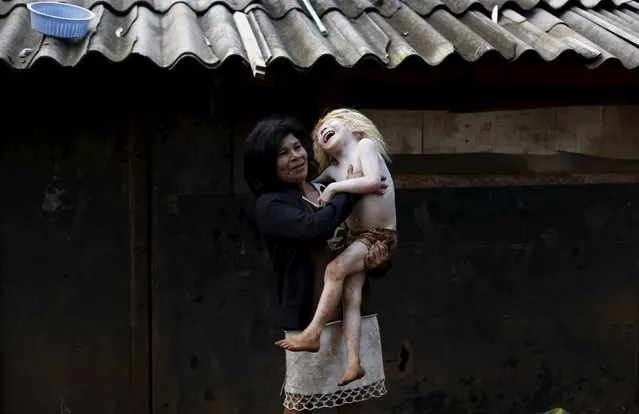
A Guarani Indian woman jokes with her son in the village of Pyau at Jaragua district, in Sao Paulo April 27, 2015. The National Indian Foundation (FUNAI) has recognised 521 hectares of this area as indigenous territory, making it the smallest indigenous reserve in Brazil. Members of the Guarani community have now established a new village outside the demarcation and are being threatened with an eviction through a court order. (Photo by Nacho Doce/Reuters)

A Guarani Indian woman jokes with her son in the village of Pyau at Jaragua district, in Sao Paulo April 27, 2015. The National Indian Foundation (FUNAI) has recognised 521 hectares of this area as indigenous territory, making it the smallest indigenous reserve in Brazil. Members of the Guarani community have now established a new village outside the demarcation and are being threatened with an eviction through a court order. (Photo by Nacho Doce/Reuters)
Details
01 May 2015 12:42:00
«Female Boxers», 2024. Julia Fullerton-Batten is a fine art photographer renowned for her cinematic visual storytelling. Her large-scale projects are based around specific themes, each image embellishing her subject matter in a series of thought-provoking “stories” using staged tableaux and sophisticated lighting techniques. (Photo by Julia Fullerton-Batten)

«Female Boxers», 2024. Julia Fullerton-Batten is a fine art photographer renowned for her cinematic visual storytelling. Her large-scale projects are based around specific themes, each image embellishing her subject matter in a series of thought-provoking “stories” using staged tableaux and sophisticated lighting techniques. (Photo by Julia Fullerton-Batten)
Details
25 May 2025 03:42:00
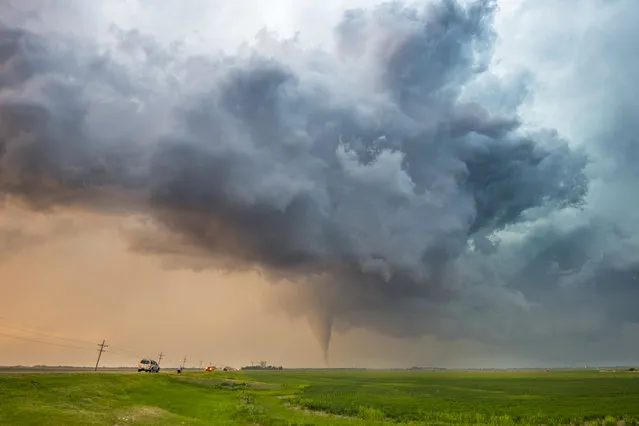
“The Sunsetter”. An EF-4 tornado rips through the open space of farmland near Rozel, Kansas. This tornado moves slowly but powerful towards the setting sun an gets its beautiful color right before sunset. Storm Chasers are spotting on the left side. Photo location: Rozel, Kansas. (Photo and caption by Dennis Oswald/National Geographic Photo Contest)

“The Sunsetter”. An EF-4 tornado rips through the open space of farmland near Rozel, Kansas. This tornado moves slowly but powerful towards the setting sun an gets its beautiful color right before sunset. Storm Chasers are spotting on the left side. Photo location: Rozel, Kansas. (Photo and caption by Dennis Oswald/National Geographic Photo Contest)

ATTENTION! All pictures are presented in high resolution. To see Hi-Res images – just TWICE click on any picture. In other words, click small picture – opens the BIG picture. Click BIG picture – opens VERY BIG picture.
Details
01 Dec 2013 11:03:00
A Turkana tribeswoman reacts after an accidental fire of a shelter in Turkana settlement in Ilemi Triangle, Kenya, July 15, 2019. (Photo by Goran Tomasevic/Reuters)

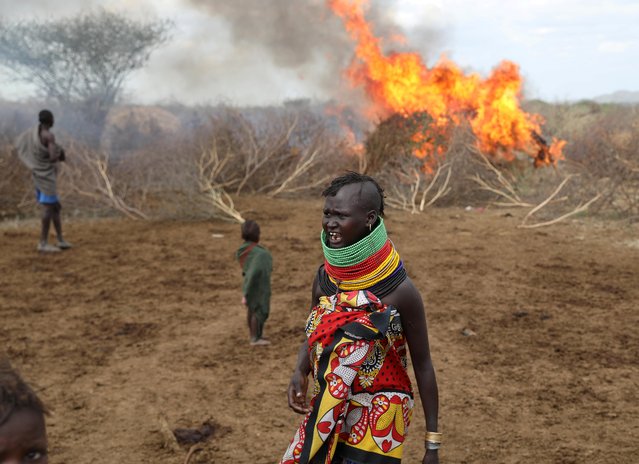
A Turkana tribeswoman reacts after an accidental fire of a shelter in Turkana settlement in Ilemi Triangle, Kenya, July 15, 2019. The Ilemi Triangle, a disputed sliver of land along the border with Ethiopia and South Sudan, is the northernmost tip of Turkana, Kenya's poorest county. A series of deadly clashes between the Turkana community and other ethnic groups that they said had crossed from South Sudan have put people on edge, to the point of posting lookouts. (Photo by Goran Tomasevic/Reuters)
Details
25 Sep 2019 00:05:00
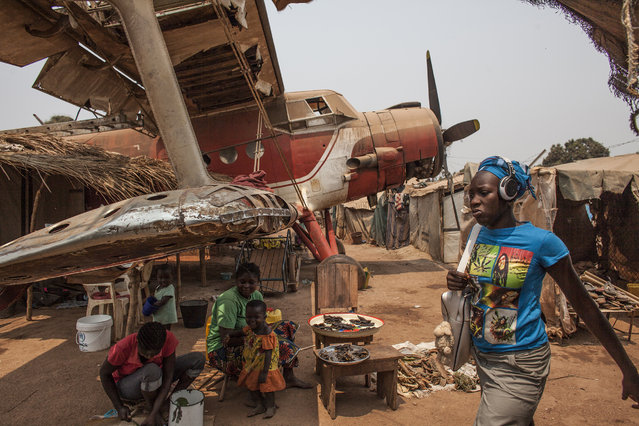
A women sell food under the wing of a plane wreckage being used as housing in M'Poko Internally Displaced Persons camp in Bangui, Central African Republic on Saturday, February 13, 2016. The M'Poko IDP camp, just outside the capitol's airport, currently houses close to 20,000 people displaced due to the ongoing conflict in Central African Republic. The camp was established in late 2013 and contained upto 70,000 people at the height of the crisis in 2014. (Photo by Jane Hahn/The Washington Post)

A women sell food under the wing of a plane wreckage being used as housing in M'Poko Internally Displaced Persons camp in Bangui, Central African Republic on Saturday, February 13, 2016. The M'Poko IDP camp, just outside the capitol's airport, currently houses close to 20,000 people displaced due to the ongoing conflict in Central African Republic. (Photo by Jane Hahn/The Washington Post)
Details
28 Feb 2016 11:09:00