Loading...
Done
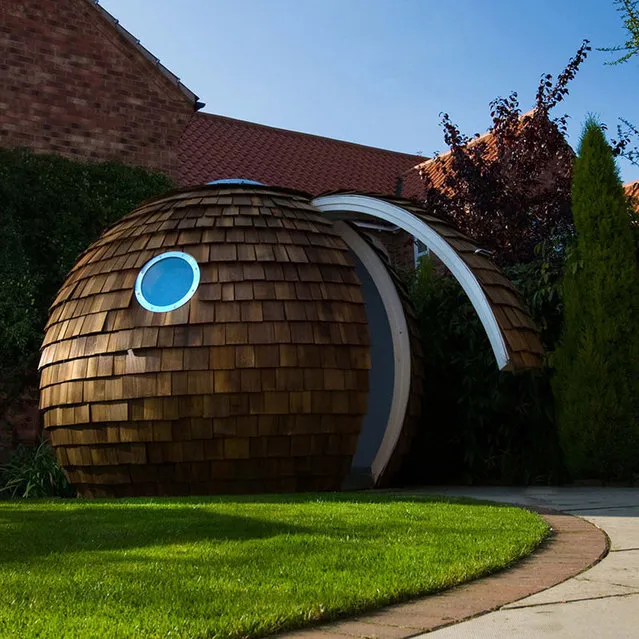
Futuristic Home Office Garden Design

Archipod futuristic home office Garden design created especially for your private office. Working from home office make you are closer to your family and nature. Home office design in your own backyard complete with telephone, electricity and water. Natural features futuristic such as coconut, brown and rough on outside, white and fluffy inside. Pod features a large skylight dometop with round windows, natural lighting into Archipod home office design. Dimmable floodlights interior, concealed lighting. Archipod futuristic home office garden design use ergonomic semi-circle office desk, with a thin white drawers unit and desktop. Gullwing doors easy open with gas struts. Archipod futuristic home office garden design made of wood panel on the outside.
Details
11 Mar 2013 10:26:00
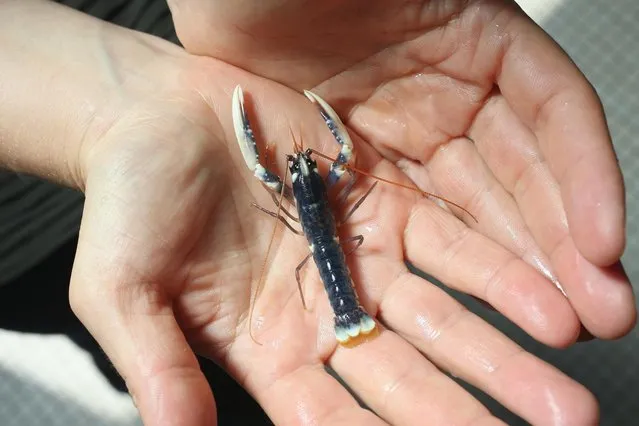
Isabel Schmalenbach, an environmental scientist with the Helgoland Biological Institute (Biologische Anstalt Helgoland), part of the Alfred Wegener Institute for Polar and Marine Research, holds a one-year old baby European lobster (Homarus gammarus) raised at the institute on August 3, 2013 on Helgoland Island, Germany. (Photo by Sean Gallup/Getty Images)

Isabel Schmalenbach, an environmental scientist with the Helgoland Biological Institute (Biologische Anstalt Helgoland), part of the Alfred Wegener Institute for Polar and Marine Research, holds a one-year old baby European lobster (Homarus gammarus) raised at the institute on August 3, 2013 on Helgoland Island, Germany. Later in the day Schmalenbach and her colleagues released a total of 415 one-year old lobsters into the North Sea as part of an effort to repopulate the lobster population around Helgoland (also called Heligoland). In the 19th century local fishermen caught up to 80,000 lobsters a year in the surrounding waters, combined with the heavy allied bombing of the island during and after World War II, as well as other environmental factors, decimated the lobster population. (Photo by Sean Gallup)
Details
05 Aug 2013 08:39:00
Tridacna Gigas, or Giant Clams

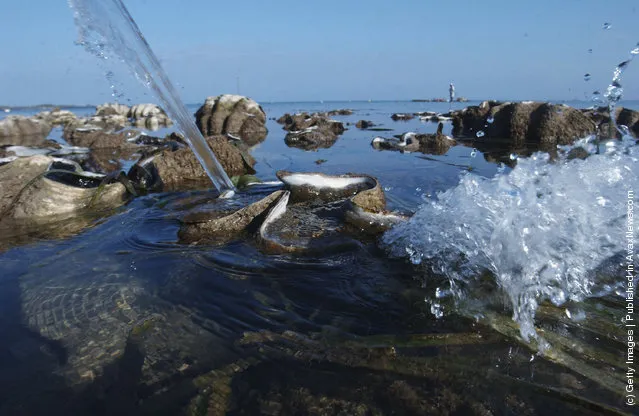
“The giant clam, Tridacna gigas (known as pā’ua in Cook Islands Māori), is the largest living bivalve mollusc. T. gigas is one of the most endangered clam species. It was mentioned as early as 1825 in scientific reports. One of a number of large clam species native to the shallow coral reefs of the South Pacific and Indian oceans, they can weigh more than 200 kilograms (440 lb) measure as much as 120 cm (47 in) across, and have an average lifespan in the wild of 100 years or more”. – Wikipedia

Photo: Tridacna Gigas, or Giant Clams spew water as a traditional fisherman passes by a small sanctuary on January 23, 2004 near Bolinao in the Northern Philippines. The clams, prime builders for coral reefs and providing shelter for spawning fish and other marine life, are exposed by low tides in the sanctuary. Overfishing and pollution throughout the country are not only threatening food security, but are also starting to choke one of the few working clam sanctuaries in the world. (Photo by David Greedy/Getty Images)
Details
01 Oct 2011 13:10:00
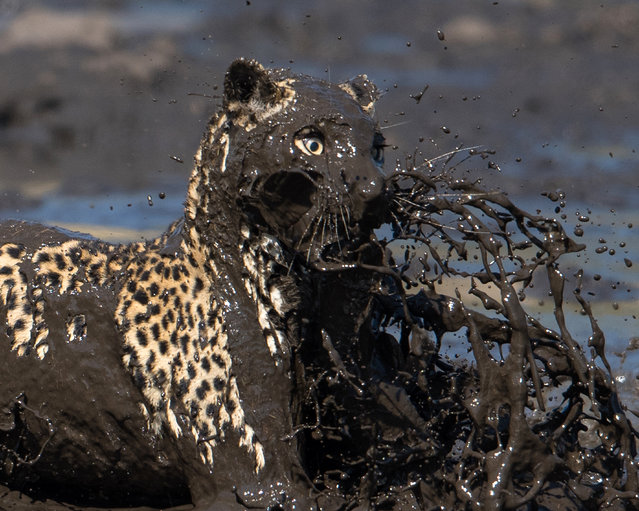
A leopard leaps into a muddy waterhole to catch a fish on August 13, 2015, in the Savuti Channel in Botswana. A leopard leaps into a muddy waterhole to catch a fish in the Savuti Channel in Botswana. The spotted predator stood poised waiting for a fish to appear – before leaping in ferociously with lightening reflexes. (Photo by Greatstock/Barcroft Media)

A leopard leaps into a muddy waterhole to catch a fish on August 13, 2015, in the Savuti Channel in Botswana. A leopard leaps into a muddy waterhole to catch a fish in the Savuti Channel in Botswana. The spotted predator stood poised waiting for a fish to appear – before leaping in ferociously with lightening reflexes. Coated in a layer of thick dark mud the big cat emerged from the water clutching the fish in its jaws. The fishing leopards of Savuti are known for their unique skills in catching fish – but have rarely been photographed. (Photo by Greatstock/Barcroft Media)
Details
06 Sep 2015 13:00:00
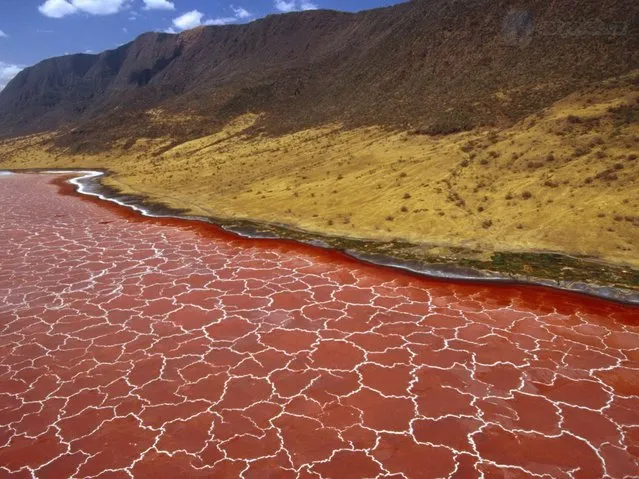
[Lake Natron in Tanzania

Lake Natron is a salt lake located in northern Tanzania, close to the Kenyan border, in the eastern branch of the East African Rift. The lake is fed by the Southern Ewaso Ng'iro River and also by mineral-rich hot springs. It is quite shallow, less than three meters (10 feet) deep, and varies in width depending on its water level, which changes due to high levels of evaporation, leaving concentrations of salt and other minerals, notably sodium carbonate (natron).
Details
05 Jun 2013 10:29:00
A makeshift aircraft plummets into the Moskva River during the Red Bull Flugtag Moscow 2011 competition. (Photo by Sergei Karpukhin/Reuters)

Spectators in Moscow were treated to the site of humorously designed makeshift aircraft plunging into the Muskova River during the Red Bull Flugtag Moscow 2011 competition. 38 teams took part at the Flugtag – which means “flying day” – a competition in which teams in fancy dress attempt to pilot human-powered, home-made flying machines off a six-meter-high platform into water.

Photo: A makeshift aircraft plummets into the Moskva River during the Red Bull Flugtag Moscow 2011 competition. (Photo by Sergei Karpukhin/Reuters)
Details
27 Jul 2012 08:09:00
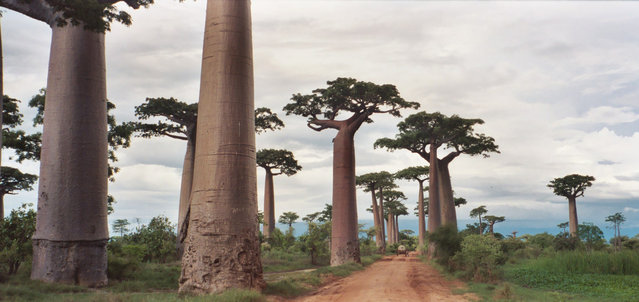
Avenue of the Baobabs

The Avenue or Alley of the Baobabs is a prominent group of baobab trees lining the dirt road between Morondava and Belon'i Tsiribihina in the Menabe region in western Madagascar. Its striking landscape draws travelers from around the world, making it one of the most visited locations in the region. It has been a center of local conservation efforts, and was granted temporary protected status in July 2007 by the Ministry of Environment, Water and Forests, the first step toward making it Madagascar's first natural monument.
Details
16 Nov 2012 10:05:00
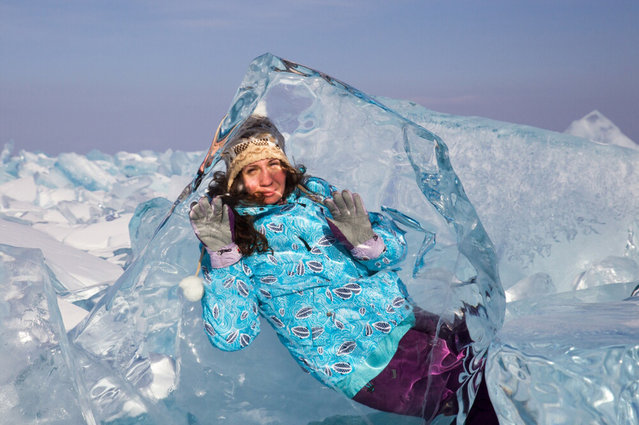
The Turquoise Ice Lake Baikal

Located in Siberia, Laka Baikal is the largest freshwater lake on the planet that contains approximately 20 percent of the Earth’s freshwater. Apart from being the oldest lake in the world at over 25 million years old, Lake Baikal is also home to over two thousand varieties of flora and fauna, of which almost 1,600 are endemic to the lake. The water of Lake Baikal is renowned for being some of the clearest in the world. When the lake freezes during the winter, an amazing phenomena takes place: large shards of transparent ice form on the surface of the lake, giving the amazing appearance of turquoise ice.
Details
02 May 2014 09:21:00