Loading...
Done
This picture taken on February 16, 2017 in Fangshan village in China's coastal province Fujians, shows a villager performing the “eating flowers” ritual. Villagers in eastern China have a unique way of washing away the taint of evil spirits – by bathing in a shower of scorching sparks. (Photo by Johannes Eisele/AFP Photo)

This picture taken on February 16, 2017 in Fangshan village in China's coastal province Fujians, shows a villager performing the “eating flowers” ritual. Villagers in eastern China have a unique way of washing away the taint of evil spirits – by bathing in a shower of scorching sparks. (Photo by Johannes Eisele/AFP Photo)
Details
19 Feb 2017 09:55:00
Neil Zeller's snaps were taken across Canada, where he photographs the northern lights dancing across a dark night sky. In one stunning shot, Zeller, 42, even manages to capture a flash of lightning beneath a storm cell while an aurora gives off a magnificent green glow. The photographer, from Calgary, Alberta, describes himself as a night person, and became interested in night photography about 10 years ago. (Photo by Neil Zeller/Caters News)

Neil Zeller's snaps were taken across Canada, where he photographs the northern lights dancing across a dark night sky. In one stunning shot, Zeller, 42, even manages to capture a flash of lightning beneath a storm cell while an aurora gives off a magnificent green glow. The photographer, from Calgary, Alberta, describes himself as a night person, and became interested in night photography about 10 years ago. (Photo by Neil Zeller/Caters News)
Details
01 Jan 2016 08:02:00
Caoimhe Cooburn-Gray poses for a picture on St. Patrick's day in Dublin, Ireland March 17, 2016. (Photo by Clodagh Kilcoyne/Reuters)

Caoimhe Cooburn-Gray poses for a picture on St. Patrick's day in Dublin, Ireland March 17, 2016. Saint Patrick's Day is a cultural and religious celebration held on 17 March, the traditional death date of Saint Patrick (c. AD 385–461), the foremost patron saint of Ireland. Celebrations generally involve public parades and festivals, céilithe, and the wearing of shamrocks, as well as green or orange attire. (Photo by Clodagh Kilcoyne/Reuters)
Details
18 Mar 2016 12:39:00
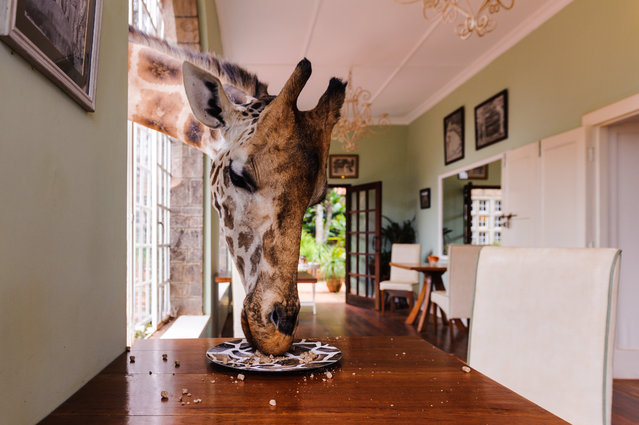
“Don't Leave Any Food On Your Plate”. The giraffes at Nairobi's Giraffe Manor are totally at home with humans. They will eat out of your hand, or even off your plate. Photo location: Giraffe Manor, Nairobi, Kenya. (Photo and caption by Gavin Werbeloff/National Geographic Photo Contest)

“Don't Leave Any Food On Your Plate”. The giraffes at Nairobi's Giraffe Manor are totally at home with humans. They will eat out of your hand, or even off your plate. Photo location: Giraffe Manor, Nairobi, Kenya. (Photo and caption by Gavin Werbeloff/National Geographic Photo Contest)
Details
20 Jun 2014 10:23:00
These are the stomach-churning pictures of the swing at the end of the world – a rickety wooden swing hanging over a precipice 2,660 metres above sea level – and not a seatbelt in sight. (Photo by Caters News)

These are the stomach-churning pictures of the swing at the end of the world – a rickety wooden swing hanging over a precipice 2,660 metres above sea level – and not a seatbelt in sight. (Photo by Caters News)
Details
18 May 2014 10:36:00
“Don't look at me, I'm not ready!!!!” (Photo and caption by Yves Lecoq)

“Don't look at me, I'm not ready!!!!” (Photo and caption by Yves Lecoq)
Details
11 Apr 2015 09:25:00
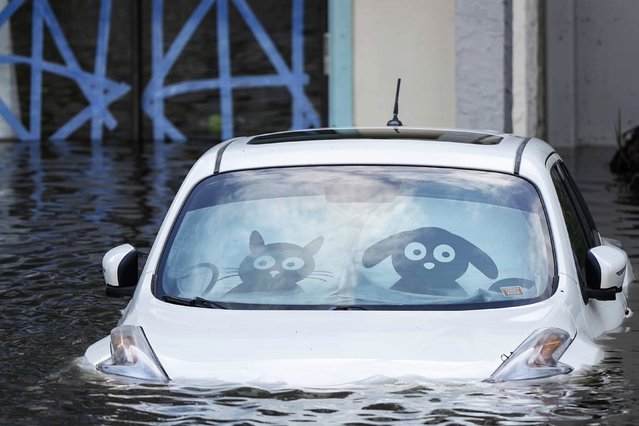
A car is submerged in flood water at an apartment complex in the aftermath of Hurricane Milton, Thursday, October 10, 2024, in Clearwater, Fla. (Photo by Mike Stewart/AP Photo)

A car is submerged in flood water at an apartment complex in the aftermath of Hurricane Milton, Thursday, October 10, 2024, in Clearwater, Fla. (Photo by Mike Stewart/AP Photo)
Details
19 Oct 2024 04:20:00
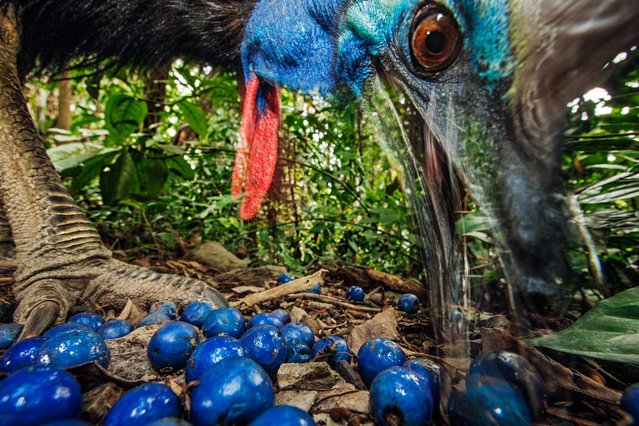
“Cassowaries are large, flightless birds related to emus and (more distantly) to ostriches, rheas, and kiwis”, writes Olivia Judson in the September issue of National Geographic magazine. (Photo by Christian Ziegler/National Geographic)

“Cassowaries are large, flightless birds related to emus and (more distantly) to ostriches, rheas, and kiwis”, writes Olivia Judson in the September issue of National Geographic magazine. How large? People-size: Adult males stand well over five foot five and top 110 pounds. Females are even taller, and can weigh more than 160 pounds. Dangerous when roused, they’re shy and peaceable when left alone. But even birds this big and tough are prey to habitat loss. The dense New Guinea and Australia rain forests where they live have dwindled. Today cassowaries might number 1,500 to 2,000. And because they help shape those same forests – by moving seeds from one place to another – “if they vanish”, Judson writes, “the structure of the forest would gradually change” too. (Photo by Christian Ziegler/National Geographic)

Details
06 Jan 2014 12:21:00