Loading...
Done
Ramoncito Campo kisses his wife Hernelie Ruazol Campo on a flooded street during a southwest monsoon that battered Manila August 8, 2012. The newly-wed couple pushed through with their scheduled wedding despite severe flooding that inundated wide areas of the capital and nearby nine provinces. (Photo by Reuters/Courtesy of Ramoncito Campo)

Ramoncito Campo kisses his wife Hernelie Ruazol Campo on a flooded street during a southwest monsoon that battered Manila August 8, 2012. The newly-wed couple pushed through with their scheduled wedding despite severe flooding that inundated wide areas of the capital and nearby nine provinces. (Photo by Reuters/Courtesy of Ramoncito Campo)
Details
04 Aug 2014 13:58:00
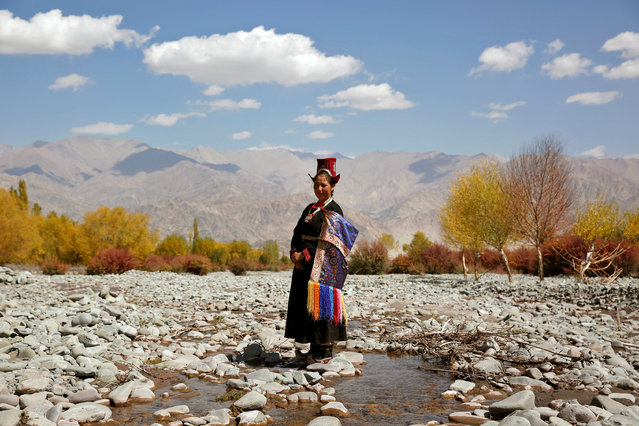
Tsewang Dolma, 33, a farmer and housewife poses for a photograph in Matho, a village nestled high in the Indian Himalayas, India September 29, 2016. When asked how living in the world's fastest growing major economy had affected life, Dolma replied: “Our culture is spoiled now. We don't wear our traditional dress”. (Photo by Cathal McNaughton/Reuters)

Tsewang Dolma, 33, a farmer and housewife poses for a photograph in Matho, a village nestled high in the Indian Himalayas, India September 29, 2016. When asked how living in the world's fastest growing major economy had affected life, Dolma replied: “Our culture is spoiled now. We don't wear our traditional dress”. (Photo by Cathal McNaughton/Reuters)
Details
13 Oct 2016 11:32:00
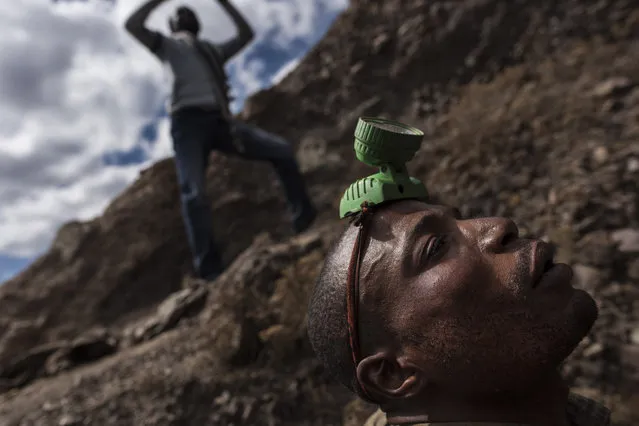
A “creuseur”, or digger, a plastic lantern on his head, readies to enter a copper and cobalt mine in Kawama, Democratic Republic of Congo on June 8, 2016. Cobalt is used in the batteries for electric cars and mobile phones. Working conditions are dangerous, often with no safety equipment or structural support for the tunnels. The diggers say they are paid on average US$2-3/day. (Photo by Michael Robinson Chavez/The Washington Post)

A “creuseur”, or digger, a plastic lantern on his head, readies to enter a copper and cobalt mine in Kawama, Democratic Republic of Congo on June 8, 2016. Cobalt is used in the batteries for electric cars and mobile phones. Working conditions are dangerous, often with no safety equipment or structural support for the tunnels. The diggers say they are paid on average US$2-3/day. (Photo by Michael Robinson Chavez/The Washington Post)
Details
30 Dec 2016 10:29:00
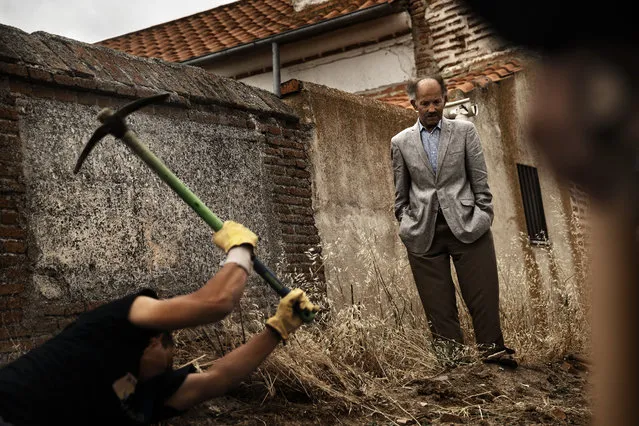
In this photo taken on July 19, 2014, a man looks at an excavation as an A.R.M.H., Association for the Recovery of Historical Memory, volunteer digs on the search for the body of Perfecto de Dios, in a hidden grave in Chaherrero, Spain. Across Spain, volunteer teams of archeologists, anthropologists and forensic scientists head out every year on expeditions to dig for suspected mass graves – a legacy of Spain's fascist past during the time of General Francisco Franco. (Photo by Daniel Ochoa de Olza/AP Photo)

In this photo taken on July 19, 2014, a man looks at an excavation as an A.R.M.H., Association for the Recovery of Historical Memory, volunteer digs on the search for the body of Perfecto de Dios, in a hidden grave in Chaherrero, Spain. Across Spain, volunteer teams of archeologists, anthropologists and forensic scientists head out every year on expeditions to dig for suspected mass graves – a legacy of Spain's fascist past during the time of General Francisco Franco. (Photo by Daniel Ochoa de Olza/AP Photo)
Details
26 Dec 2014 14:54:00
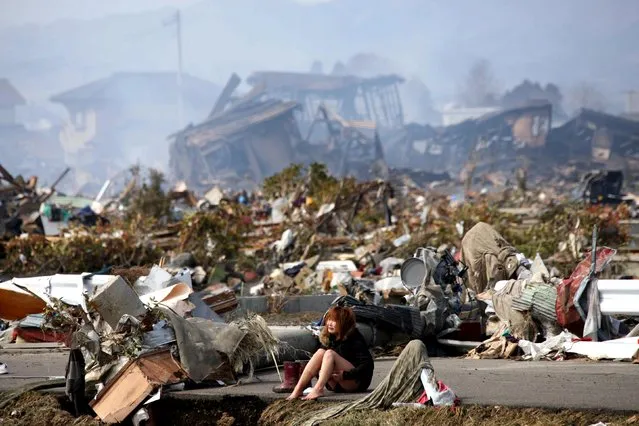
A woman cries while sitting on a road amid the destroyed city of Natori, Miyagi Prefecture in northern Japan March 13, 2011, after a massive earthquake and tsunami that are feared to have killed more than 10,000 people. (Photo by Asahi Shimbun/Reuters)

A woman cries while sitting on a road amid the destroyed city of Natori, Miyagi Prefecture in northern Japan March 13, 2011, after a massive earthquake and tsunami. Five years on from the tsunami that triggered meltdowns at Japan's Fukushima nuclear plant, the page is anything but turned. A magnitude 9 earthquake and towering tsunami on March 11, 2011 killed nearly 16,000 people along Japan's northeastern coast and left more than 2,500 missing. The 10-metre (33-foot) tsunami swept away everything in its path, including houses, ships, cars and farm buildings. (Photo by Asahi Shimbun/Reuters)
Details
09 Mar 2016 12:40:00
Miniature pig “Nueffel” is walked in a park in Hanover, Germany, 14 April 2016. (Photo by Sebastian Gollnow/EPA)

Miniature pig “Nueffel” is walked in a park in Hanover, Germany, 14 April 2016. (Photo by Sebastian Gollnow/EPA)
Details
17 Apr 2016 10:02:00
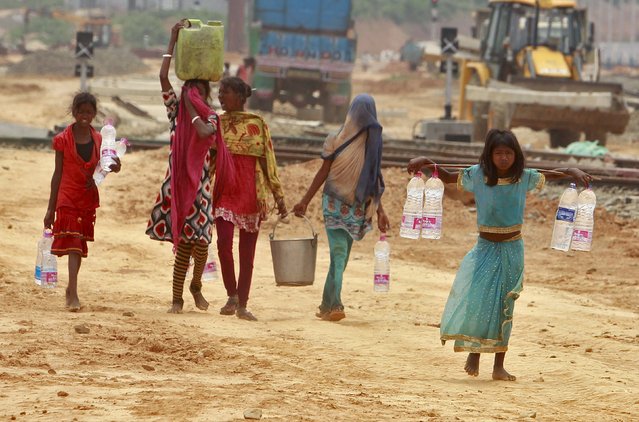
Young girls carry containers filled with drinking water beside the railway station in Agartala, India, April 20, 2016. (Photo by Jayanta Dey/Reuters)

Young girls carry containers filled with drinking water beside the railway station in Agartala, India, April 20, 2016. (Photo by Jayanta Dey/Reuters)
Details
25 Apr 2016 09:10:00
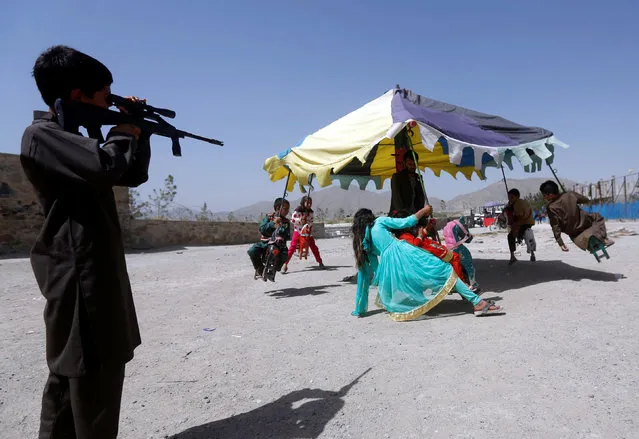
An Afghan boy looks through the scope of a toy gun, as other children ride on swings during the first day of the Muslim holiday of Eid al-Fitr, which marks the end of the holy month of Ramadan, in Kabul, Afghanistan June 25, 2017. (Photo by Omar Sobhani/Reuters)

An Afghan boy looks through the scope of a toy gun, as other children ride on swings during the first day of the Muslim holiday of Eid al-Fitr, which marks the end of the holy month of Ramadan, in Kabul, Afghanistan June 25, 2017. (Photo by Omar Sobhani/Reuters)
Details
11 Oct 2017 07:30:00