Loading...
Done
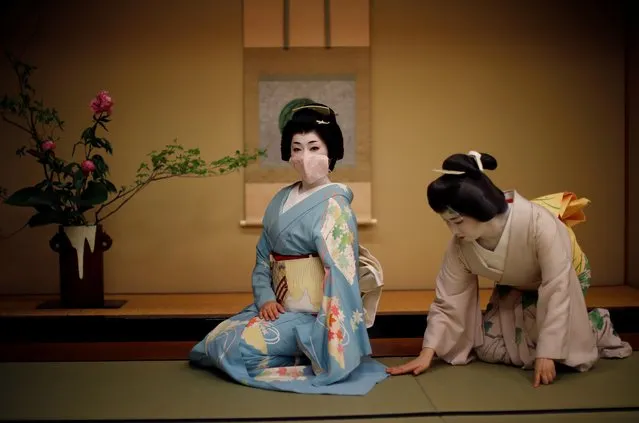
Mayu adjusts Koiku’s kimono, as Koiku wears a protective face mask while posing for a photograph, before they work at a party where they will entertain with other geisha at Japanese luxury restaurant Asada in Tokyo, Japan, June 23, 2020. The coronavirus pandemic has made Tokyo's geisha fear for their centuries-old profession as never before. Though the number of geisha - famed for their witty conversation, beauty and skill at traditional arts - has been falling for years, they were without work for months due to Japan's state of emergency and now operate under awkward social distancing rules. Engagements are down 95 percent, and come with new rules: no pouring drinks for customers or touching them even to shake hands, and sitting 2 meters apart. Masks are hard to wear with their elaborate wigs, so they mostly don't. “I was just full of anxiety”, said Mayu, 47. “I went through my photos, sorted my kimonos ... The thought of a second wave is terrifying”. (Photo by Kim Kyung-Hoon/Reuters)

Mayu adjusts Koiku’s kimono, as Koiku wears a protective face mask while posing for a photograph, before they work at a party where they will entertain with other geisha at Japanese luxury restaurant Asada in Tokyo, Japan, June 23, 2020. (Photo by Kim Kyung-Hoon/Reuters)
Details
23 Jul 2020 00:03:00
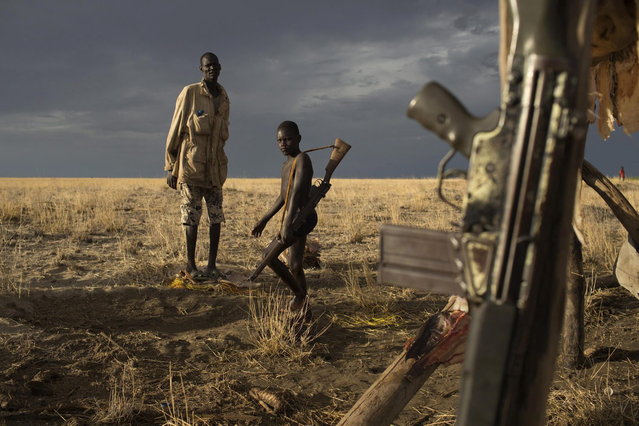
A Turkana man and a boy carrying a gun look on as a G3 battle rifle hangs from a structure used to dry fish at a fishing camp on the shores of Lake Turkana, some kilometres from Todonyang near the Kenya-Ethiopia border in northwestern Kenya October 12, 2013. (Photo by Siegfried Modola/Reuters)

A Turkana man and a boy carrying a gun look on as a G3 battle rifle hangs from a structure used to dry fish at a fishing camp on the shores of Lake Turkana, some kilometres from Todonyang near the Kenya-Ethiopia border in northwestern Kenya October 12, 2013The Turkana are traditionally nomadic pastoralists, but they have seen the pasture that they need to feed their herds suffer from recurring droughts and many have turned to fishing. However, Lake Turkana is overfished, and scarcity of food and pastureland is fuelling long-standing conflict with Ethiopian indigenous Dhaasanac, who have seen grazing grounds squeezed by large-scale government agricultural schemes in southern Ethiopia. The Dhaasanac now venture ever deeper into Kenyan territory in search of fish and grass, clashing with neighbours. Fighting between the communities has a long history, but the conflict has become ever more fatal as automatic weapons from other regional conflicts seep into the area. While the Turkana region is short of basics like grass and ground-water, it contains other resources including oil reserves and massive, newly discovered underground aquifers. (Photo by Siegfried Modola/Reuters)

Details
05 Dec 2013 12:08:00
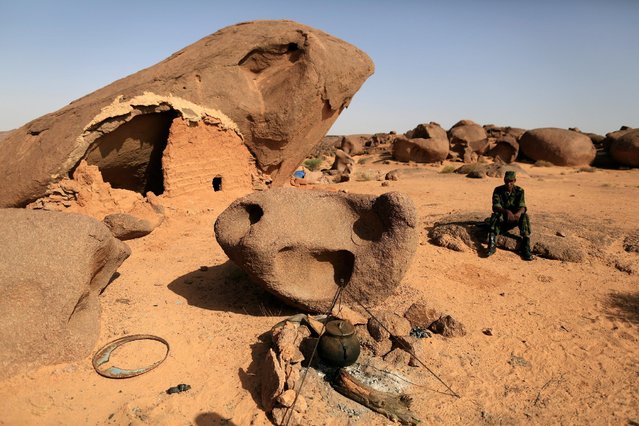
A Polisario fighter sits on a rock at a forward base on the outskirts of Tifariti, Western Sahara, September 9, 2016. At a rocky outpost in Western Sahara, a new generation of soldiers who have never known war are mobilising as tensions resurface in one of Africa's oldest disputes after a quarter century of uneasy peace. Young Sahrawi troops man new desert posts for the Polisario Front, which for more than 40 years has sought independence for the vast desert region - first in a guerrilla war against Morocco and then politically since a ceasefire deal in 1991. Now a standoff with Morocco, which controls the majority of Western Sahara, is renewing pressure for a diplomatic solution to ensure foot soldiers don't return to fighting as the last generation of commanders once did. The standoff since August has brought Moroccan and Polisario forces within 200 metres of each other in a narrow strip of land near the Mauritanian border. Rich in phosphate, Western Sahara has been contested since 1975 when Spanish colonial powers left. Morocco claimed the territory and fought the 16-year war with Polisario. (Photo by Zohra Bensemra/Reuters)

A Polisario fighter sits on a rock at a forward base on the outskirts of Tifariti, Western Sahara, September 9, 2016. At a rocky outpost in Western Sahara, a new generation of soldiers who have never known war are mobilising as tensions resurface in one of Africa's oldest disputes after a quarter century of uneasy peace. (Photo by Zohra Bensemra/Reuters)
Details
04 Nov 2016 12:09:00
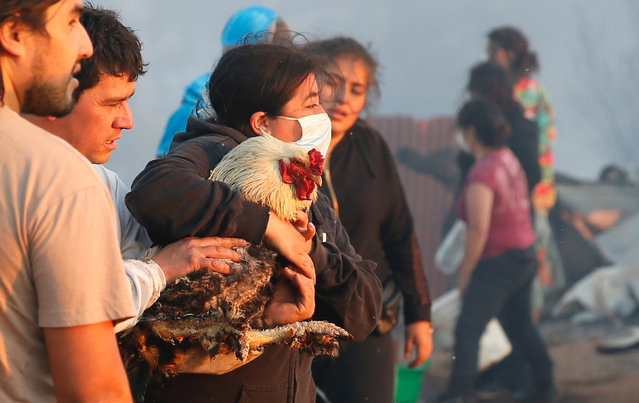
A woman holds a rooster burned during a fire on a hill, where more than 100 homes were burned due to a forest fire but there have been no reports of death, local authorities said in Valparaiso, Chile January 2, 2017. (Photo by Rodrigo Garrido/Reuters)

A woman holds a rooster burned during a fire on a hill, where more than 100 homes were burned due to a forest fire but there have been no reports of death, local authorities said in Valparaiso, Chile January 2, 2017. (Photo by Rodrigo Garrido/Reuters)
Details
03 Jan 2017 11:09:00
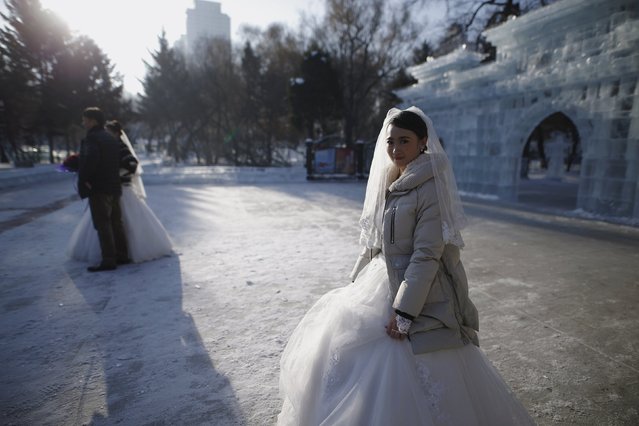
Newly-wed couples attend their group wedding ceremony which was held as part of the Harbin International Ice and Snow Festival in the northern city of Harbin, Heilongjiang province January 6, 2016. (Photo by Aly Song/Reuters)

Newly-wed couples attend their group wedding ceremony which was held as part of the Harbin International Ice and Snow Festival in the northern city of Harbin, Heilongjiang province January 6, 2016. As many as 15 couples attend this mass wedding ceremony. (Photo by Aly Song/Reuters)
Details
08 Jan 2016 08:02:00
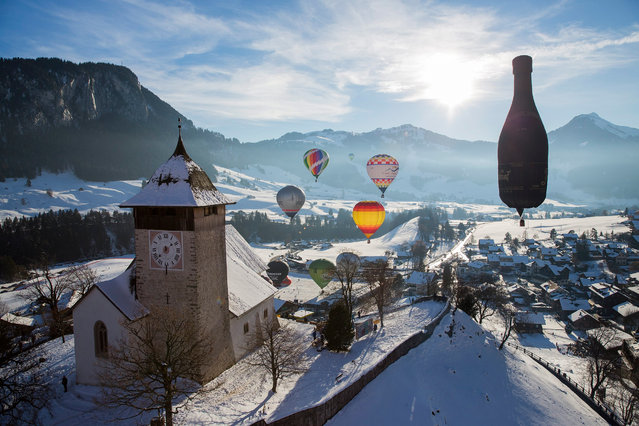
Hot air balloons take part in the 38th International Balloon Festival of Chateau-d'oex, Switzerland, 23 January 2016. The festival takes place from 23 to 31 January. (Photo by Cyril Zingaro/EPA)

Hot air balloons take part in the 38th International Balloon Festival of Chateau-d'oex, Switzerland, 23 January 2016. For nine days balloonists from 15 countries take part in the ballooning event in the Swiss mountain resort famous for ideal flight conditions due to an exceptional microclimate. The festival takes place from 23 to 31 January. (Photo by Cyril Zingaro/EPA)
Details
24 Jan 2016 15:23:00
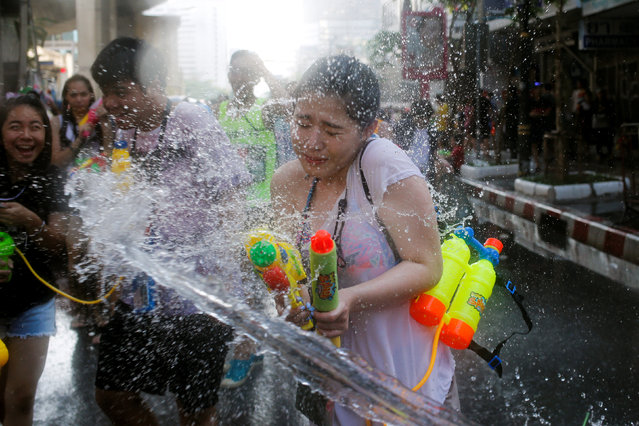
A reveller reacts during a water fight at Songkran Festival celebrations in Bangkok April 13, 2016. (Photo by Jorge Silva/Reuters)

A reveller reacts during a water fight at Songkran Festival celebrations in Bangkok April 13, 2016. The three-day Songkran Festival starts on 13-15 April annually and is celebrated with splashing water and putting powder on each others faces as a symbolic sign of cleansing and washing away the sins from the old year. (Photo by Jorge Silva/Reuters)
Details
14 Apr 2016 12:18:00
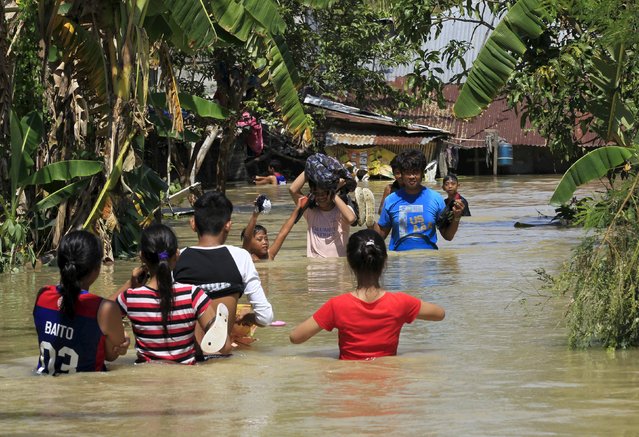
Residents wade across floodwaters after a week typhoon Koppu battered Calumpit town, Bulacan province, north of Manila October 24, 2015. Typhoon Koppu, that dumped heavy rains on the northern Philippines, killing 58 people as it flattened houses and destroyed crops, was petering out on Wednesday, weather officials said. (Photo by Romeo Ranoco/Reuters)

Residents wade across floodwaters after a week typhoon Koppu battered Calumpit town, Bulacan province, north of Manila October 24, 2015. Typhoon Koppu, that dumped heavy rains on the northern Philippines, killing 58 people as it flattened houses and destroyed crops, was petering out on Wednesday, weather officials said. (Photo by Romeo Ranoco/Reuters)
Details
27 Oct 2015 08:02:00