Loading...
Done
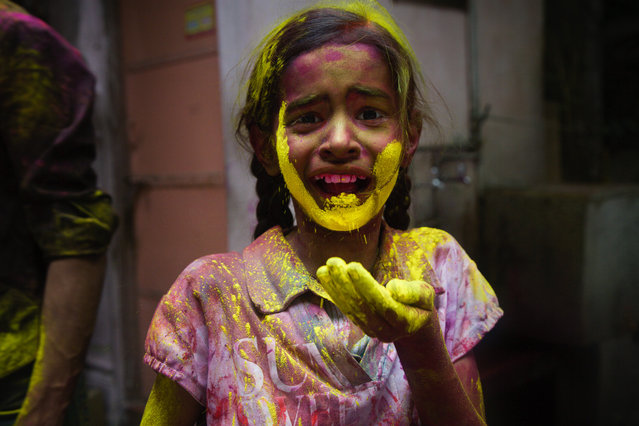
Jaipur, India, 2013, (Photo by Takehiko Yagi/The Guardian)

Takehiko Yagi is a rising star in Japanese photography, and his vibrant pictures of the Hindu spring festival of Holi won the Grand Prize at the fourth annual Nikkei National Geographic Photo Prize. Diving into the Colors of Holi is his first exhibition in the US, on show at Foto Care Gallery in New York until 28 September, 2016. Here: Jaipur, India, 2013, (Photo by Takehiko Yagi/The Guardian)
Details
23 Sep 2016 09:05:00
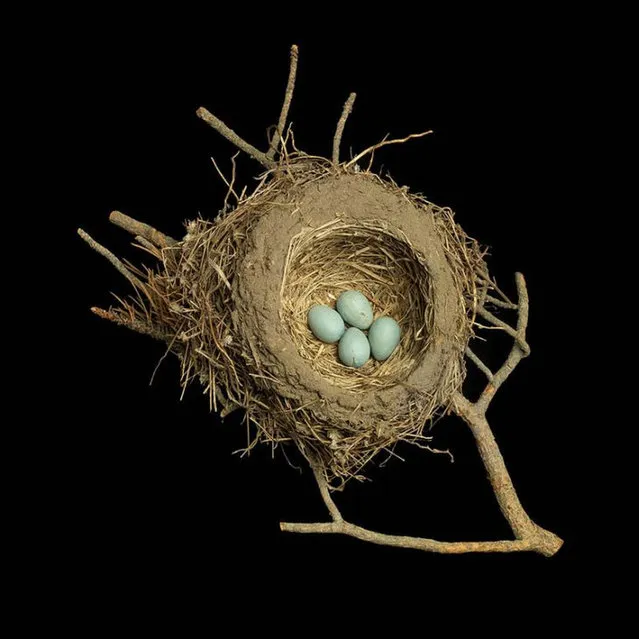
Bird Nest By Sharon Beals

Sharon Beals is a San Francisco based photographer who has photographed nest and eggs specimens collected over the last two centuries at The California Academy of Sciences, The Museum of Vertebrate Zoology, and The Western Foundation of Vertebrate Zoology. While few nests are collected today, these nests and eggs are used for research, providing important information about their builder’s habitats, DNA, diseases and other survival issues.
Details
20 Aug 2013 09:49:00
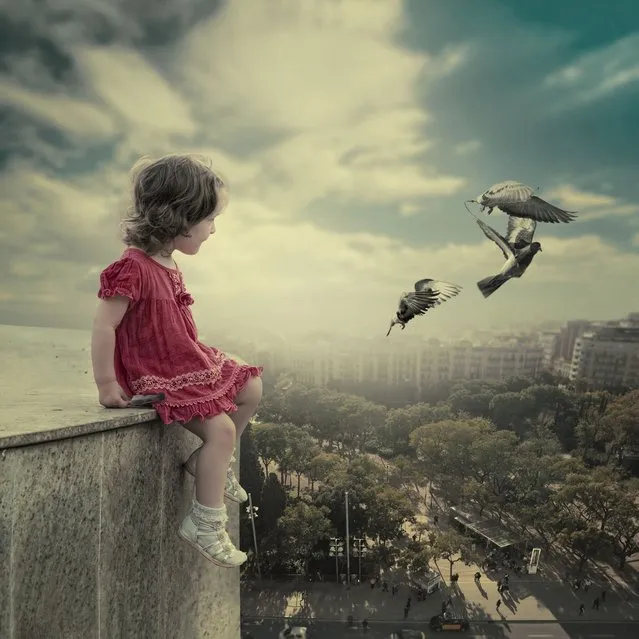
“The observer”. (Photo by Ionut Caras)

“Photo mechanic” and photographer Ionut Caras creates surreal concepts by combining the everyday with the unthinkable. His use of light and tone takes the viewer into a bizarre and beautiful world only seen in storybooks and our dreams. Photo: “The observer”. (Photo by Ionut Caras)
Details
03 Jun 2015 08:49:00
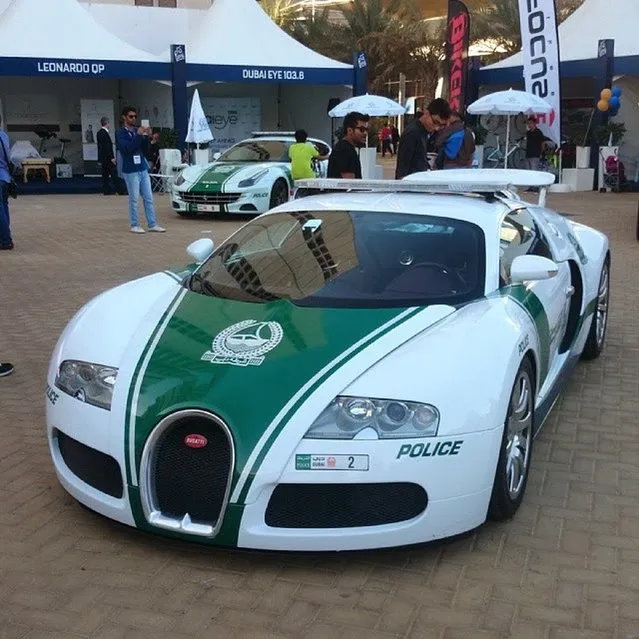
The Bugatti Veyron Of The Dubai Police

The first images of the 1001bhp monster were released via facebook on Thursday. Now the force has also published a video of the car, which joins the likes of McLaren, Lamborghini and Ferrari in Dubai Police’s fleet of supercars. The police have said that it is using supercars to show the world how progressive Dubai is and to demonstrate why it is the right city to host major events such as Expo 2020.
Details
08 Feb 2014 11:02:00
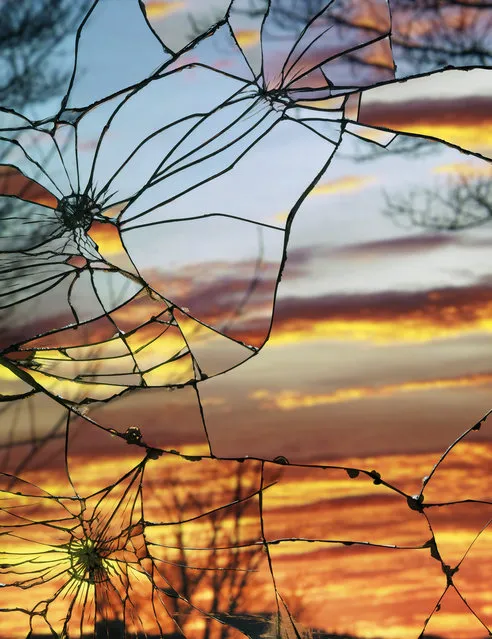
Broken Mirrors By  Bing Wright

We pleased to present Broken Mirror/Evening Sky, a new series of striking landscape photographs by New York based artist Bing Wright. Departing from his usual pared down images in grey palettes, Wright offers us moving skyscape photographs of richly colored sunsets reflected onto broken mirrors. This new body of work marks his first return to color photography in almost a decade.
Details
01 Mar 2014 11:35:00


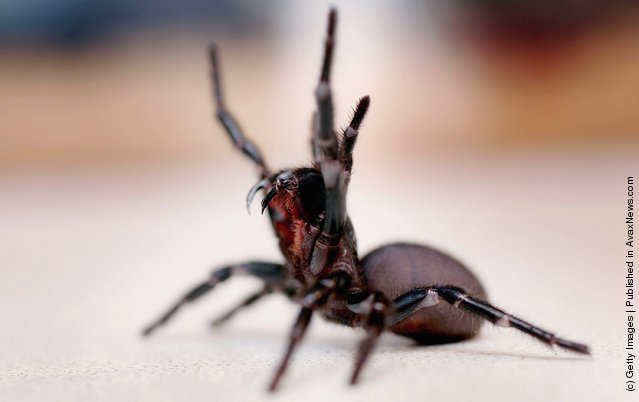
A Funnel Web spider is pictured at the Australian Reptile Park January 23, 2006 in Sydney, Australia. The Funnel Web is one of Australia's deadliest animals, with a venom that is packed with at least 40 different toxic proteins. A bite from a Funnel Web causes massive electrical over-load in the body's nervous system. Finally, fatalities occur from either heart attack or a pulmonary oedema, where the capillaries around the lungs begin to leak fluid and the patient effectively drowns. Death can come as quickly as two hours after a bite if no medical treatment is sought. Due to advances in anti-venom, there has been no death from a Funnel Web bite in Australia since 1980. Australia is home to some of the most deadly and poisonous animals on earth. (Photo by Ian Waldie/Getty Images)
Details
25 Apr 2011 07:49:00
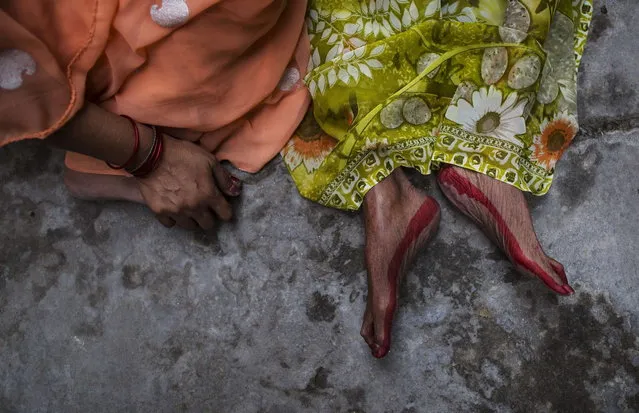
A relative (L) of Champa Devi, 88, sits next to her body, minutes after her death at Mukti Bhavan (Salvation House) at Varanasi, in the northern Indian state of Uttar Pradesh, June 21, 2014. (Photo by Danish Siddiqui/Reuters)

A relative (L) of Champa Devi, 88, sits next to her body, minutes after her death at Mukti Bhavan (Salvation House) at Varanasi, in the northern Indian state of Uttar Pradesh, June 21, 2014. The city of Varanasi, on the banks of the River Ganges, is widely considered Hinduism's holiest city and many Hindus believe that dying there and having their remains scattered in the Ganges allows their soul to escape a cycle of death and rebirth, attaining “moksha” or salvation. “Mukti Bhavan” or “Salvation House”, is a charity-run hostel that caters for people who wish to come to Varanasi to die. Guests can normally stay up to two weeks after which, if they haven't yet passed away, they are gently asked to leave. (Photo by Danish Siddiqui/Reuters)
Details
24 Jul 2014 12:32:00
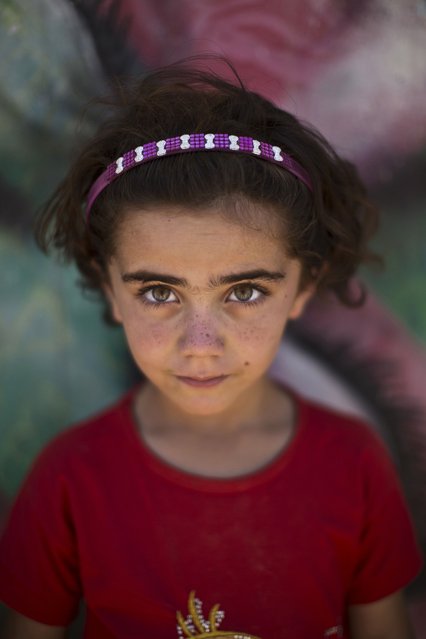
In this Tuesday, July 29, 2014, photo, Syrian refugee Samah, 5, poses for a picture at Zaatari refugee camp, near the Syrian border, in Mafraq, Jordan. More than 2.8 million Syrian children inside and outside the country – nearly half the school-aged population – cannot get an education because of the devastation from the civil war, according to the U.N. children's agency, UNICEF. (Photo by Muhammed Muheisen/AP Photo)

In this Tuesday, July 29, 2014, photo, Syrian refugee Samah, 5, poses for a picture at Zaatari refugee camp, near the Syrian border, in Mafraq, Jordan. More than 2.8 million Syrian children inside and outside the country – nearly half the school-aged population – cannot get an education because of the devastation from the civil war, according to the U.N. children's agency, UNICEF. That number is likely higher, as UNICEF can't count the children whose parents didn't register with the United Nations refugee agency. (Photo by Muhammed Muheisen/AP Photo)
Details
03 Aug 2014 07:46:00