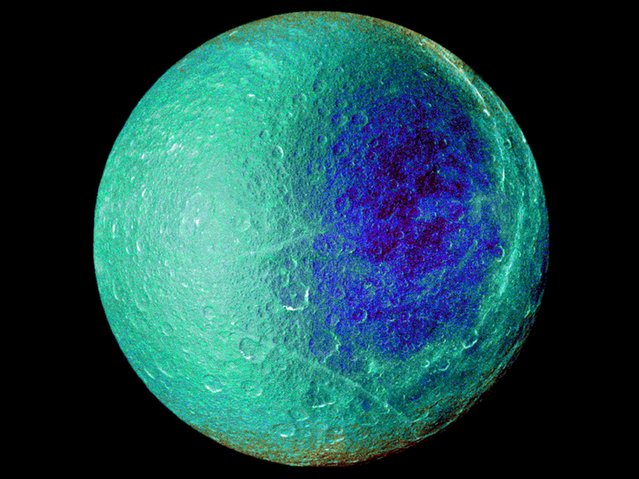
Hemispheric color differences on Saturn's moon Rhea are apparent in this false-color view from NASA's Cassini spacecraft in this March 2, 2010 file photo. (Photo by Reuters/NASA/JPL/SSI)
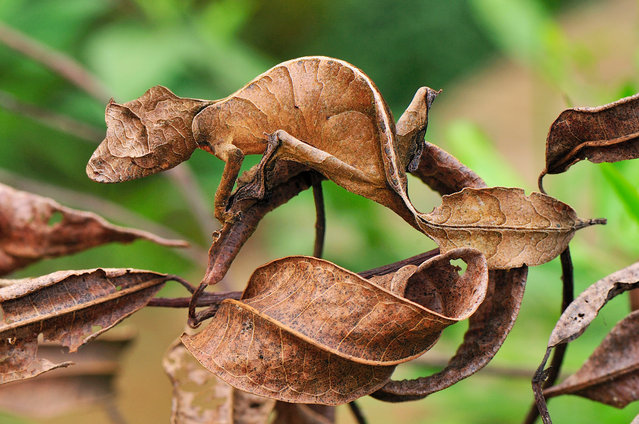
Is it a leaf? Is it tree bark? No, it’s the Satanic leaf-tailed gecko. Cleverly disguised as a rotting leaf, Madagascar’s camouflage king has red eyes, pointy horns and a taste for night hunting: it’s nature’s most devilish deceiver. The twisted body and veiny skin echo the detail of a dry leaf, which ensures the gecko blends in with its forest home. The mottled tail appears to have sections missing, as though it has withered over time. This mini-monster epitomises survival of the fittest, having adapted gradually to become today’s extraordinary leaf impersonator. (Photo by Thomas Marent/ARDEA)
Sandstone sculpted by water and wind erosion is seen in a slot canyon, one of hundreds that surround Lake Powell near Page, Arizona, May 26, 2015. Lake Powell on the Colorado River provides water for Nevada, Arizona and California. A severe drought in recent years, combined with withdrawals that many believe are not sustainable, has reduced its levels to only about 42 percent of its capacity. (Photo by Rick Wilking/Reuters)
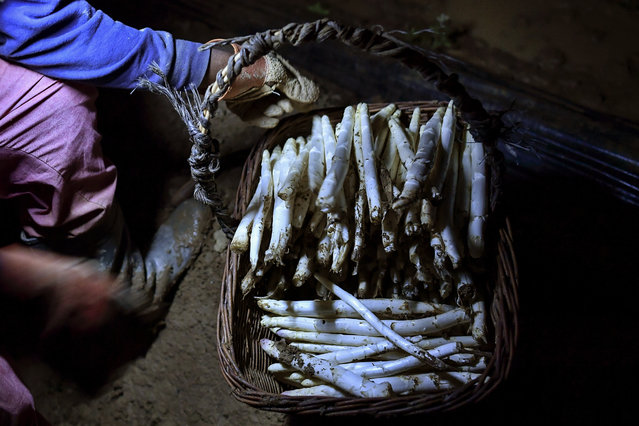
In this Thursday, May 31, 2018 photo, a temporary worker using a lantern collects white asparagus from a field in Caparroso, around 85 km (52 miles) from Pamplona, northern Spain. Dubbed the “white gold” of these northern Spanish farms because of their color and the high price they fetch in markets and restaurants around the world, the stringy delicacy is planted every fall and picked each year between April and June, at the height of the spring. (Photo by Alvaro Barrientos/AP Photo)
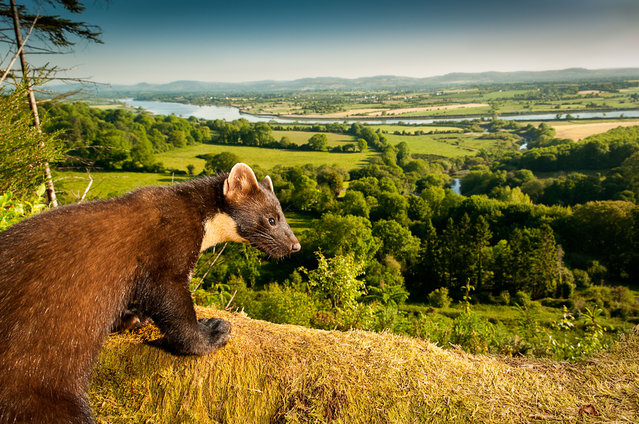
A pine marten – one of a few wild mammals doing well in Britain (although they number just 3,700). A fifth of the country’s wild mammals are at high risk of extinction, research shows. (Photo by Maurice Flynn/The Mammal Society)
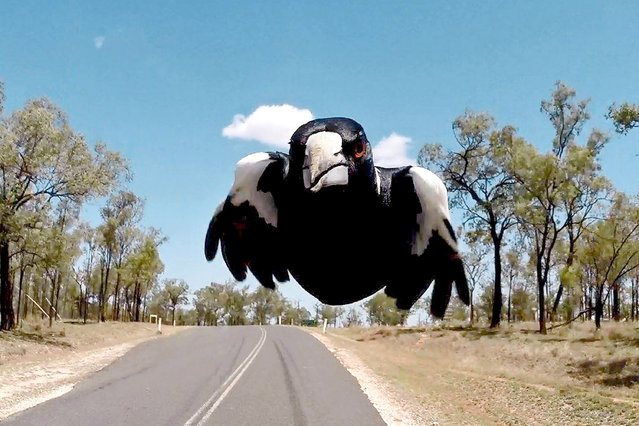
This perfectly-timed GoPro snap captures the moment an angrymagpiecame within inches of a biker, as swooping season takes hold in Australia. The notoriously aggressive bird can be seen flying with its wings tucked in so it looks exactly like a torpedo in the magnificent photograph from Middlemount, Queensland. Retail businesswoman Monique Newton, 53 was riding pillion with a friend when she spied the divebombing bird – but rather than speed off, they slowed down to capture it up close. (Photo by Monique Newton/Caters News Agency)