Loading...
Done
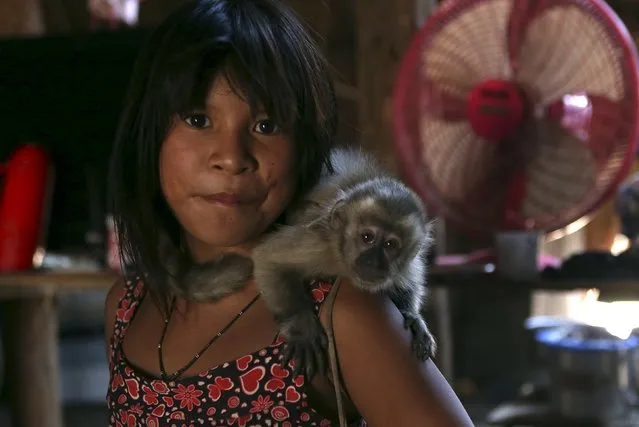
An indigenous girl carries a monkey inside her house in their village at Xingu national park in Mato Grosso, Brazil, October 2, 2015. (Photo by Paulo Whitaker/Reuters)

An indigenous girl carries a monkey inside her house in their village at Xingu national park in Mato Grosso, Brazil, October 2, 2015. The Kamayura tribe consists of around 300 people, and is one of the 16 ethnic groups living in the indigenous Xingu national park. (Photo by Paulo Whitaker/Reuters)
Details
18 Oct 2015 08:03:00
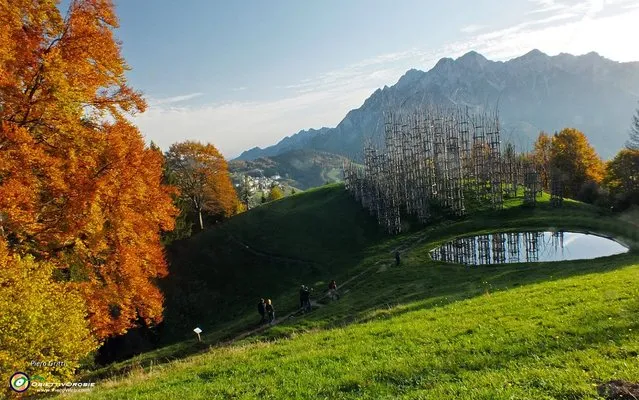
Cathedral Made From Trees By Giuliano Mauri

Italian artist Guiliano Mauri is the father of this spectacular Cattedrale Vegetale (Tree Cathedral), a unique building created out of rows of real living trees. Located at the foot of Mount Arera on the outskirts of Bergamo in Northern Italy, the cathedral is an ever-changing building that will be fully formed over the course of decades – when the trees outgrow their supporting columns and become a piece of natural architecture.
Details
02 Mar 2015 15:31:00
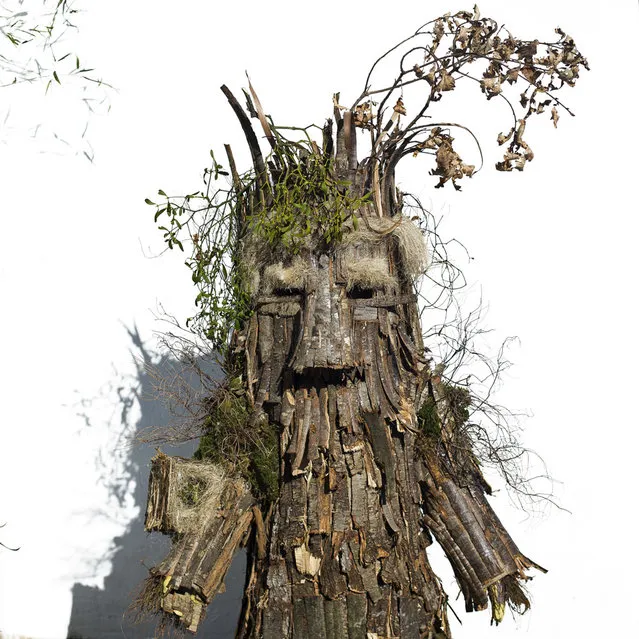
A man dressed as a  “Trapajon”, representing entities of nature, poses for a picture after taking part in the Vijanera Festival in Silio, northern Spain, Sunday, Jan. 6, 2013. The Vijanera masquerade, of pre-Roman origin, is the first carnival of the year in Europe symbolizing the triumph of good over evil and involving the participation of crowds of residents wearing different masks, animal skins and brightly colored clothing with its own complex function and symbolism and becoming the living example of the survival of archaic cults to nature. (Photo by Daniel Ochoa de Olza/AP Photo)

A man dressed as a “Trapajon”, representing entities of nature, poses for a picture after taking part in the Vijanera Festival in Silio, northern Spain, Sunday, Jan. 6, 2013. The Vijanera masquerade, of pre-Roman origin, is the first carnival of the year in Europe symbolizing the triumph of good over evil and involving the participation of crowds of residents wearing different masks, animal skins and brightly colored clothing with its own complex function and symbolism and becoming the living example of the survival of archaic cults to nature. (Photo by Daniel Ochoa de Olza/AP Photo)
Details
19 Jan 2013 13:01:00
In this February 5, 2014 photo, Divaldo Aguiar, who plays the part of Pachencho, is carried in a mock coffin during the Burial of Pachencho celebration, through a cemetery in Santiago de Las Vegas, Cuba. Cuban villagers stage a mock funeral and burial of Pachencho, with a living man playing the part of Pachencho, in a boozy festival that has become an annual tradition in this small town near Havana, held each February 5 for the last 30 years. (Photo by Enric Marti/AP Photo)

In this February 5, 2014 photo, Divaldo Aguiar, who plays the part of Pachencho, is carried in a mock coffin during the Burial of Pachencho celebration, through a cemetery in Santiago de Las Vegas, Cuba. Cuban villagers stage a mock funeral and burial of Pachencho, with a living man playing the part of Pachencho, in a boozy festival that has become an annual tradition in this small town near Havana, held each February 5 for the last 30 years. (Photo by Enric Marti/AP Photo)
Details
10 Feb 2014 09:24:00
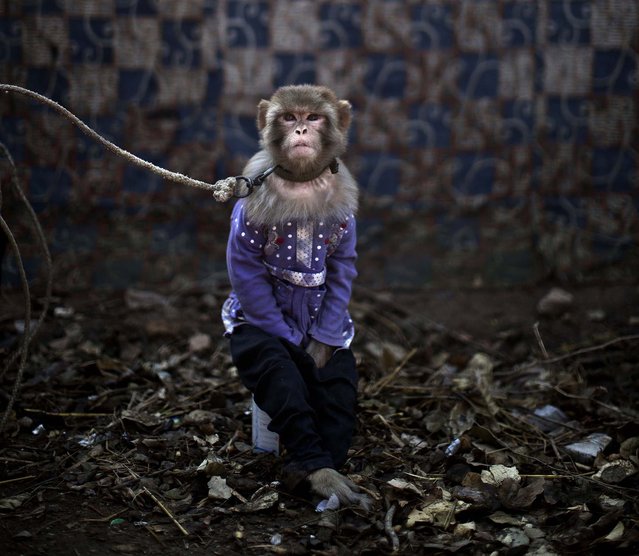
In this Tuesday, February 11, 2014, photo, a trained monkey, that makes a living for her Pakistani owner by performing to a crowd in public and private places, sits held by a leash, in Rawalpindi, Pakistan. For Pakistanis who raise and train the monkeys they are an important source of income in an impoverished country, and they form a strong bond with the animals. The monkeys are usually captured in the wild when they are babies and then trained. A trained monkey can fetch 20,000 to 30,000 rupees ($190 to $285). (Photo by Muhammed Muheisen/Associated Press)

In this Tuesday, February 11, 2014, photo, a trained monkey, that makes a living for her Pakistani owner by performing to a crowd in public and private places, sits held by a leash, in Rawalpindi, Pakistan. For Pakistanis who raise and train the monkeys they are an important source of income in an impoverished country, and they form a strong bond with the animals. The monkeys are usually captured in the wild when they are babies and then trained. A trained monkey can fetch 20,000 to 30,000 rupees ($190 to $285). (Photo by Muhammed Muheisen/Associated Press)
Details
23 Feb 2014 09:50:00
A fan watches the group A World Cup match between Mexico and Brazil via a live broadcast at the FIFA Fan Fest in Sao Paulo, Brazil, Tuesday, June 17, 2014. Forget the French manicure. It’s Brazil during World Cup, and women here want to flaunt their love of the national team with wacky nail designs. (Photo by Dario Lopez-Mills/AP Photo)

A fan watches the group A World Cup match between Mexico and Brazil via a live broadcast at the FIFA Fan Fest in Sao Paulo, Brazil, Tuesday, June 17, 2014. Forget the French manicure. It’s Brazil during World Cup, and women here want to flaunt their love of the national team with wacky nail designs. (Photo by Dario Lopez-Mills/AP Photo)
Details
19 Jun 2014 10:24:00
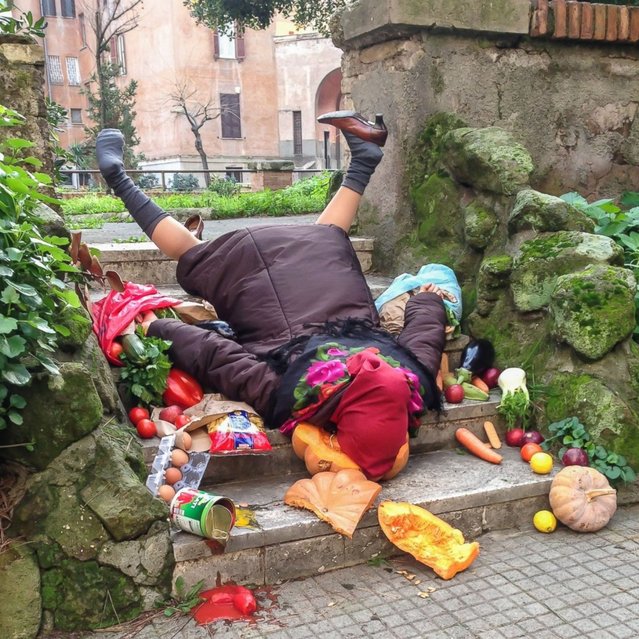
Photographer Sandro Giordoan has created a photo series of people who look like they’ve just taken terrible falls, spilling all their things around them. “Each shot ‘tells’ about worn out characters who, as if a sudden black-out of mind and body took over, let themselves crash with no attempt to save themselves, unable, because of the fatigue of the everyday ‘representation’ of living, oppressed by ‘appearance’ instead of simply ‘existing’,” said Giordano. (Photo by Sandro Giordoan)

Photographer Sandro Giordoan has created a photo series of people who look like they’ve just taken terrible falls, spilling all their things around them. “Each shot ‘tells’ about worn out characters who, as if a sudden black-out of mind and body took over, let themselves crash with no attempt to save themselves, unable, because of the fatigue of the everyday ‘representation’ of living, oppressed by ‘appearance’ instead of simply ‘existing’,” said Giordano. (Photo by Sandro Giordoan)
Details
26 Jun 2014 11:46:00
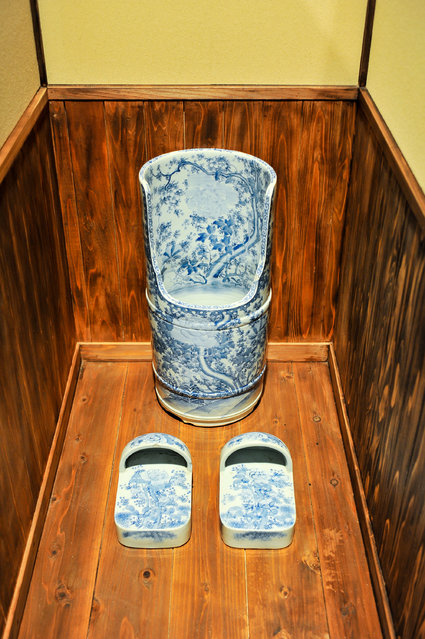
An old toilet is displayed during the “Toilet!? Human Waste and Earth's Future” exhibition at The National Museum of Emerging Science and Innovation – Miraikan on July 1, 2014 in Tokyo, Japan. The exhibition focuses on how the toilet has changed our daily lives and discovers what the most environment-friendly and ideal toilet is. (Photo by Keith Tsuji/Getty Images)

An old toilet is displayed during the “Toilet!? Human Waste and Earth's Future” exhibition at The National Museum of Emerging Science and Innovation – Miraikan on July 1, 2014 in Tokyo, Japan. The exhibition focuses on how the toilet has changed our daily lives and discovers what the most environment-friendly and ideal toilet is. (Photo by Keith Tsuji/Getty Images)
Details
03 Jul 2014 11:34:00