Loading...
Done
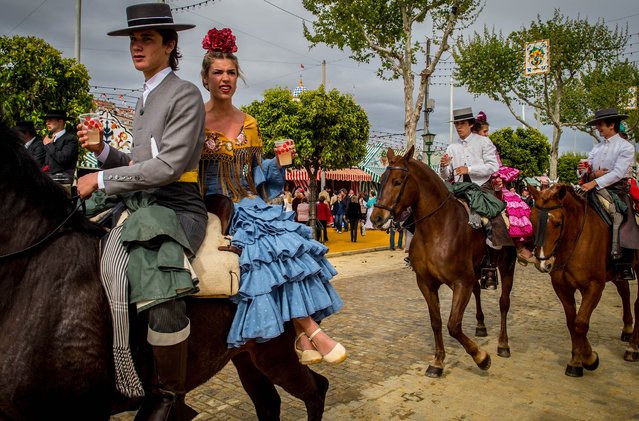
Participants in traditional dress ride on horseback as they enjoy the atmosphere at the Feria de Abril (April's Fair) on April 12, 2016 in Seville, Spain. The Feria de Abril has a history that dates back to 1857 and takes place a fortnight after Easter each year. The origin of the fair was a cattle market but the event quickly turned its goal from commerce to having fun. More than 1 million local and international participants are expected to attend the Feria de Abril. (Photo by David Ramos/Getty Images)

Participants in traditional dress ride on horseback as they enjoy the atmosphere at the Feria de Abril (April's Fair) on April 12, 2016 in Seville, Spain. The Feria de Abril has a history that dates back to 1857 and takes place a fortnight after Easter each year. The origin of the fair was a cattle market but the event quickly turned its goal from commerce to having fun. More than 1 million local and international participants are expected to attend the Feria de Abril. (Photo by David Ramos/Getty Images)
Details
14 Apr 2016 12:25:00
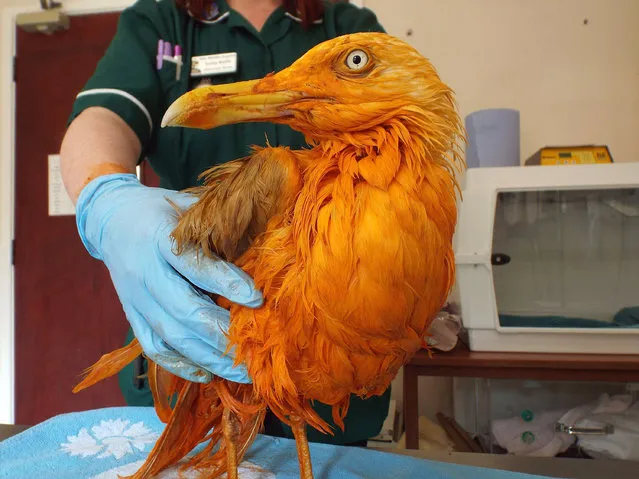
A seagull who turned bright orange after he plunged into a vat of chicken tikka masala in Beckford, England on June 9, 2016. The bird fell into a container of the food while trying to scavenge a piece of meat from a food factory bin in Wales. (Photo by Vale Wildlife Hospital/PA Wire)

A seagull who turned bright orange after he plunged into a vat of chicken tikka masala in Beckford, England on June 9, 2016. The bird fell into a container of the food while trying to scavenge a piece of meat from a food factory bin in Wales. (Photo by Vale Wildlife Hospital/PA Wire)
Details
12 Jun 2016 10:11:00
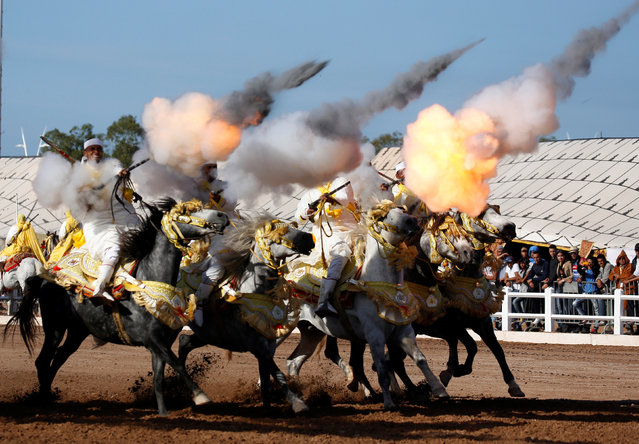
Horse riders perform with guns during the El-Jadida International Horse Show in El-Jadida, south of Casablanca, Morocco, October 15, 2016. (Photo by Youssef Boudlal/Reuters)

Horse riders perform with guns during the El-Jadida International Horse Show in El-Jadida, south of Casablanca, Morocco, October 15, 2016. (Photo by Youssef Boudlal/Reuters)
Details
16 Oct 2016 11:31:00
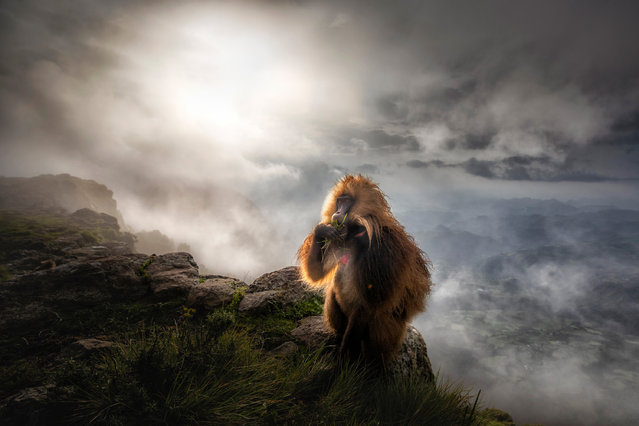
Highly commended, mammals: Gelada after the storm – Marco Gaiotti (Italy). “Gelada baboons are the only monkey species in the world that feed on grasses. They are native to the tableland of Ethiopia. Every morning large family groups wander from their sleeping places in the steep rock face, up to 1,000 metres high, to the feeding grounds at the tablelands. This image clearly depicts their feeding strategy: they pull out bunches of grass, sort the stalks and then lift them to their mouth. This shot was taken towards the end of the rainy season after a heavy storm”. (Photo by Marco Gaiotti/2019 GDT European Wildlife Photographer of the Year)

Highly commended, mammals: Gelada after the storm – Marco Gaiotti (Italy). “Gelada baboons are the only monkey species in the world that feed on grasses. They are native to the tableland of Ethiopia. Every morning large family groups wander from their sleeping places in the steep rock face, up to 1,000 metres high, to the feeding grounds at the tablelands. This image clearly depicts their feeding strategy: they pull out bunches of grass, sort the stalks and then lift them to their mouth. This shot was taken towards the end of the rainy season after a heavy storm”. (Photo by Marco Gaiotti/2019 GDT European Wildlife Photographer of the Year)
Details
31 Oct 2019 00:03:00
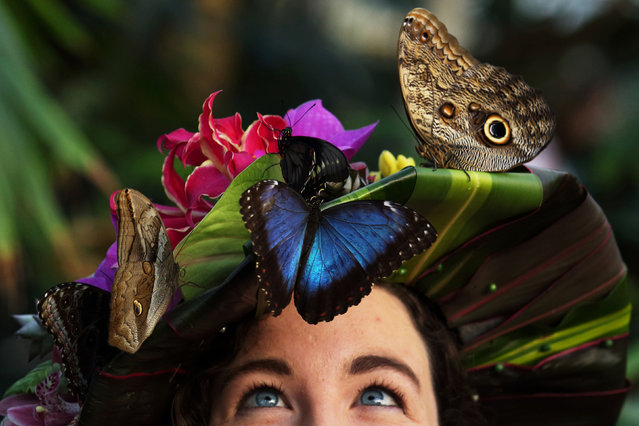
Entomologist Anna Platoni wears a hat made of tropical flowers made by florist Emma Reynolds with a Blue Morpho butterfly on her cheek to mark the opening of Butterflies in the Glasshouse at RHS Garden Wisley, south of London, on Janurary 15, 2016. (Photo by Luke MacGregor/PA Wire/RHS)

Entomologist Anna Platoni wears a hat made of tropical flowers made by florist Emma Reynolds with a Blue Morpho butterfly on her cheek to mark the opening of Butterflies in the Glasshouse at RHS Garden Wisley, south of London, on Janurary 15, 2016. (Photo by Luke MacGregor/PA Wire/RHS)
Details
16 Jan 2016 10:22:00
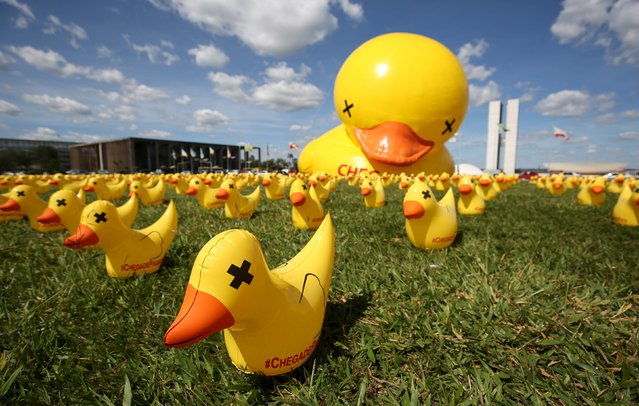
Inflatable dolls in the shape of ducks are seen in front of the National Congress during a protest against tax increases in Brasilia, Brazil, March 29, 2016. The campaign “I will not pay the Duck” is organized by the Federation of Industries of Sao Paulo (FIESP) and uses the duck symbol in reference to industries that pay high taxes. (Photo by Gregg Newton/Reuters)

Inflatable dolls in the shape of ducks are seen in front of the National Congress during a protest against tax increases in Brasilia, Brazil, March 29, 2016. The campaign “I will not pay the Duck” is organized by the Federation of Industries of Sao Paulo (FIESP) and uses the duck symbol in reference to industries that pay high taxes. (Photo by Gregg Newton/Reuters)
Details
30 Mar 2016 11:27:00
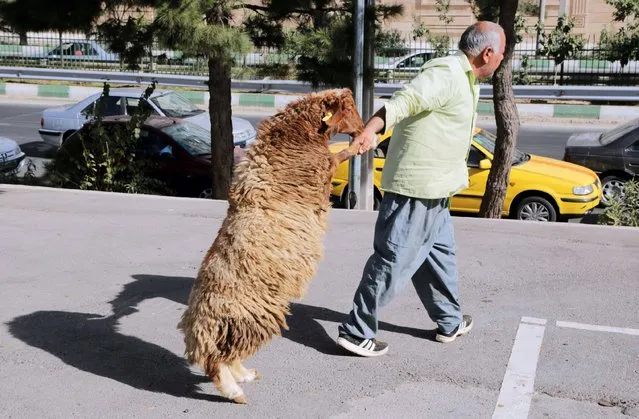
A Iranian man walks with a sheep he bought at a market in the capital Tehran on September 12, 2016, as Muslims mark the first day of the Eid al-Adha (Feast of the Sacrifice) holiday. Muslims across the world celebrate the annual festival of Eid al-Adha, or the festival of sacrifice, which marks the end of the Hajj pilgrimage to Mecca and commemorates prophet Abraham's readiness to sacrifice his son to show obedience to God. (Photo by AFP Photo/Stringer)

A Iranian man walks with a sheep he bought at a market in the capital Tehran on September 12, 2016, as Muslims mark the first day of the Eid al-Adha (Feast of the Sacrifice) holiday. Muslims across the world celebrate the annual festival of Eid al-Adha, or the festival of sacrifice, which marks the end of the Hajj pilgrimage to Mecca and commemorates prophet Abraham's readiness to sacrifice his son to show obedience to God. (Photo by AFP Photo/Stringer)
Details
13 Sep 2016 09:31:00
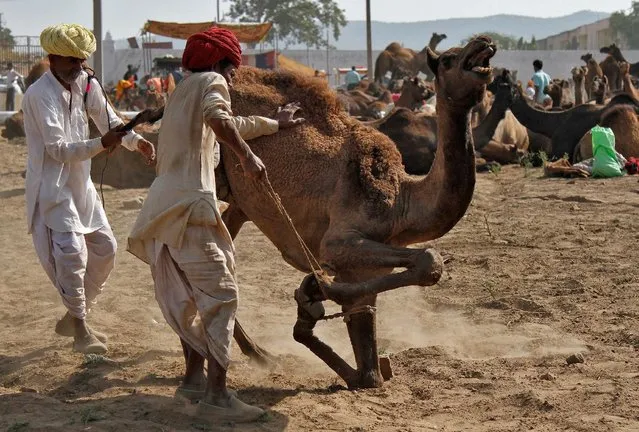
Traders try to control a camel at Pushkar Fair where animals, mainly camels, are brought to be sold and traded in the desert Indian state of Rajasthan November 6, 2016. (Photo by Himanshu Sharma/Reuters)

Traders try to control a camel at Pushkar Fair where animals, mainly camels, are brought to be sold and traded in the desert Indian state of Rajasthan November 6, 2016. (Photo by Himanshu Sharma/Reuters)
Details
07 Nov 2016 12:04:00