Loading...
Done
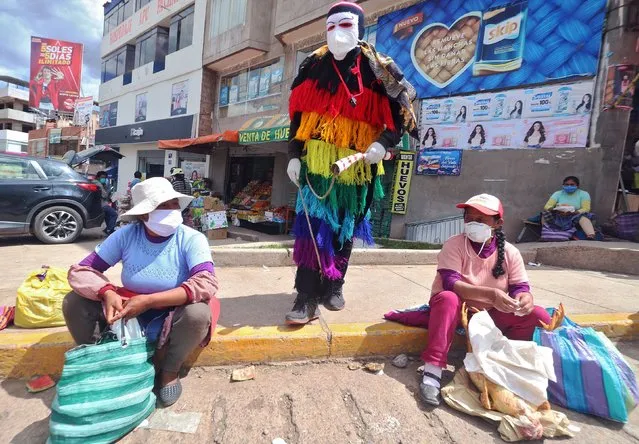
A man dressed in Andean attire as “Ukukus” or “Pabluchas”, a traditional character that acts as a vigilante imposing social order, uses a whip as a threat to force people to maintain their distance and remind them to wear face masks and gloves as a preventive measure against the novel coronavirus COVID-19, in the Vinocanchon market area in San Jeronimo district, close to the Peruvian Andean city of Cusco, on May 2, 2020. The government has identified public markets as major hotspots of the new coronavirus in Peru, where 40,459 confirmed cases and 1,124 deaths were reported on May 1. (Photo by Jose Carlos Angulo/AFP Photo)

A man dressed in Andean attire as “Ukukus” or “Pabluchas”, a traditional character that acts as a vigilante imposing social order, uses a whip as a threat to force people to maintain their distance and remind them to wear face masks and gloves as a preventive measure against the novel coronavirus COVID-19, in the Vinocanchon market area in San Jeronimo district, close to the Peruvian Andean city of Cusco, on May 2, 2020. The government has identified public markets as major hotspots of the new coronavirus in Peru, where 40,459 confirmed cases and 1,124 deaths were reported on May 1. (Photo by Jose Carlos Angulo/AFP Photo)
Details
04 May 2020 00:07:00
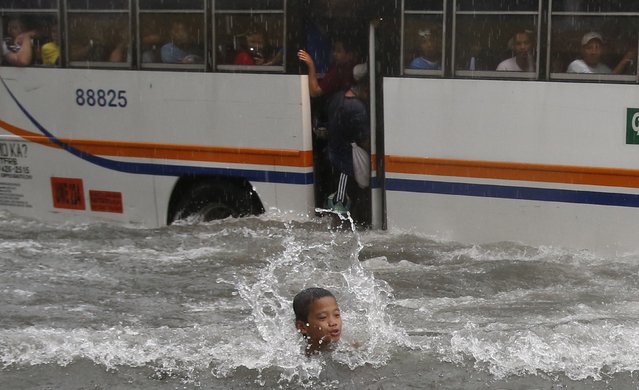
A boy plays at a flooded street in front of a passing bus as tropical storm Fung-Wong battered the Philippine capital Manila September 19, 2014. Heavy rain in the Philippine capital, Manila, caused flooding in many areas on Friday, shutting schools, government offices and financial markets as a tropical storm made landfall to the north. Thousands of residents in low-lying areas were moved to higher ground, officials said, as flood waters rose quickly after the equivalent of half a month's usual rain fell in six hours. (Photo by Erik De Castro/Reuters)

A boy plays at a flooded street in front of a passing bus as tropical storm Fung-Wong battered the Philippine capital Manila September 19, 2014. Heavy rain in the Philippine capital, Manila, caused flooding in many areas on Friday, shutting schools, government offices and financial markets as a tropical storm made landfall to the north. Thousands of residents in low-lying areas were moved to higher ground, officials said, as flood waters rose quickly after the equivalent of half a month's usual rain fell in six hours. (Photo by Erik De Castro/Reuters)
Details
19 Sep 2014 09:39:00
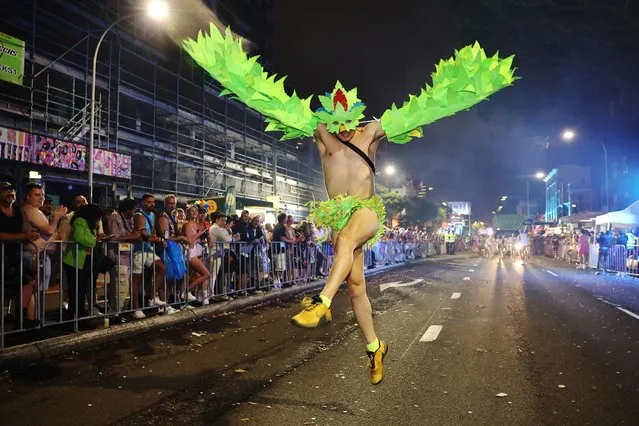
An Emerald City Kickball member makes their way up the parade route on March 02, 2024 in Sydney, Australia. Emerald City Kickball began in 2020 as a project between friends to find a safe and affirming way to create an inclusive community during the COVID-19 pandemic. As a recreational sport that is available to players regardless of skill or experience level, kickball quickly became a vibrant piece of the Sydney LGBT community. Emerald City Kickball has marched in Mardi Gras for four years, receiving nominations or special commendations each year they have marched. The Sydney Gay and Lesbian Mardi Gras parade began in 1978 as a march to commemorate the 1969 Stonewall Riots in New York and has been held every year since to promote awareness of gay, lesbian, bisexual and transgender issues. (Photo by Don Arnold/WireImage)

An Emerald City Kickball member makes their way up the parade route on March 02, 2024 in Sydney, Australia. Emerald City Kickball began in 2020 as a project between friends to find a safe and affirming way to create an inclusive community during the COVID-19 pandemic. As a recreational sport that is available to players regardless of skill or experience level, kickball quickly became a vibrant piece of the Sydney LGBT community. (Photo by Don Arnold/WireImage)
Details
04 Apr 2024 00:47:00
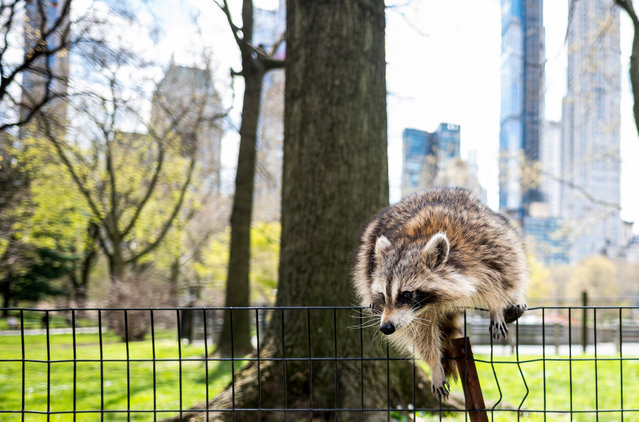
A racoon jumps over a fence in almost deserted Central Park in Manhattan on April 16, 2020 in New York City. Gone are the softball games, horse-drawn carriages and hordes of tourists. In their place, pronounced birdsong, solitary walks and renewed appreciation for Central Park's beauty during New York's coronavirus lockdown. The 843-acre (341-hectare) park – arguably the world's most famous urban green space – normally bustles with human activity as winter turns to spring, but this year due to Covid-19 it's the wildlife that is coming out to play. (Photo by Johannes Eisele/AFP Photo)

A racoon jumps over a fence in almost deserted Central Park in Manhattan on April 16, 2020 in New York City. Gone are the softball games, horse-drawn carriages and hordes of tourists. In their place, pronounced birdsong, solitary walks and renewed appreciation for Central Park's beauty during New York's coronavirus lockdown. The 843-acre (341-hectare) park – arguably the world's most famous urban green space – normally bustles with human activity as winter turns to spring, but this year due to Covid-19 it's the wildlife that is coming out to play. (Photo by Johannes Eisele/AFP Photo)
Details
14 Dec 2025 07:04:00
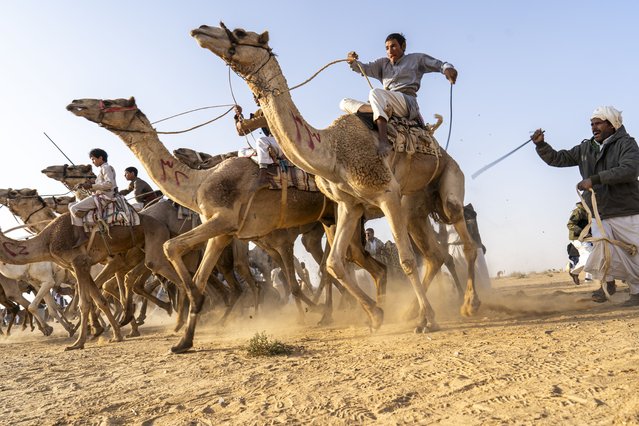
The start of the Al-Sirr camel race on November 19, 2025 in El Hassana, Egypt. The Al-Sirr camel race is one of the most culturally significant and widely celebrated sporting events among the Bedouin communities of Sinai. Every year, Bedouin tribes gather here to hold this traditional race, an event that preserves its authentic heritage. Unlike modern camel races elsewhere, the Bedouin here do not use robotic jockeys or advanced racing technologies. Instead, the camels are ridden by young boys aged approximately 5 to 16, maintaining a long-standing cultural practice. (Photo by Ali Moustafa/Getty Images)

The start of the Al-Sirr camel race on November 19, 2025 in El Hassana, Egypt. The Al-Sirr camel race is one of the most culturally significant and widely celebrated sporting events among the Bedouin communities of Sinai. Every year, Bedouin tribes gather here to hold this traditional race, an event that preserves its authentic heritage. Unlike modern camel races elsewhere, the Bedouin here do not use robotic jockeys or advanced racing technologies. Instead, the camels are ridden by young boys aged approximately 5 to 16, maintaining a long-standing cultural practice. (Photo by Ali Moustafa/Getty Images)
Details
03 Jan 2026 12:49:00
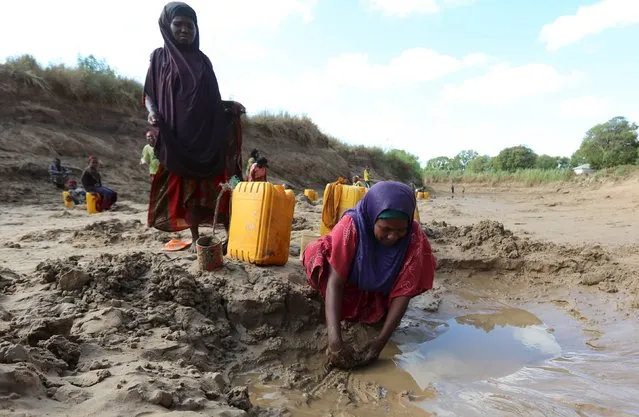
People collect water from shallow wells dug along the Shabelle River bed, which is dry due to drought in Somalia's Shabelle region, March 19, 2016. The cabinet ministers of the federal republic of Somalia have held on Thursday their weekly meeting in Mogadishu and discussed on the drought situation in parts of the country and its humanitarian consequences. Chaired by the acting PM and justice minister Abdullah Ahmed Jama (Ilka-Jir), the cabinet noted with deep concern the the prevailing situation in Somalia, with one of the worst ever drought in two decades. (Photo by Feisal Omar/Reuters)

People collect water from shallow wells dug along the Shabelle River bed, which is dry due to drought in Somalia's Shabelle region, March 19, 2016. The cabinet ministers of the federal republic of Somalia have held on Thursday their weekly meeting in Mogadishu and discussed on the drought situation in parts of the country and its humanitarian consequences. Chaired by the acting PM and justice minister Abdullah Ahmed Jama (Ilka-Jir), the cabinet noted with deep concern the the prevailing situation in Somalia, with one of the worst ever drought in two decades. (Photo by Feisal Omar/Reuters)
Details
20 Mar 2016 11:38:00
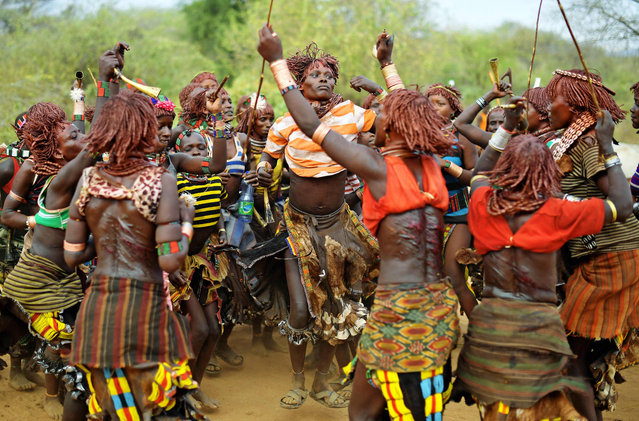
Hamar women dance before a bull jumping ceremony in Ethiopia's southern Omo Valley region near Turmi on September 19, 2016. The Hamar are a Nilotic ethnic group in Ethiopia. The construction of the Gibe III dam, the third largest hydroelectric plant in Africa, and large areas of very “thirsty” cotton and sugar plantations and factories along the Omo river are impacting heavily on the lives of tribes living in the Omo Valley who depend on the river for their survival and way of life. Human rights groups fear for the future of the tribes if they are forced to scatter, give up traditional ways through loss of land or ability to keep cattle as globalisation and development increases. (Photo by Carl De Souza/AFP Photo)

Hamar women dance before a bull jumping ceremony in Ethiopia's southern Omo Valley region near Turmi on September 19, 2016. The Hamar are a Nilotic ethnic group in Ethiopia. The construction of the Gibe III dam, the third largest hydroelectric plant in Africa, and large areas of very “thirsty” cotton and sugar plantations and factories along the Omo river are impacting heavily on the lives of tribes living in the Omo Valley who depend on the river for their survival and way of life. (Photo by Carl De Souza/AFP Photo)
Details
02 Oct 2016 08:45:00
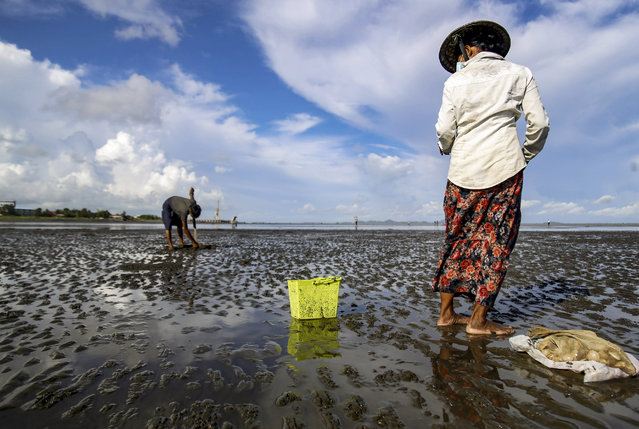
People search for shells on a beach in Sittwe, Rakhine State, Myanmar, 17 September 2020. International Coastal Cleanup Day is observed annually on the third Saturday of September and will occur on 19 September this year. The day was established to encourage global efforts to clean up garbage on beaches and coastal areas and raise awareness on protecting the world's oceans and waterways. According to a report released by the US-based nonprofit environmental advocacy group Ocean Conservancy on 08 September 2020, plastic food packaging topped the list of most common items found in beach trash. Close to five million food wrappers were collected in a single day during the International Coastal Cleanup Day in 2019. An approximate 11 million metric tons of plastic enters the ocean every year according to a 2016 analysis, affecting more than 800 marine species and causing contamination to human food chains and drinking water. (Photo by Nyunt Win/EPA/EFE/Rex Features/Shutterstock)

People search for shells on a beach in Sittwe, Rakhine State, Myanmar, 17 September 2020. International Coastal Cleanup Day is observed annually on the third Saturday of September and will occur on 19 September this year. (Photo by Nyunt Win/EPA/EFE/Rex Features/Shutterstock)
Details
24 Oct 2020 00:05:00