Loading...
Done
A dancer performs as visitors take pictures at an auto show in Tianjin, China April 28, 2016. (Photo by Reuters/Stringer)

A dancer performs as visitors take pictures at an auto show in Tianjin, China April 28, 2016. (Photo by Reuters/Stringer)
Details
15 May 2016 11:47:00
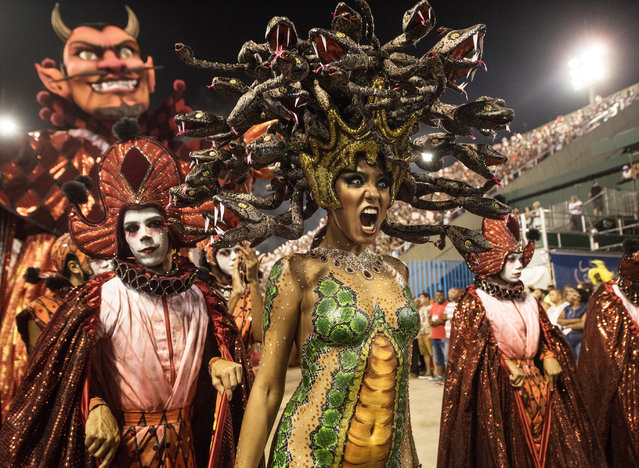
A performer dances during Salgueiro performance at the Rio de Janeiro Carnival at Sambodromo on February 26, 2017 in Rio de Janeiro, Brazil. (Photo by Raphael Dias/Getty Images)

A performer dances during Salgueiro performance at the Rio de Janeiro Carnival at Sambodromo on February 26, 2017 in Rio de Janeiro, Brazil. (Photo by Raphael Dias/Getty Images)
Details
01 Mar 2017 00:06:00
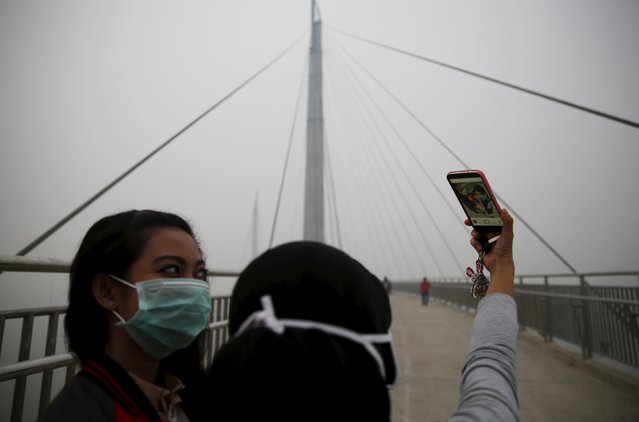
Girls take a selfie at the haze shrouded Batanghari River bridge in Jambi, Indonesia Sumatra island, September 14, 2015. Indonesian islands are blanketed in the so-called “haze”, caused by slash-and-burn clearances on the islands of Sumatra and Borneo, which makes thousands sick, delays flights and pushes air quality to unhealthy levels in neighboring Singapore and Malaysia. (Photo by Reuters/Beawiharta)

Girls take a selfie at the haze shrouded Batanghari River bridge in Jambi, Indonesia Sumatra island, September 14, 2015. Indonesian islands are blanketed in the so-called “haze”, caused by slash-and-burn clearances on the islands of Sumatra and Borneo, which makes thousands sick, delays flights and pushes air quality to unhealthy levels in neighboring Singapore and Malaysia. (Photo by Reuters/Beawiharta)
Details
15 Sep 2015 14:32:00
An aerial view shows the Amazon rainforest at the Bom Futuro National Forest near Rio Pardo in Porto Velho, Rondonia State, Brazil, September 3, 2015. The town of Rio Pardo, a settlement of about 4,000 people in the Amazon rainforest, rises where only jungle stood less than a quarter of a century ago. Loggers first cleared the forest followed by ranchers and farmers, then small merchants and prospectors. (Photo by Nacho Doce/Reuters)

An aerial view shows the Amazon rainforest at the Bom Futuro National Forest near Rio Pardo in Porto Velho, Rondonia State, Brazil, September 3, 2015. The town of Rio Pardo, a settlement of about 4,000 people in the Amazon rainforest, rises where only jungle stood less than a quarter of a century ago. Loggers first cleared the forest followed by ranchers and farmers, then small merchants and prospectors. Brazil's government has stated a goal of eliminating illegal deforestation, but enforcing the law in remote corners like Rio Pardo is far from easy. (Photo by Nacho Doce/Reuters)
Details
08 Nov 2015 08:00:00
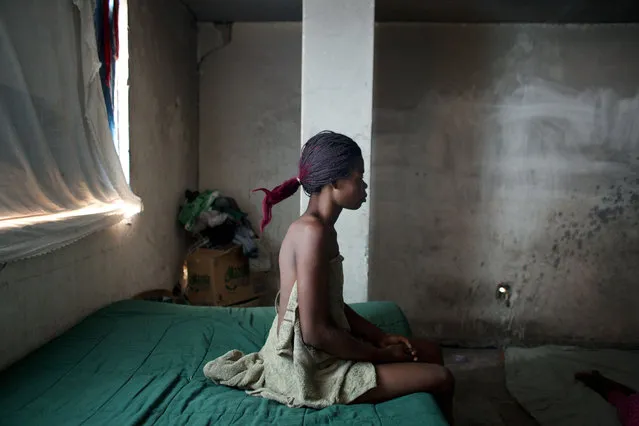
In this June 29, 2015 photo, hairdresser Loavia Bienaime, 30, sits on her bed as she prepares to begin her day in the room her family occupies in an government office building that was damaged in the 2010 earthquake in Port-au-Prince, Haiti. Bienaime's husband, Jimmy Bellefleur, used his skill as an electrician to connect the abandoned building to the power grid, and has repaired broken televisions, fans, and a blender for the family to use. (Photo by Rebecca Blackwell/AP Photo)


In this June 29, 2015 photo, hairdresser Loavia Bienaime, 30, sits on her bed as she prepares to begin her day in the room her family occupies in an government office building that was damaged in the 2010 earthquake in Port-au-Prince, Haiti. Bienaime's husband, Jimmy Bellefleur, used his skill as an electrician to connect the abandoned building to the power grid, and has repaired broken televisions, fans, and a blender for the family to use. (Photo by Rebecca Blackwell/AP Photo)
Details
05 Aug 2015 13:21:00
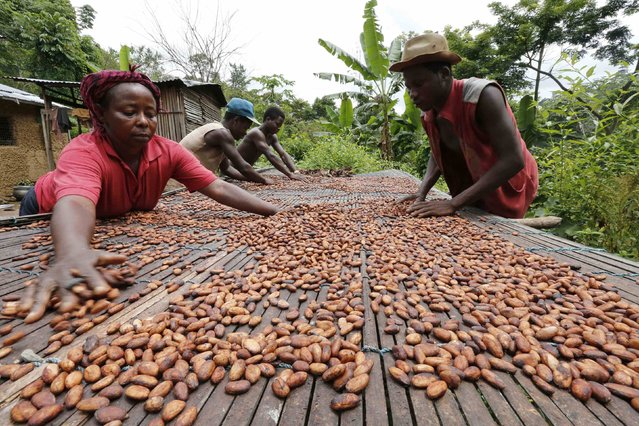
People work with cocoa beans in Enchi June 17, 2014. Picture taken June 17, 2014. Ghana emerged as a success story during the 2000s, when war, political instability and a disastrous liberalization brought Ivory Coast's cocoa sector to its knees. Ghana's output more than tripled from 340,000 tons in the 2001/02 season to a record 1,025,000 tons a decade later. Strict controls cemented its reputation as a producer of top quality beans, establishing a brand that fetches a premium. (Photo by Thierry Gouegnon/Reuters)

People work with cocoa beans in Enchi June 17, 2014. Picture taken June 17, 2014. Ghana emerged as a success story during the 2000s, when war, political instability and a disastrous liberalization brought Ivory Coast's cocoa sector to its knees. Ghana's output more than tripled from 340,000 tons in the 2001/02 season to a record 1,025,000 tons a decade later. Strict controls cemented its reputation as a producer of top quality beans, establishing a brand that fetches a premium. (Photo by Thierry Gouegnon/Reuters)
Details
03 Aug 2014 07:17:00
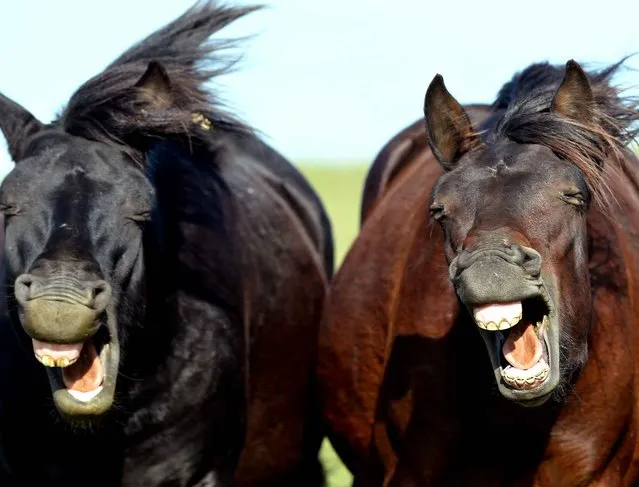
Hucul horses play in the wild meadows and forests near Odrzychowa in southeastern Poland on October 18, 2014. Huculs, a primitive breed of horse, escaped total extinction due to the efforts of scientists and Polish farmers. (Photo by Janek Skarzynski/AFP Photo)

Hucul horses play in the wild meadows and forests near Odrzychowa in southeastern Poland on October 18, 2014. Huculs, a primitive breed of horse, escaped total extinction due to the efforts of scientists and Polish farmers. (Photo by Janek Skarzynski/AFP Photo)
Details
25 Oct 2014 14:08:00
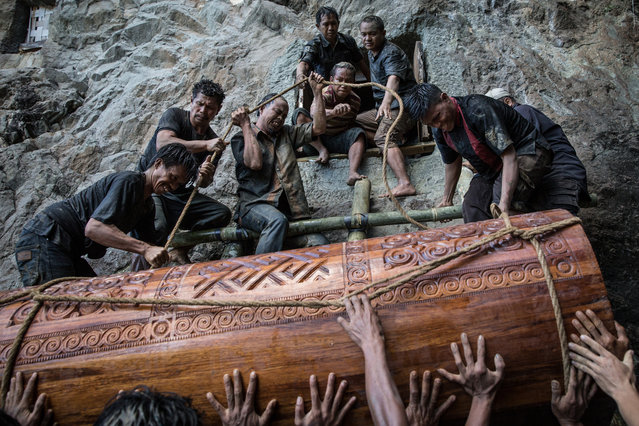
It is said that Torajans are people who “live to die”. For this Indonesian ethnic group, funerals are such extravagant events that they sometimes attract tourists. Families can postpone burials years (and the deceased are considered sick and hosted at home until the funeral) until the family can raise enough money and gather as many relatives as possible. And then it’s a jubilant multiday social event with a parade, dances and animal sacrifices. Agung Parameswara photographed these funerary practices when he traveled to South Sulawesi province, where the Torajans live. But often, their funeral isn’t the last time the dead are seen. In August, crypts are opened, coffins are slid back out and bodies delicately unsheathed. This tender ritual is known as Ma’Nene, which is customarily performed every few years. (Photo by Agung Parameswara/The Washington Post)

It is said that Torajans are people who “live to die”. For this Indonesian ethnic group, funerals are such extravagant events that they sometimes attract tourists. Families can postpone burials years (and the deceased are considered sick and hosted at home until the funeral) until the family can raise enough money and gather as many relatives as possible. And then it’s a jubilant multiday social event with a parade, dances and animal sacrifices. Agung Parameswara photographed these funerary practices when he traveled to South Sulawesi province, where the Torajans live. (Photo by Agung Parameswara/The Washington Post)
Details
06 Oct 2016 09:15:00