Loading...
Done
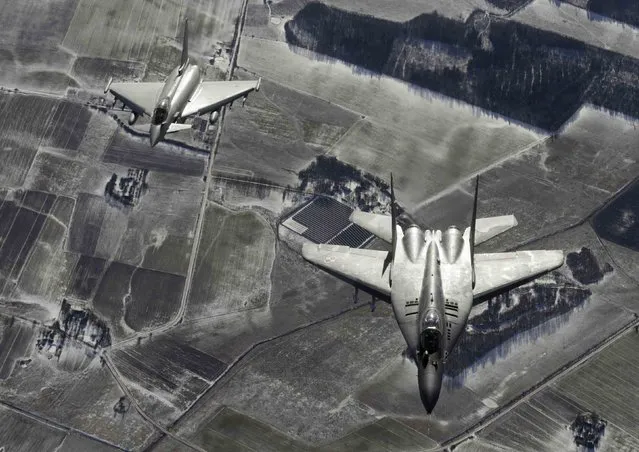
A Polish Air Force MIG-29 fighter (R) and an Italian Air Force Eurofighter Typhoon fighter patrol over the Baltics during a NATO air policing mission from Zokniai air base near Siauliai, Lithuania February 10, 2015. (Photo by Ints Kalnins/Reuters)

A Polish Air Force MIG-29 fighter (R) and an Italian Air Force Eurofighter Typhoon fighter patrol over the Baltics during a NATO air policing mission from Zokniai air base near Siauliai, Lithuania February 10, 2015. (Photo by Ints Kalnins/Reuters)
Details
11 Feb 2015 12:52:00
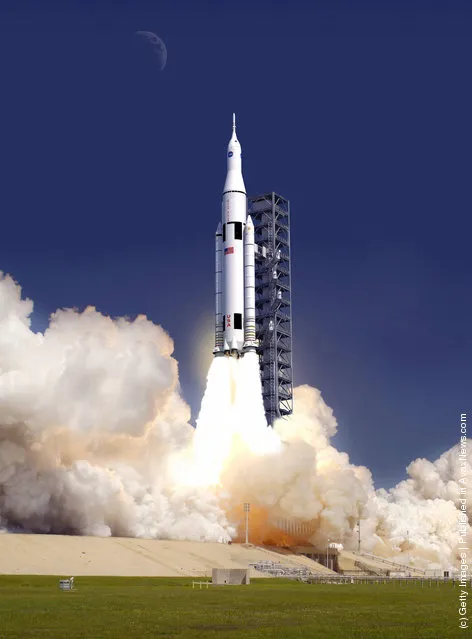
NASA's New Space Launch System

“The Space Launch System, or SLS, is a Shuttle-Derived heavy launch vehicle being designed by NASA, following the cancellation of the Constellation Program, to replace the Space Shuttle after its retirement. The NASA Authorization Act of 2010 envisions the transformation of the Ares I and Ares V vehicle designs into a single launch vehicle usable for both crew and cargo. It is to be upgraded over time with more powerful versions. The proposed SLS is visually similar to the legacy Saturn V booster and in particular the proposed, two-stage, Saturn INT-20”. – Wikipedia

Photo: In this illustration provided by NASA, the design for a new space rocket system, the Space Launch System, is seen. NASA's new rocket design will reportedly cost about $35 billion and be ready to for test launch in 2017. According to NASA, the rocket will be used to carry Orion Multi-Purpose Crew Vehicle as well as cargo and science experiments to earth's orbit, as a backup for the space station and possibly destinations beyond that. (Illustration by NASA via Getty Images)

Details
15 Sep 2011 10:50:00
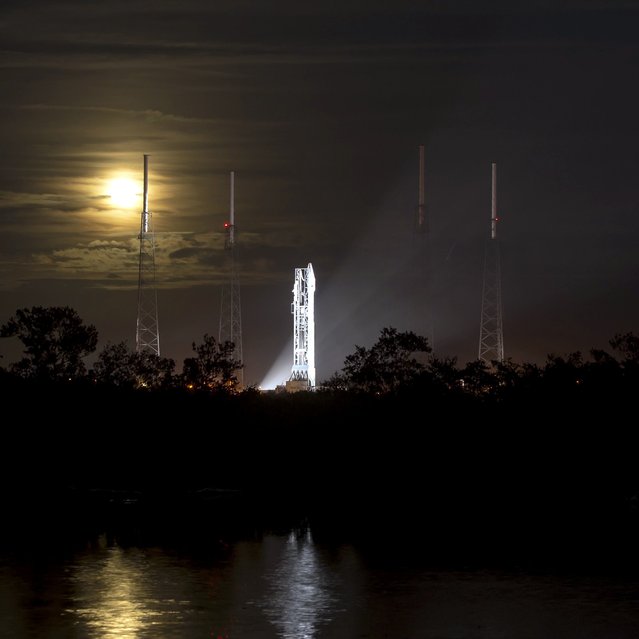
This photo provided by NASA shows a full moon rising behind the United Launch Alliance Atlas V rocket with NASA's Mars Atmosphere and Volatile Evolution (MAVEN) spacecraft onboard at the Cape Canaveral Air Force Station Space Launch Complex 41, Sunday, Nov. 17, 2013, Cape Canaveral, Florida. NASA's next Mars-bound spacecraft, the Mars Atmosphere and Volatile Evolution, or MAVEN, is the first spacecraft devoted to exploring and understanding the Martian upper atmosphere. (AP Photo/NASA, Bill Ingalls)

This photo provided by NASA shows a full moon rising behind the United Launch Alliance Atlas V rocket with NASA's Mars Atmosphere and Volatile Evolution (MAVEN) spacecraft onboard at the Cape Canaveral Air Force Station Space Launch Complex 41, Sunday, November 17, 2013, Cape Canaveral, Florida. NASA's next Mars-bound spacecraft, the Mars Atmosphere and Volatile Evolution, or MAVEN, is the first spacecraft devoted to exploring and understanding the Martian upper atmosphere. (Photo by Bill Ingalls/AP Photo/NASA)
Details
19 Nov 2013 06:42:00
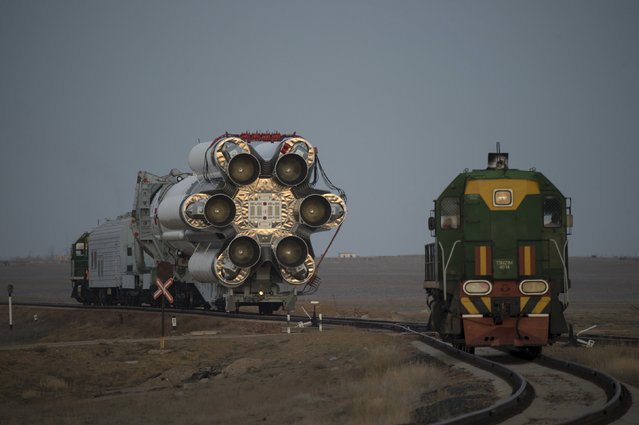
The Proton rocket, that will launch the ExoMars 2016 spacecraft to Mars, is transfered to the launchpad at the Baikonur cosmodrome, Kazakhstan, in this handout photo released by European Space Agency (ESA) on March 11, 2016. (Photo by Stephane Corvaja/Reuters/ESA)

The Proton rocket, that will launch the ExoMars 2016 spacecraft to Mars, is transfered to the launchpad at the Baikonur cosmodrome, Kazakhstan, in this handout photo released by European Space Agency (ESA) on March 11, 2016. (Photo by Stephane Corvaja/Reuters/ESA)
Details
12 Mar 2016 14:38:00


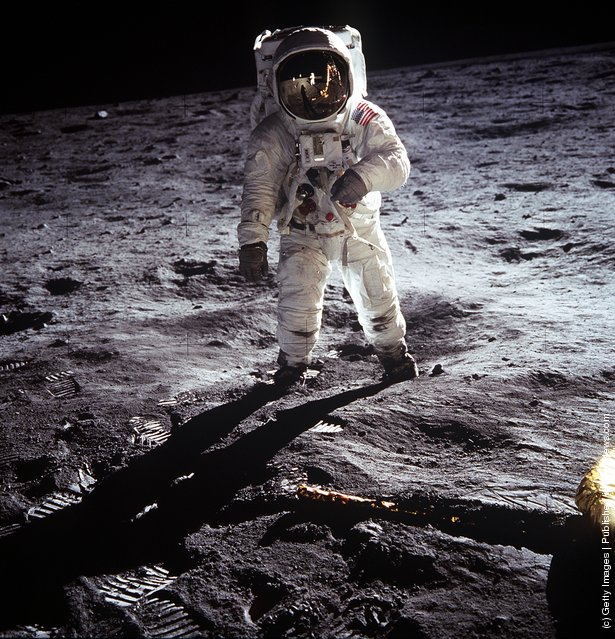
Astronaut Edwin E. Aldrin Jr. walks near the Lunar Module during the Apollo 11 extravehicular activity July 20, 1969 on the Moon. (Photo by NASA/Newsmakers)
Details
28 May 2011 11:04:00


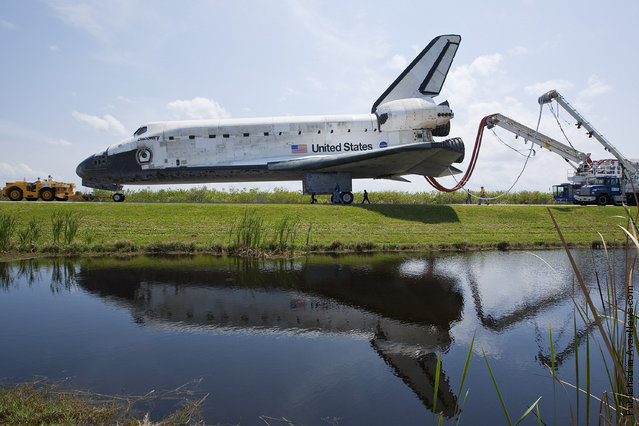
Space Shuttle Discovery is towed from the shuttle landing facility to the orbiter processing facility at Kennedy Space Center on April 20, 2010 in Cape Canaveral, Florida. Discovery's landing attempts at KSC were scrubbed yesterday due to unacceptable weather conditions. Discovery is returning from a successful mission to the International Space Station. (Photo by Matt Stroshane/Getty Images). CAPE CANAVERAL, FL – APRIL 20 2010
Details
08 Mar 2011 16:50:00


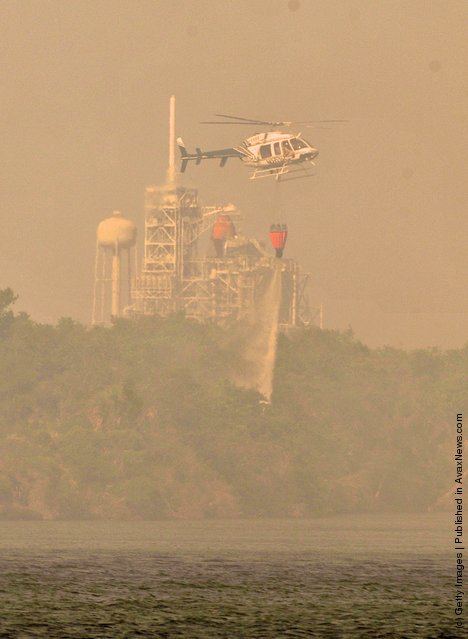
A helicopter pours water over a wildfire with the Space Shuttle Endeavour seen through heavy smoke in the background April 27, 2011 in Cape Canaveral, Florida. (Photo by Roberto Gonzalez/Getty Images)
Details
29 Apr 2011 08:56:00
A NASA Engineer Builds A Better Halloween Costume

Two years ago, Mark Rober was an engineer at NASA’s Jet Propulsion Laboratory in Pasadena, California, part of a team that worked on the Curiosity rover. For Halloween, he strapped an iPad to his chest and another to his back. Then he turned them on and used the devices’ cameras and screens to make it appear as if he had a gaping hole in the middle of his torso. (Photo By Mark Rober)
Details
15 Oct 2014 17:16:00