Loading...
Done
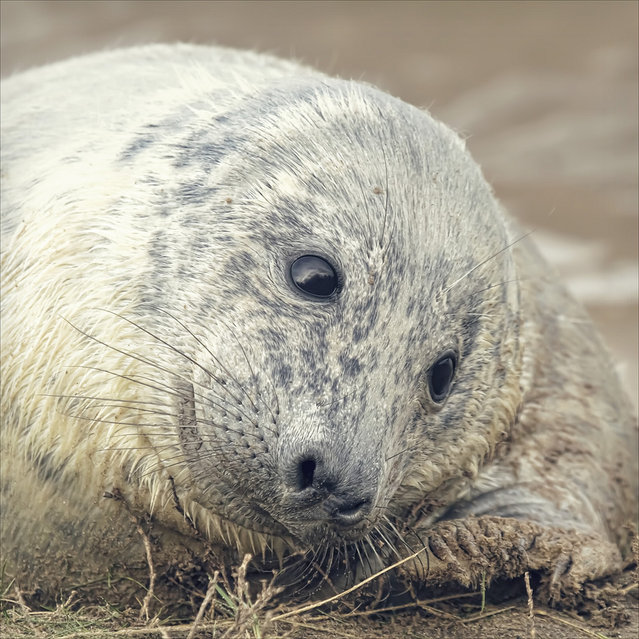
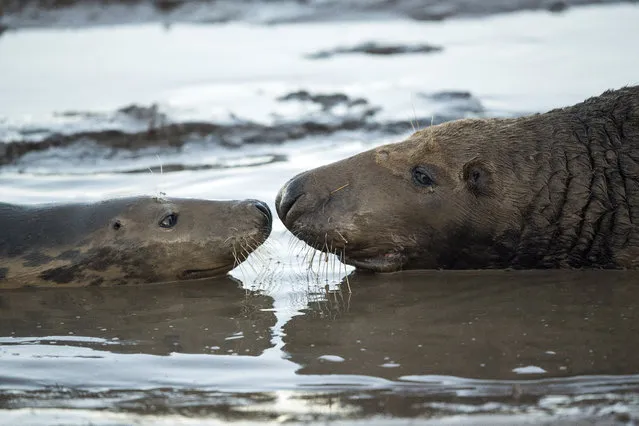
A Grey Seal pup and it's mother lay in the mud at the Lincolnshire Wildlife Trust's Donna Nook nature reserve on November 24, 2014 in Grimsby, England. Seal pup numbers have increased on last year with over 800 pups born at the reserve so far. Large bull seals are the first to arrive at the reserve in late October or early November where they will wait for females. (Photo by Dan Kitwood/Getty Images)

A Grey Seal pup and it's mother lay in the mud at the Lincolnshire Wildlife Trust's Donna Nook nature reserve on November 24, 2014 in Grimsby, England. Seal pup numbers have increased on last year with over 800 pups born at the reserve so far. Large bull seals are the first to arrive at the reserve in late October or early November where they will wait for females. (Photo by Dan Kitwood/Getty Images)
Details
26 Nov 2014 15:11:00
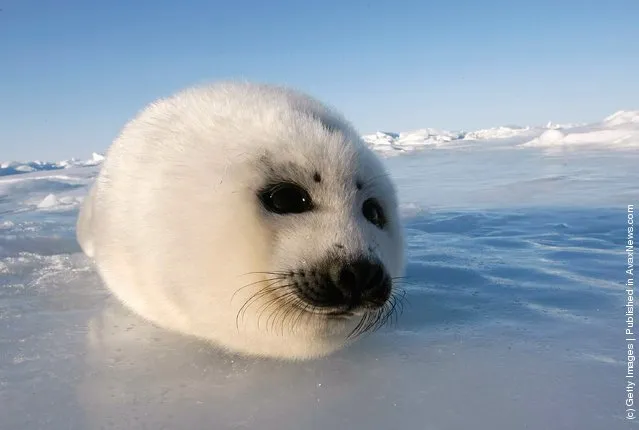
A harp seal pup

“The harp seal or saddleback seal is a species of earless seal native to the northernmost Atlantic Ocean and adjacent parts of the Arctic Ocean. Newborn pups weigh around 11 kilograms (24 lb) and are 80–85 centimetres (31–33 in) long. After birth, the mother only feeds that pup. During the 12 day nursing period, the mother does not eat, losing up to 3 kilograms (7 lb) per day. Harp seal milk contains up to 48% fat, so pups gain over 2.2 kilograms (4.9 lb) per day. During this time, the juvenile's “greycoat” grows in beneath the white neonatal coat, and it weighs 80 pounds (36 kg)”. – Wikipedia

Photo: A harp seal pup lies on an ice floe in the Gulf of Saint Lawrence March 24, 2008 in Charlottetown, Canada. (Photo by Joe Raedle/Getty Images)
Details
19 Sep 2011 15:49:00
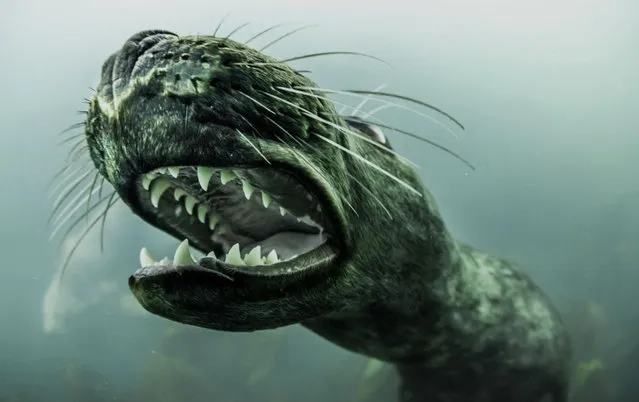
Seal By Adam Hanlon

These terrifying teeth should be enough to scare off even the bravest wildlife photographer – but those divers who persevere are rewarded with a unique encounter with an adorable group of playful seals.
Details
23 Feb 2013 13:11:00
The shuttle never got its final coat of paint and was left unfinished. (Photo by Ralph Mirebs/Exclusivepix Media)

Ralph Mirebs, an urban explorer and photographer in Russia, has revealed extraordinary photos of Soviet space shuttle prototypes gathering dust in an abandoned hangar. The abandoned hangar is located at the Baikonur Cosmodrome in Kazakhstan, which is still in operation today (with the close of NASA’s shuttle program, Russian Soyuz shuttles are the only way for astronauts to reach the International Space Station). The Buran prototype shuttles found by Mirebs, however, are from an earlier era – they are the last remnants of a space program that began in 1974 and was finally shuttered in 1993. (Photo by Ralph Mirebs/Exclusivepix Media)
Details
12 Mar 2017 00:05:00
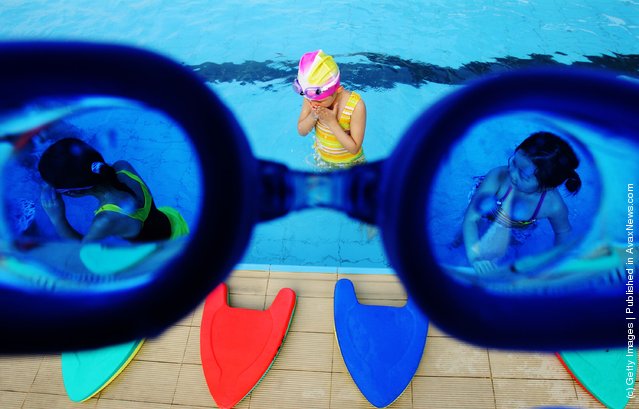
A child attends a training session in a swimming pool

A child attends a training session in a swimming pool on July 10, 2007 in Wuhan of Hubei Province, China. (Photo by China Photos/Getty Images)
Details
20 Jan 2012 15:01:00
Basque Health Department Headquarters In Bilbao

The Spanish city of Bilbao, known architecturally for its Guggenheim, has a new(ish) architectural icon. Not that it’s replacing Ghery’s work, just another one.
Details
01 May 2014 11:38:00
I really need a manicure!

“Nature is beautiful and amazing – i just point my camera at it”. – Black Cat. Photo: “I really need a manicure”! (Photo by Black Cat)

Details
05 Nov 2012 10:26:00
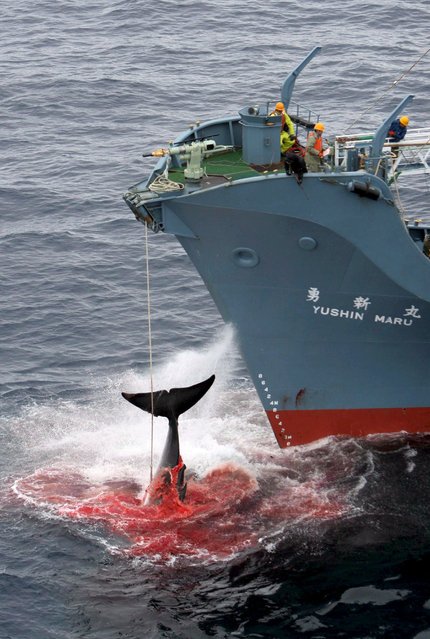
A file photograph dated 07 January 2006 and released by Greenpeace, showing the Yushin Maru, a factory ship in a Japanese whaling fleet, injuring a whale with it's first harpoon attempt. A UN court in The Hague on 31 March 2014 halted Japan's much-criticized whaling programme, ruling that it contravenes a 1986 moratorium on whale hunting. Japan must end its 'research whaling' programme, the International Court of Justice (ICJ) said. (Photo by Kate Davison/EPA)

A file photograph dated 07 January 2006 and released by Greenpeace, showing the Yushin Maru, a factory ship in a Japanese whaling fleet, injuring a whale with it's first harpoon attempt. A UN court in The Hague on 31 March 2014 halted Japan's much-criticized whaling programme, ruling that it contravenes a 1986 moratorium on whale hunting. Japan must end its 'research whaling' programme, the International Court of Justice (ICJ) said. Japan said the programme was for scientific research and permitted under international conventions. Australia had brought the case to the ICJ in 2010, charging that Japan was breaching international law by killing hundreds of whales every year for commercial purposes. Japan was “deeply disappointed” by the ruling, an unnamed government official was quoted by the Kyodo News agency as saying. But the official said Japan would stand by the ruling. (Photo by Kate Davison/EPA)
Details
01 Apr 2014 08:38:00