Loading...
Done
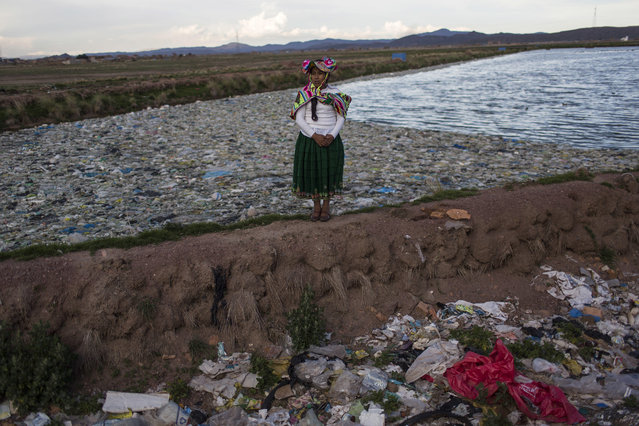
In this February 1, 2017 photo, environmental activist Maruja Inquilla poses for a photo next to a Municipal waste treatment plant with water that flows into Lake Titicaca, in Juliaca, in the Puno region of Peru. “If the frogs could talk they would say, This is killing me”," said Inquilla, who recently showed up at the Puno governor's house carrying plastic bags filled with hundreds of dead frogs in protest. (Photo by Rodrigo Abd/AP Photo)

In this February 1, 2017 photo, environmental activist Maruja Inquilla poses for a photo next to a Municipal waste treatment plant with water that flows into Lake Titicaca, in Juliaca, in the Puno region of Peru. “If the frogs could talk they would say, This is killing me”," said Inquilla, who recently showed up at the Puno governor's house carrying plastic bags filled with hundreds of dead frogs in protest. (Photo by Rodrigo Abd/AP Photo)
Details
04 Mar 2017 00:02:00
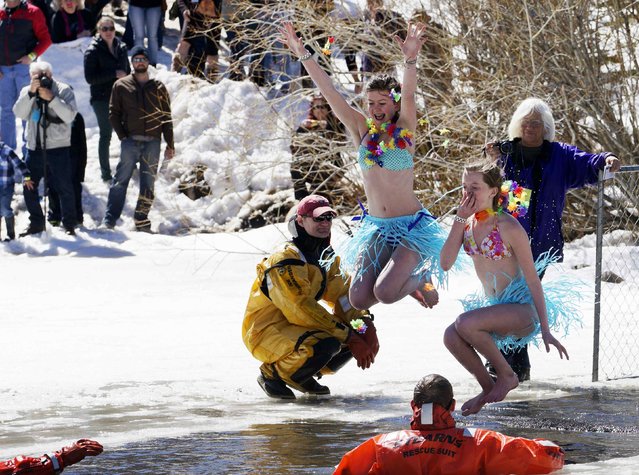
Two women jump into a frozen pond as they compete in the Polar Plunge at Frozen Dead Guy Days in Nederland, Colorado March 14, 2015. (Photo by Rick Wilking/Reuters)

Two women jump into a frozen pond as they compete in the Polar Plunge at Frozen Dead Guy Days in Nederland, Colorado March 14, 2015. The winter festival in the small mountain town commemorates the 1994 discovery of the corpse of Bredo Morstol, which is now housed in a shed on dry ice above the town. (Photo by Rick Wilking/Reuters)
Details
16 Mar 2015 10:37:00
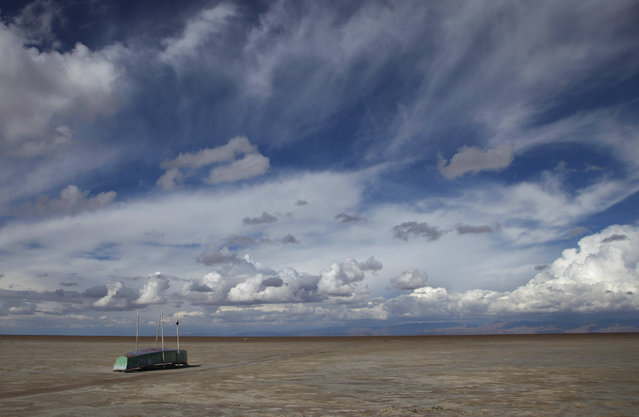
In this January 12, 2016 photo, an abandoned boat lies on the dried up lake bed of Lake Poopo, on the outskirts of Untavi, Bolivia. Drought caused by the recurrent El Nino meteorological phenomenon is considered the main driver of the lake's demise. Along with glacial melting, authorities say another factor is the diversion of water from Poopo's tributaries, mostly for mining but also for agriculture. (Photo by Juan Karita/AP Photo)

In this January 12, 2016 photo, an abandoned boat lies on the dried up lake bed of Lake Poopo, on the outskirts of Untavi, Bolivia. Drought caused by the recurrent El Nino meteorological phenomenon is considered the main driver of the lake's demise. Along with glacial melting, authorities say another factor is the diversion of water from Poopo's tributaries, mostly for mining but also for agriculture. (Photo by Juan Karita/AP Photo)
Details
21 Jan 2016 12:33:00
Boats of fishermen are seen on the dried Poopo lakebed in the Oruro Department, south of La Paz, Bolivia, December 17, 2015. (Photo by David Mercado/Reuters)

Boats of fishermen are seen on the dried Poopo lakebed in the Oruro Department, south of La Paz, Bolivia, December 17, 2015. Lake Poopo in Bolivia, the Andean nation's formerly second largest after the famed Titicaca, has dried up entirely. With the water now gone, animals have died off in the millions, according to studies. And the local families, having lost much of their sustenance, have been forced to migrate. (Photo by David Mercado/Reuters)
Details
20 Dec 2015 08:04:00
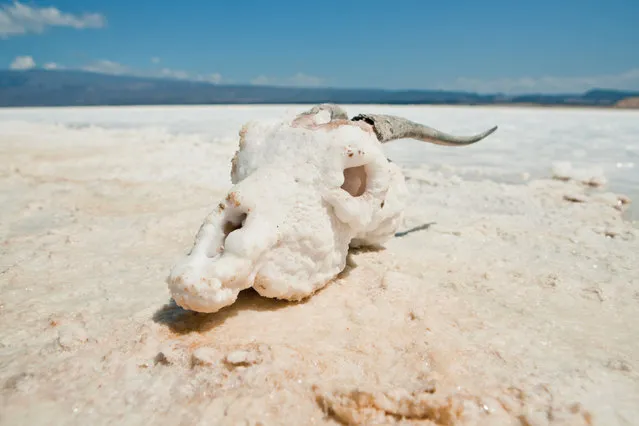
Lake Assal Crater Lake In The Central Djibouti

Lake Assal is a crater lake in central-western Djibouti. It is located at the western end of Gulf of Tadjoura in the Tadjoura Region, touching Dikhil Region, at the top of the Great Rift Valley, some 120 km (75 mi) west of Djibouti city. Lake Assal is a saline lake which lies 155 m (509 ft) below sea level in the Afar Triangle, making it the lowest point on land in Africa and the third-lowest land depression on Earth after the Dead Sea and Sea of Galilee.
Details
15 Jul 2015 10:19:00
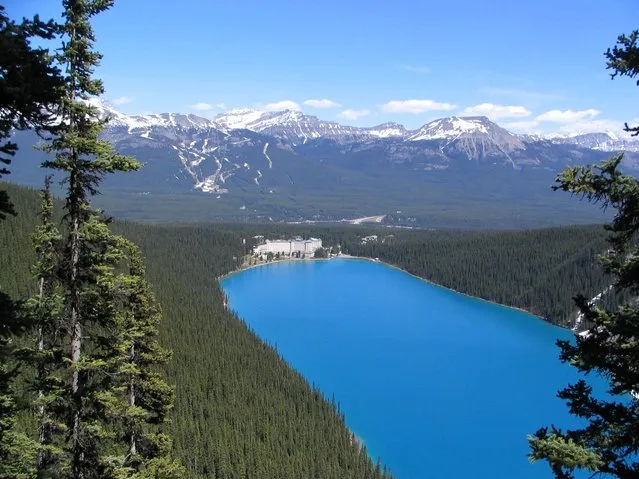
Lake Louise In  Canada

Lake Louise, named Lake of the Little Fishes by the Stoney Natoka First Nations people, is a glacial lake within Banff National Park in Alberta, Canada. It is located 5 km (3.1 mi) west of the Hamlet of Lake Louise and the Trans-Canada Highway (Highway 1).
Details
01 Oct 2013 04:42:00
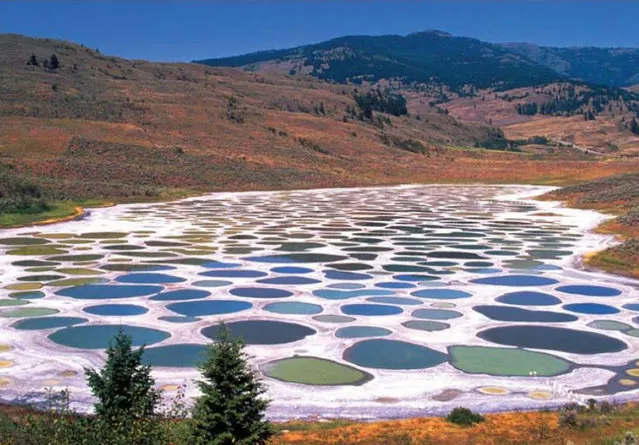
Kliluk, the Spotted Lake, Canada

Originally known to the First Nations of the Okanagan Valley as Khiluk, which was- and remains today revered as a sacred site producing therapeutic waters. During World War I the minerals of Spotted Lake were used in manufacturing ammunition. Later the area came under the control of the Ernest Smith Family, for a term of about 40 years. In 1979 Smith attempted to create interest in a spa at the lake. The First Nations responded with an effort to buy the lake; in October 2001 they finally struck a deal. First Nations arranged the purchase of 22 hectares of land for a total of $720,000, and contributed about 20% of the cost. The Indian Affairs Department paid the remainder.
Details
06 Mar 2015 12:59:00
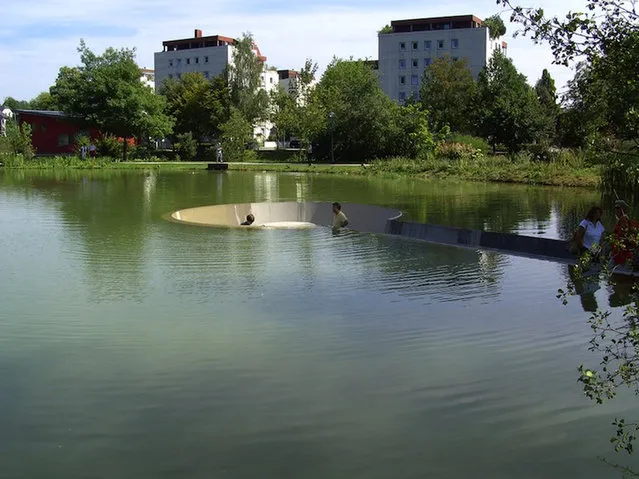
Vocklabruck Platform In The Middle Of A Lake

There's a wonderfully picturesque spot in Vöcklabruck, Austria where visitors are able to sit in the middle of a pond without getting wet. The scenic landscape includes a path leading down to a hollowed out circular area where people can take a seat and relax amongst nature. It's a surreal journey along the gradual ramp to the observational platform as the water level gains height either side. Once in the resting area, depending on perspective, visitors seem like they're wading in the lake without a drop of water on them.
Details
09 Apr 2013 09:23:00