Hikaru Cho believes that we should challenge our imaginations to create new work using traditional tools, not fancy computers and software. (Photo by Jim Marks/PA Wire)
“Mehndi or menhdi is the application of henna as a temporary form of skin decoration in India, as well as by expatriate communities from the country. The word mehndi is derived from the Sanskrit word mendhikā. The use of mehndi and turmeric is described in the earliest Vedic ritual books. Haldi (Staining oneself with turmeric paste) as well as mehndi are important Vedic customs as a symbolic representation of the Outer and the Inner Sun. Vedic customs are meant to awaken the “inner light” and so the gold of the inner Sun has an important symbolic function”. – Wikipedia
Photo: Application of henna or “Mehndi” to a girls hand in a market on October 18, 2010 in Jaipur, India. (Photo by Simon de Trey-White/Getty Images)
Suadar Oyunbold, age 5 runs from a Lion Dancer in Dublin City Farm at St Anne’s Park on January 9, 2023 to mark the launch of the programme for Dublin Lunar New Year which runs from 21-29 January. (Photo by Dara Mac Dónaill/The Irish Times)
#1: Superman. According to McAfee, 16.50% of Web searches for Superman led to sites with viruses and other malicious software. Pictured here: The Superman costume that was worn by Christopher Reeve in “Superman: The Movie” on display at Profiles In History in Calabasas, northwest of downtown Los Angeles, on July 19, 2012 in California. (Photo by Frederic J. Brown/AFP Photo)
An aspiring witch performs during auditions the new witch of Wookey Hole Caves during trials held at the Somerset tourist attraction, on October 22, 2013. Around 50 applicants took part in the auditions today for a £50,000 a year (pro rata) job as the face of Wookey Hole. (Photo by Tim Ireland/PA Wire)
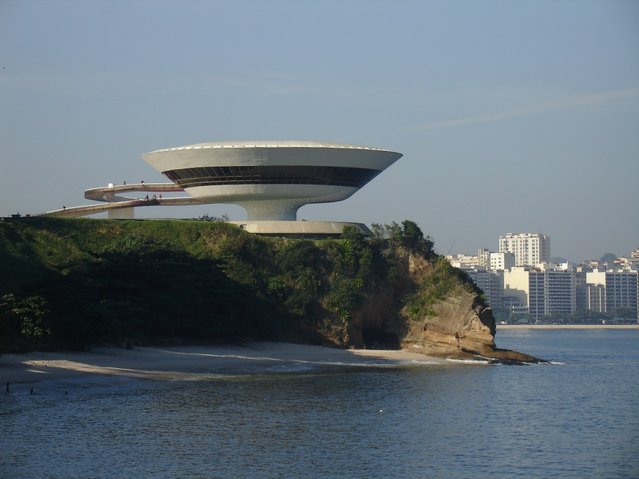
The Niterói Contemporary Art Museum (Museu de Arte Contemporânea de Niterói — MAC) is situated in the city of Niterói, Rio de Janeiro, Brazil, and is one of the city’s main landmarks. It was completed in 1996.
Amazing photographs by Agustin Rafael Reyes, software engineer and talented photographer from Manila, Philippines who currently based in Yokohama, Japan.
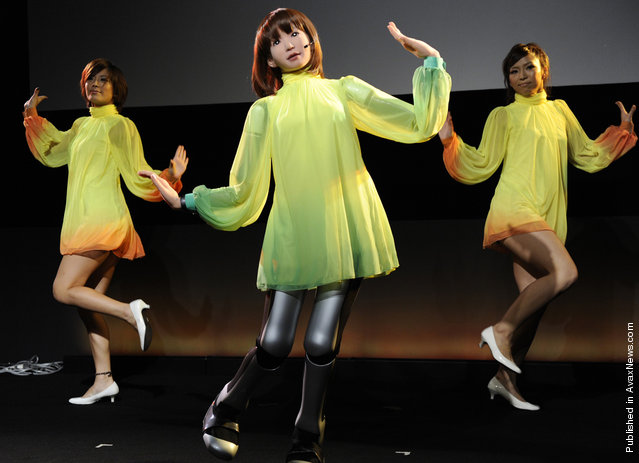
HRP-4C, a five-foot humanoid robot developed at Japan's National Institute of Advanced Industrial Science and Technology, sings and dances with performers at the Digital Contents Expo in Tokyo on October 17, 2010. The robot runs entertainment software called Choreonoid, a name formed from the words “choreograph” and “humanoid”. (Yoshikazu Tsuno/AFP)