Loading...
Done
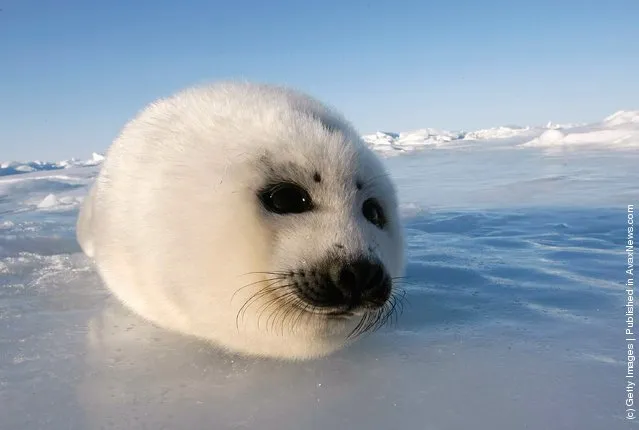
A harp seal pup

“The harp seal or saddleback seal is a species of earless seal native to the northernmost Atlantic Ocean and adjacent parts of the Arctic Ocean. Newborn pups weigh around 11 kilograms (24 lb) and are 80–85 centimetres (31–33 in) long. After birth, the mother only feeds that pup. During the 12 day nursing period, the mother does not eat, losing up to 3 kilograms (7 lb) per day. Harp seal milk contains up to 48% fat, so pups gain over 2.2 kilograms (4.9 lb) per day. During this time, the juvenile's “greycoat” grows in beneath the white neonatal coat, and it weighs 80 pounds (36 kg)”. – Wikipedia

Photo: A harp seal pup lies on an ice floe in the Gulf of Saint Lawrence March 24, 2008 in Charlottetown, Canada. (Photo by Joe Raedle/Getty Images)
Details
19 Sep 2011 15:49:00
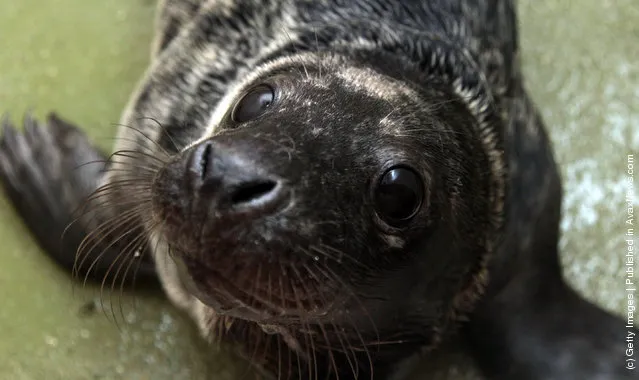
A recently rescued grey seal pup looks up from its indoor kennel at the RSPCA West Hatch Wildlife Centre

A recently rescued grey seal pup looks up from its indoor kennel at the RSPCA West Hatch Wildlife Centre on January 9, 2012 in Taunton, England. The centre is currently dealing with a number of mainly grey seals that have been rescued from the coast due to the recent storms. Staff at the centre hope to release all the seals back into the wild by the spring. (Photo by Matt Cardy/Getty Images)
Details
10 Jan 2012 13:34:00
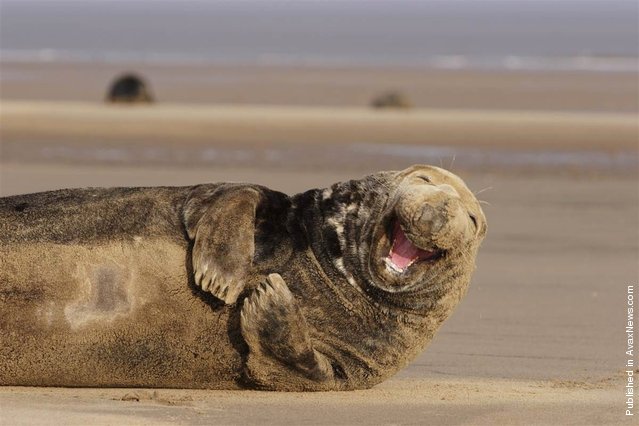
This grey adult male seal enjoys a good grin while lying on the beach

“This grey adult male seal enjoys a good grin while lying on the beach”. (Photo by Michael Hutch/SplashdownDirect via Rex USA)
Details
20 Apr 2012 13:30:00
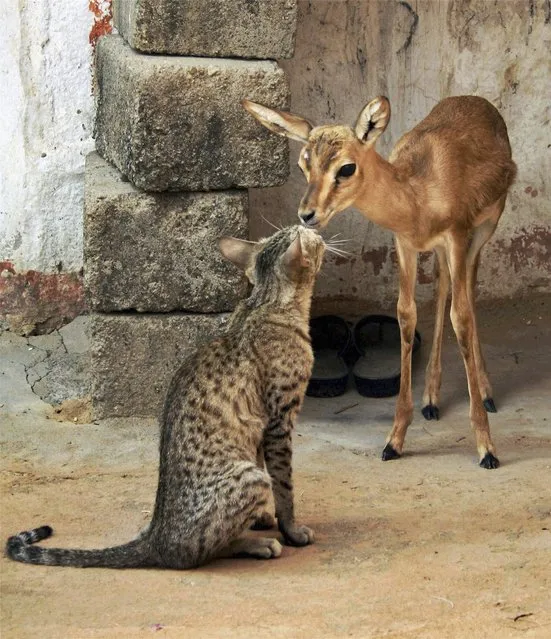
In this Wednesday, May 23, 2012 photograph, a young deer and a cat share a moment in Feench village near Jodhpur, Rajasthan state, India

In this Wednesday, May 23, 2012 photograph, a young deer and a cat share a moment in Feench village near Jodhpur, Rajasthan state, India. (Photo by AP Photo)
Details
16 Jun 2012 11:07:00
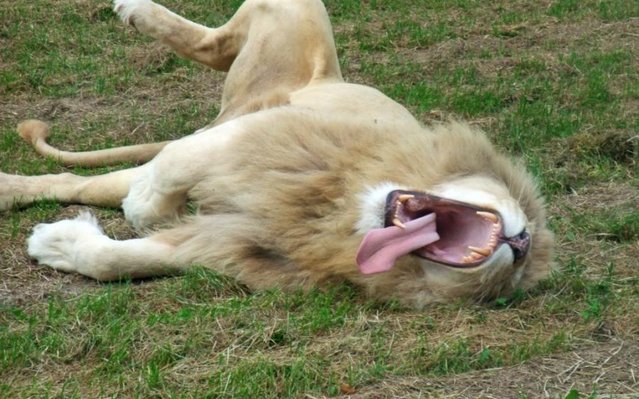
Animals Yawning

In animals, yawning can serve as a warning signal. For example, Charles Darwin, in his book The Expression of the Emotions in Man and Animals, mentioned that baboons yawn to threaten their enemies, possibly by displaying large canine teeth. Similarly, Siamese fighting fish yawn only when they see a conspecific (same species) or their own mirror-image, and their yawn often accompanies aggressive attack. Guinea pigs also yawn in a display of dominance or anger, displaying their impressive incisor teeth. This is often accompanied by teeth chattering, purring and scent marking.

Details
11 Aug 2012 09:12:00
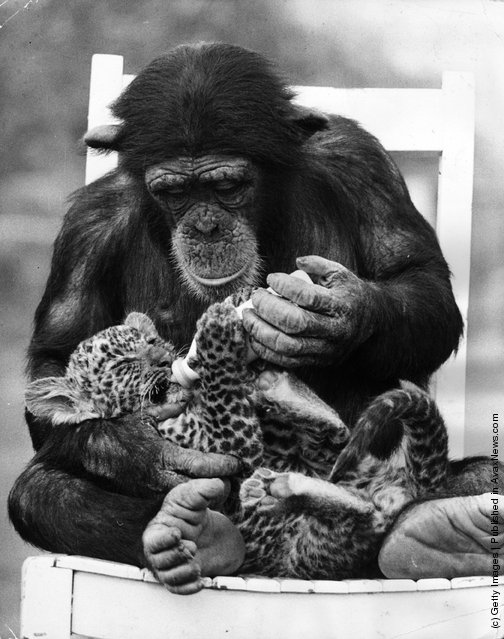
1971: A chimpanzee feeding a leopard cub at Southam Park Zoo, Warwickshire

A chimpanzee feeding a leopard cub at Southam Park Zoo, Warwickshire. (Photo by Ian Tyas/Keystone Features/Getty Images). 1971
Details
08 Sep 2011 14:32:00
Tall story: Can you spot the giraffe? (Photo by Caters News)

These snaps show a series of crafty critters camouflaged out of view. Many adventurous animals love to stand out from a crowd, but there are times when they need to blend in a bit more too. Photo: Tall story – can you spot the giraffe? (Photo by Caters News)
Details
04 Apr 2014 09:53:00
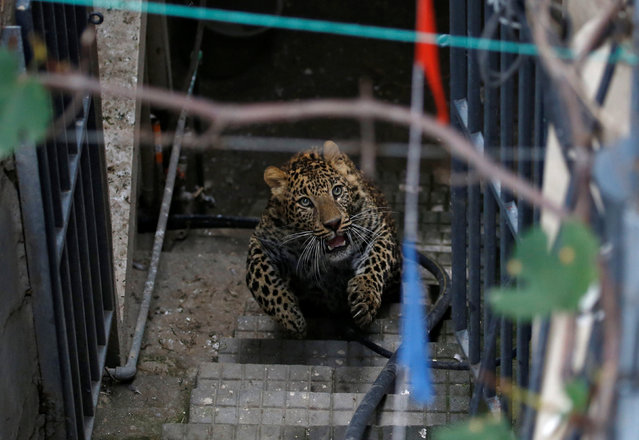
A wild leopard runs on the stairs as it tries to escape from a compound of a house in Kathmandu, Nepal June 1, 2016. (Photo by Navesh Chitrakar/Reuters)

A wild leopard runs on the stairs as it tries to escape from a compound of a house in Kathmandu, Nepal June 1, 2016. (Photo by Navesh Chitrakar/Reuters)
Details
04 Jun 2016 11:44:00