Loading...
Done
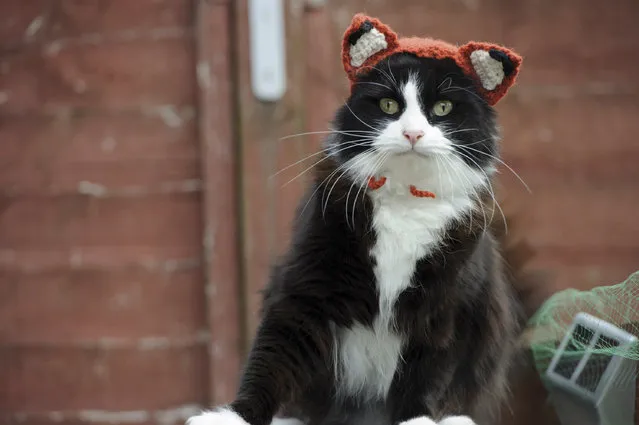
This photo provided by Running Press and Quarto, Inc. shows Feline Fox from the book, “Cats in Hats”, published by Running Press. The book released on March 24, 2015. (Photo by Liz Coleman/Running Press/Quarto, Inc. via AP Photo)

This photo provided by Running Press and Quarto, Inc. shows Feline Fox from the book, “Cats in Hats”, published by Running Press. The book released on March 24, 2015. (Photo by Liz Coleman/Running Press/Quarto, Inc. via AP Photo)
Details
22 Apr 2015 09:24:00
Snoopy the Cat

Snoopy the Cat (大肥猫宝儿) is one of the most popular cats in the world especially in China. She is an Exotic Shorthair cat with a lovely master that takes pictures of her everyday.
Details
17 Sep 2013 10:15:00
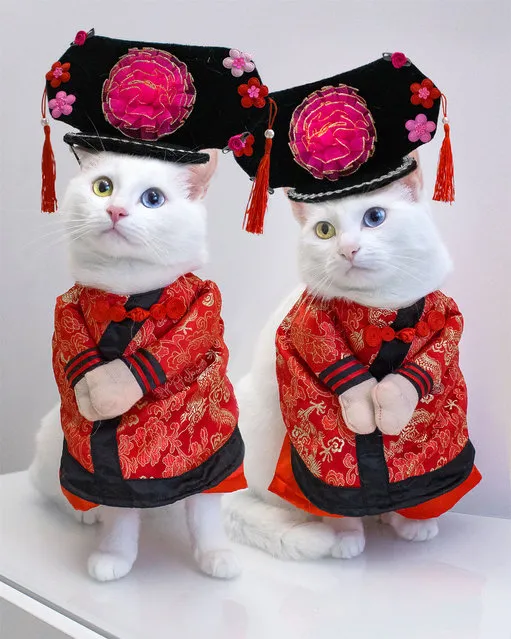
These adorable cats – which are twins – showcase their contrasting blue and green eyes. The fascinating pair, Iriss and Abyss, live with their owner Pavel Dyagilev, 34, in St. Petersburg, Russia. The cats have a condition called heterochromia iridis, which causes each eye to vary in color. Dyagilev said: “When I found an ad on social media that two kittens were seeking a new home, I never imagined that I'd end up with two. But I looked through the pictures of kittens and saw two twins always together on the photos. And my heart melted”. (Photo by @sis.twins/Caters News Agency)

These adorable cats – which are twins – showcase their contrasting blue and green eyes. The cats have a condition called heterochromia iridis, which causes each eye to vary in color. (Photo by @sis.twins/Caters News Agency)
Details
14 Aug 2019 00:03:00
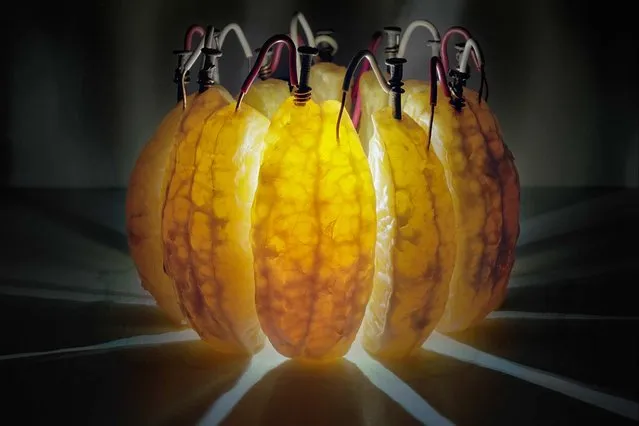
Wedges of an orange generate enough current and electrical juice – 3.5 volts – to power an LED. The fruit’s citric acid helps electrons flow from galvanized nails to copper wire in this 14-hour exposure. This image was published in September’s Visions of Earth, a trio of photos that appear in each issue of National Geographic. (Photo by Caleb Charland/National Geographic)

Wedges of an orange generate enough current and electrical juice – 3.5 volts – to power an LED. The fruit’s citric acid helps electrons flow from galvanized nails to copper wire in this 14-hour exposure. This image was published in September’s Visions of Earth, a trio of photos that appear in each issue of National Geographic. (Photo by Caleb Charland/National Geographic)
Details
06 Jan 2014 12:09:00
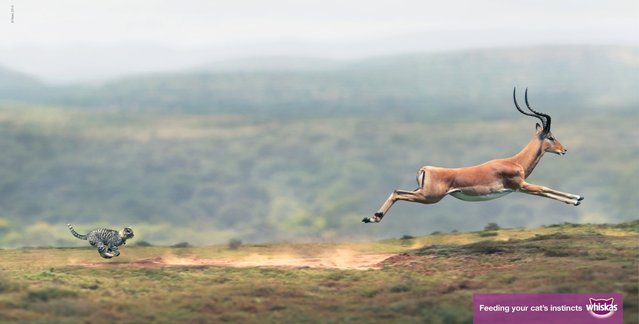
Whiskas: Big Cat-Small Cat

Scottish photographer George Logan and retoucher Tony Swinney let’s you imagine what it would be like if your cat wasn’t just a purring ball of fur. As a part of “Big Cat, Small Cat” ad campaign for Whiskas, they created a series of funny images showing tiny domestic cats chasing after antelopes, zebras, elephants and doing other “big cat” stuff.
Details
29 Sep 2013 12:16:00
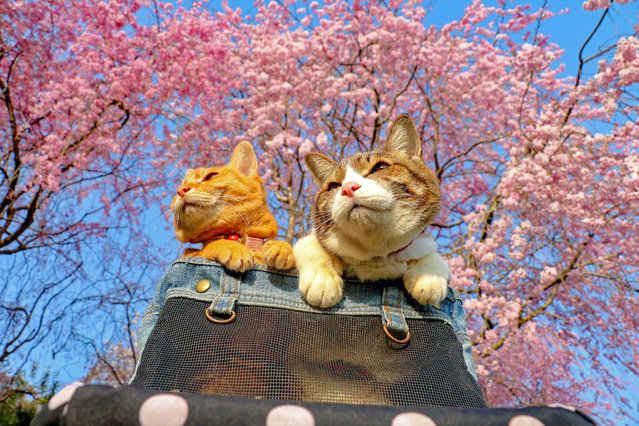
Daisuke Nagasawa travels nationally and internationally with his beautiful kitties Fuku-Chan and Daikichi. The two pose under the iconic Japanese cherry blossoms. (Photo by Daisuke Nagasawa/Caters News Agency)

Daisuke Nagasawa, 49, has spent the past few years taking his two faithful cats, Daikichi and Fuku-Chan, around the world with him. Here: Daisuke Nagasawa travels nationally and internationally with his beautiful kitties Fuku-Chan and Daikichi. The two pose under the iconic Japanese cherry blossoms. (Photo by Daisuke Nagasawa/Caters News Agency)
Details
31 Jul 2018 00:05:00
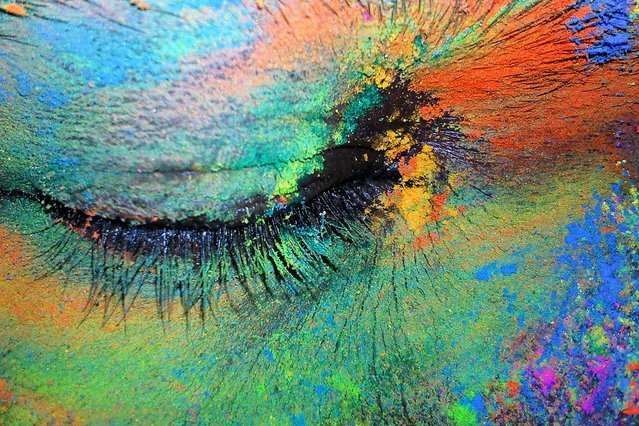
This close-up image – of a Holi Festival celebrant in Vrindivan, India, coated in neon-colored powder – was submitted to National Geographic’s Your Shot in the last week of March. On April 1 we published it on our Daily News site, along with seven other bright scenes captured during the Hindu spring Festival of Colors. (Photo by Tinto Alencherry/National Geographic)

This close-up image – of a Holi Festival celebrant in Vrindivan, India, coated in neon-colored powder – was submitted to National Geographic’s Your Shot in the last week of March. On April 1 we published it on our Daily News site, along with seven other bright scenes captured during the Hindu spring Festival of Colors. (Photo by Tinto Alencherry/National Geographic)
Details
06 Jan 2014 12:30:00
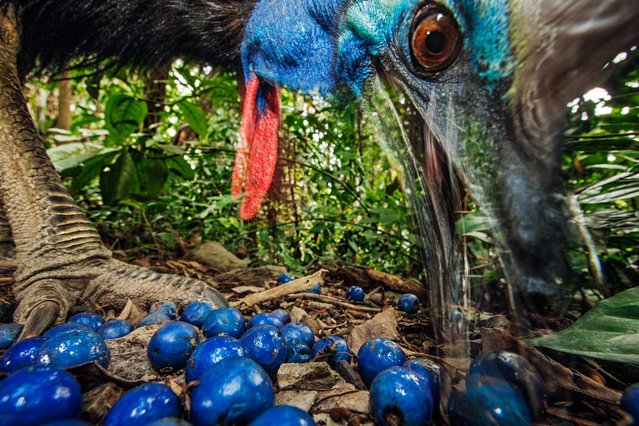
“Cassowaries are large, flightless birds related to emus and (more distantly) to ostriches, rheas, and kiwis”, writes Olivia Judson in the September issue of National Geographic magazine. (Photo by Christian Ziegler/National Geographic)

“Cassowaries are large, flightless birds related to emus and (more distantly) to ostriches, rheas, and kiwis”, writes Olivia Judson in the September issue of National Geographic magazine. How large? People-size: Adult males stand well over five foot five and top 110 pounds. Females are even taller, and can weigh more than 160 pounds. Dangerous when roused, they’re shy and peaceable when left alone. But even birds this big and tough are prey to habitat loss. The dense New Guinea and Australia rain forests where they live have dwindled. Today cassowaries might number 1,500 to 2,000. And because they help shape those same forests – by moving seeds from one place to another – “if they vanish”, Judson writes, “the structure of the forest would gradually change” too. (Photo by Christian Ziegler/National Geographic)

Details
06 Jan 2014 12:21:00