Loading...
Done
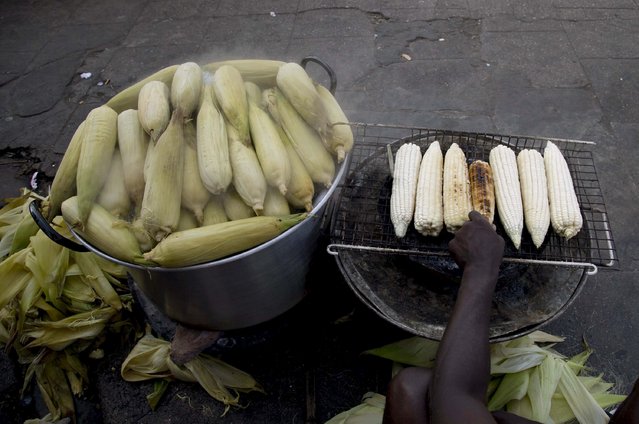
A trader sells mealies to commuter in Durban, South Africa, April19, 2016, as food prices continue to rise due to drought conditions. (Photo by Rogan Ward/Reuters)

A trader sells mealies to commuter in Durban, South Africa, April19, 2016, as food prices continue to rise due to drought conditions. (Photo by Rogan Ward/Reuters)
Details
20 Apr 2016 12:53:00
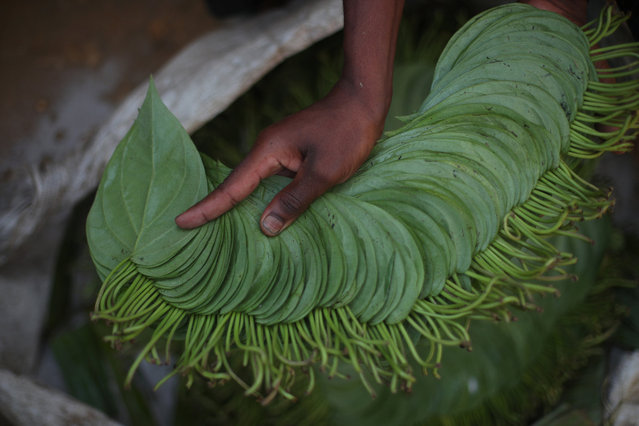
Faruk, 17, a Rohingya refugee trader holds betel leaves which are on sale at a stall in Palong Khali refugee camp near Cox's Bazar, Bangladesh, November 3, 2017. He left his village in Myanmar when the military opened fire towards the Rohingya. “I buy this betel leaf from Palong Khali market, in one bundle there are 160 pieces, I buy it for 80 taka and I sell it for 100 taka. Bangladeshi's and I sell for the same rate in the camp. Outside in the local market it is 80 taka per bundle. My problem is that I don't have money so I can't buy anything to eat, I can't buy fish to eat”, he said. (Photo by Hannah McKay/Reuters)

Faruk, 17, a Rohingya refugee trader holds betel leaves which are on sale at a stall in Palong Khali refugee camp near Cox's Bazar, Bangladesh, November 3, 2017. He left his village in Myanmar when the military opened fire towards the Rohingya. “I buy this betel leaf from Palong Khali market, in one bundle there are 160 pieces, I buy it for 80 taka and I sell it for 100 taka (1 Bangladeshi Taka = 0.012 US Dollar). Bangladeshi's and I sell for the same rate in the camp. Outside in the local market it is 80 taka per bundle. My problem is that I don't have money so I can't buy anything to eat, I can't buy fish to eat”, he said. (Photo by Hannah McKay/Reuters)
Details
27 Nov 2017 08:54:00
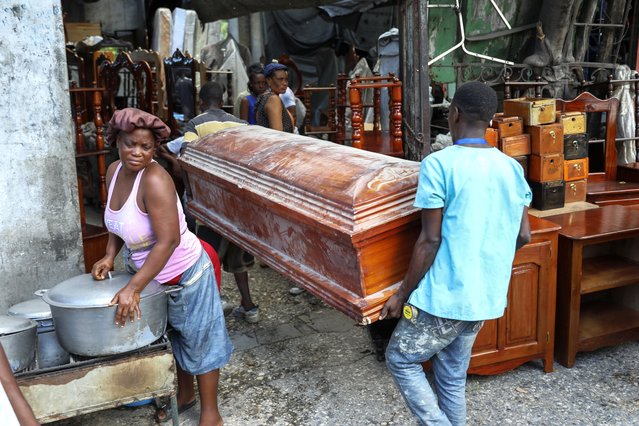
People carry an empty coffin past a street food vendor into the shop that is buying it to repair and sell in Port-au-Prince, Haiti, Friday, September 13, 2024. (Photo by Odelyn Joseph/AP Photo)

People carry an empty coffin past a street food vendor into the shop that is buying it to repair and sell in Port-au-Prince, Haiti, Friday, September 13, 2024. (Photo by Odelyn Joseph/AP Photo)
Details
27 Sep 2024 03:57:00
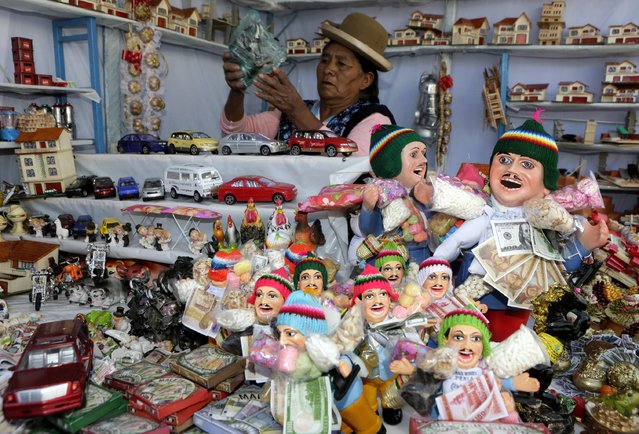
A woman sells statues of the Ekeko, god of fortune, at the traditional “Alasitas” fair in La Paz January 24, 2015. During the fair, Bolivians buy miniature versions of goods like cars, money and houses they would like to own in real life during the year. (Photo by David Mercado/Reuters)

A woman sells statues of the Ekeko, god of fortune, at the traditional “Alasitas” fair in La Paz January 24, 2015. During the fair, Bolivians buy miniature versions of goods like cars, money and houses they would like to own in real life during the year. (Photo by David Mercado/Reuters)
Details
25 Jan 2015 09:59:00
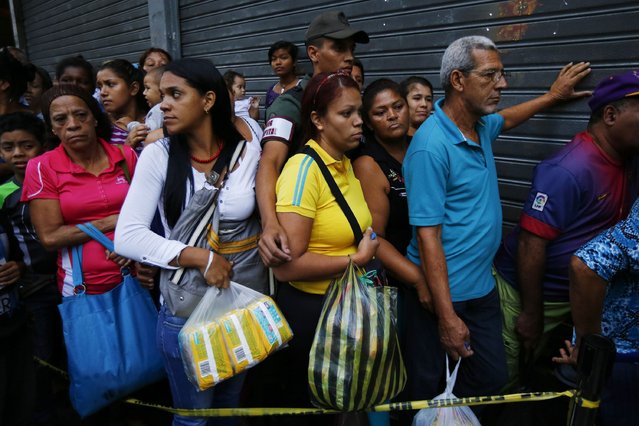
People line up to buy toilet paper and baby diapers at a supermarket in downtown Caracas January 19, 2015. (Photo by Jorge Silva/Reuters)

People line up to buy toilet paper and baby diapers at a supermarket in downtown Caracas January 19, 2015. There's a booming new profession in Venezuela: standing in line. The job usually involves starting before dawn, enduring long hours under the Caribbean sun, dodging or bribing police, and then selling a coveted spot at the front of huge shopping lines. As Venezuela's ailing economy spawns unprecedented shortages of basic goods, panic-buying and a rush to snap up subsidized food, demand is high and the pay is reasonable. (Photo by Jorge Silva/Reuters)
Details
22 Jan 2015 13:51:00
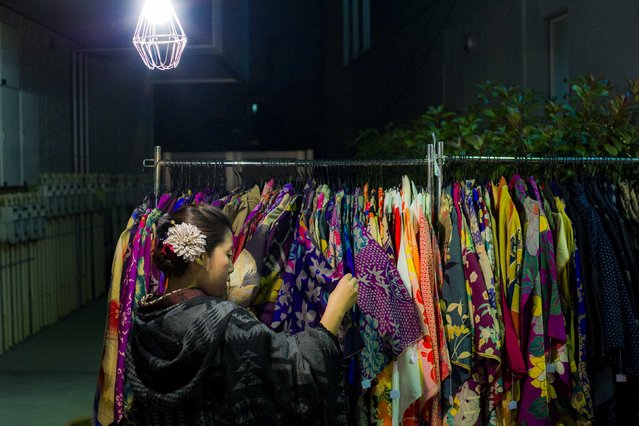
A woman browses through kimonos for sale at Boroichi flea market in Tokyo December 15, 2014. In the 16th century, Boroichi was a place for farmers to buy and sell rags, known as boro, for mending clothes and weaving sandals. Now in its 436th year, the original spirit lingers, with about 700 stands hawking fabric, used clothes and piles of rags. Others sell kitchen tools, pottery, seaweed and spices. (Photo by Thomas Peter/Reuters)

A woman browses through kimonos for sale at Boroichi flea market in Tokyo December 15, 2014. In the 16th century, Boroichi was a place for farmers to buy and sell rags, known as boro, for mending clothes and weaving sandals. Now in its 436th year, the original spirit lingers, with about 700 stands hawking fabric, used clothes and piles of rags. Others sell kitchen tools, pottery, seaweed and spices. About 200,000 people flock to the market, which is only open for four mid-winter days a year – two in December and two in January. (Photo by Thomas Peter/Reuters)
Details
19 Dec 2014 12:50:00
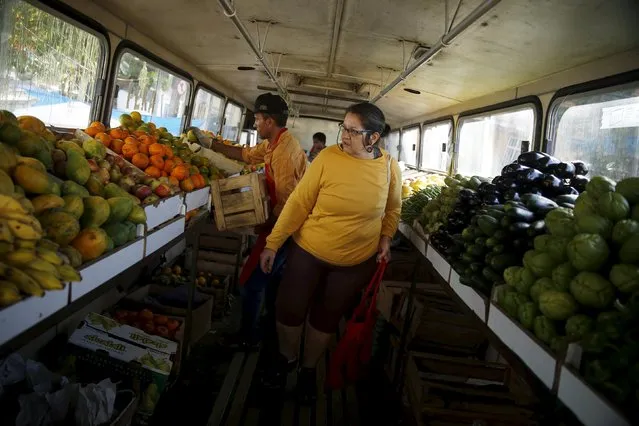
A woman looks for fruits to buy inside a bus called Sacolao in Santa Teresa neighborhood in Rio de Janeiro, Brazil, July 7, 2015. (Photo by Pilar Olivares/Reuters)

A woman looks for fruits to buy inside a bus called Sacolao in Santa Teresa neighborhood in Rio de Janeiro, Brazil, July 7, 2015. The bus, which began operating as a municipal initiative but has been taken over by a private enterprise, arrives every week in some neighborhoods to facilitate families with their grocery shopping and sells food at an affordable price, according to sellers. (Photo by Pilar Olivares/Reuters)
Details
08 Jul 2015 11:52:00
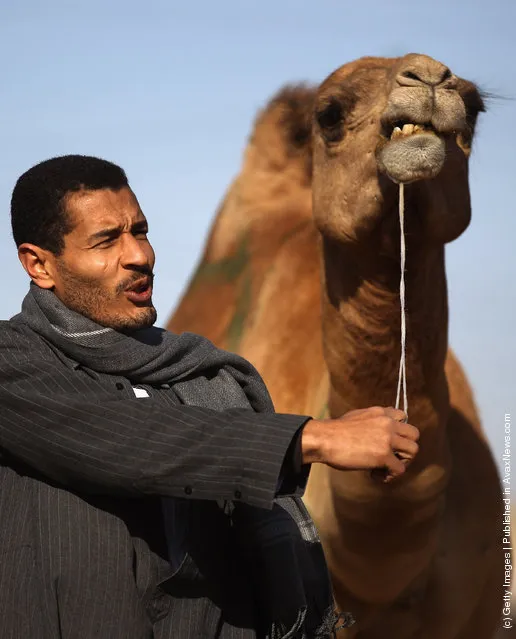
Men buy and sell camels at Birqash camel market in Cairo, Egypt

A man walks with a camel at Birqash camel market on January 27, 2012 in Cairo, Egypt. On the edge of the western dessert, thousands of camels are bought and sold every Friday at Brqash camel market, one of the biggest in the Middle East. (Photo by Jeff J. Mitchell/Getty Images)
Details
28 Jan 2012 14:55:00