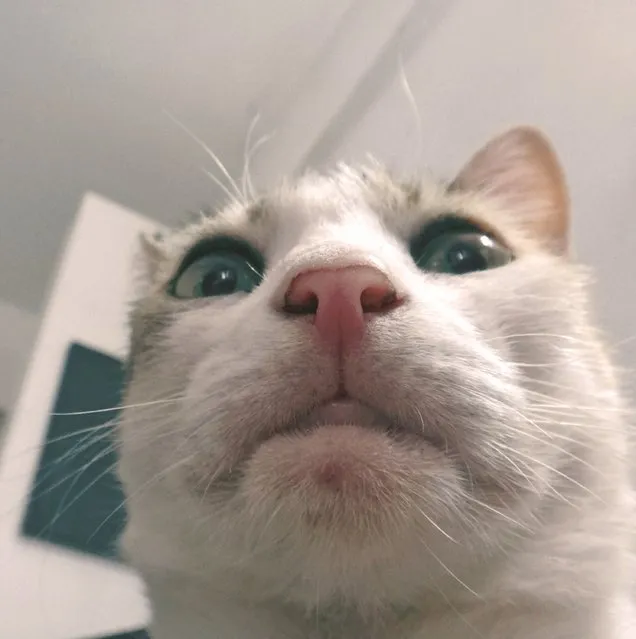
If Kim Kardashian was a feline shed be purr-fect for this new book which features a collection the worlds best cat “selfies”. The furry frames have been compiled by cat owner Charlie Ellis who has scoured the globe for the perfect puss pictures. In his book “Cat Selfies” moggies try their hand at the craze most of their humans have become addicted to posting on social media. And it turns out cats might be better at taking photos than their owners with a variety of poses captioned in the book. (Photo by Charlie Ellis/Caters News)
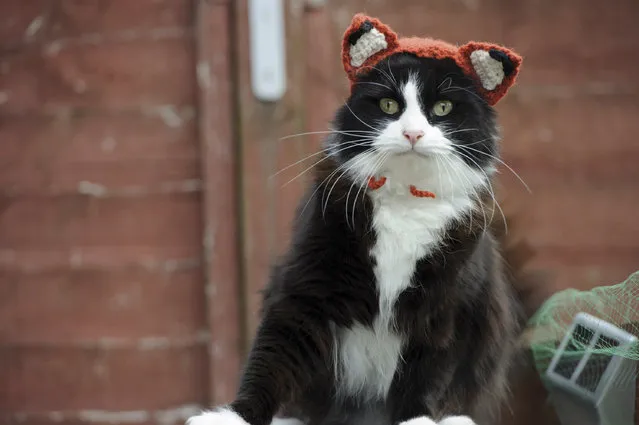
This photo provided by Running Press and Quarto, Inc. shows Feline Fox from the book, “Cats in Hats”, published by Running Press. The book released on March 24, 2015. (Photo by Liz Coleman/Running Press/Quarto, Inc. via AP Photo)
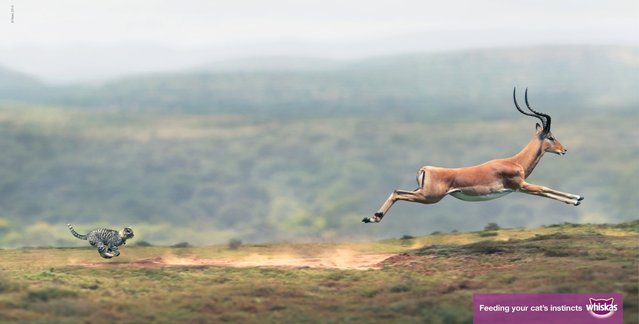
Scottish photographer George Logan and retoucher Tony Swinney let’s you imagine what it would be like if your cat wasn’t just a purring ball of fur. As a part of “Big Cat, Small Cat” ad campaign for Whiskas, they created a series of funny images showing tiny domestic cats chasing after antelopes, zebras, elephants and doing other “big cat” stuff.
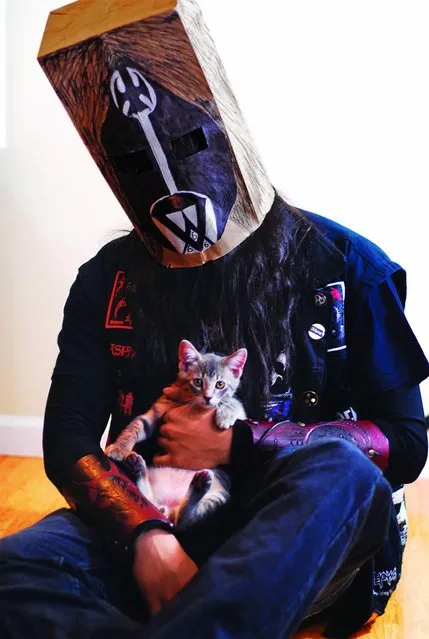
Alexandra Crockett, a musician and jewelry designer, has been present and active in the metal community since the age of 15 and is currently a doctoral student in the Bay Area. Beginning her idea for the book by doing promotional photos for bands and friends she would cat-sit for, she found an interesting dynamic between men in the metal scene and their cats. The idea for the book formed around giving accolades to local musicians and artists in the metal scene, while also bringing to light no-kill shelters and their importance for animal rights.
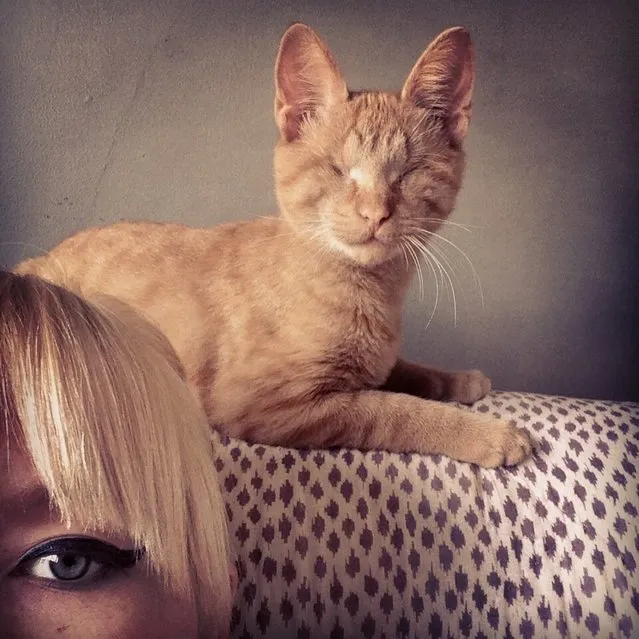
Dillon was born in the spring of 2013. He lived for four months on the streets near Boston, MA before being scooped up by the Animal Rescue League of Boston.
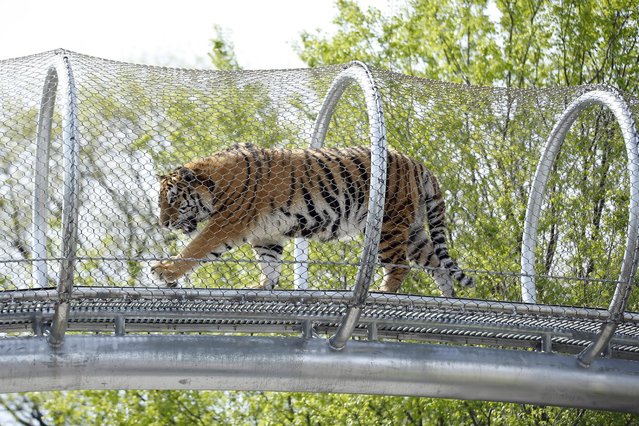
An Amur tiger walks across a passageway after a news conference at the Philadelphia Zoo, Wednesday, May 7, 2014, in Philadelphia. The see-through mesh pathway called Big Cat Crossing is part of a national trend called animal rotation that zoos use to enrich the experience of both creatures and guests. (Photo by Matt Slocum/AP Photo)
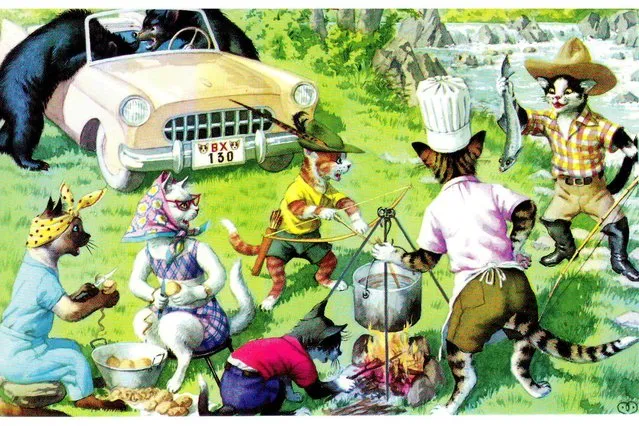
From the 1940s through the 1960s, the Alfred Mainzer Company of Long Island City, NY published a series of linen and photochrome humorous cat postcards illustrated by Eugen Hartung (or Hurtong) (1897–1973), sometimes referred to as “Mainzer Cats”. These postcards normally illustrate settings that are filled with action, often with a minor disaster just about to occur. While the dressed cats were by far the most popular and most plentiful cards, Hartung also painted other dressed animals – primarily mice, dogs, and hedgehogs.