Loading...
Done
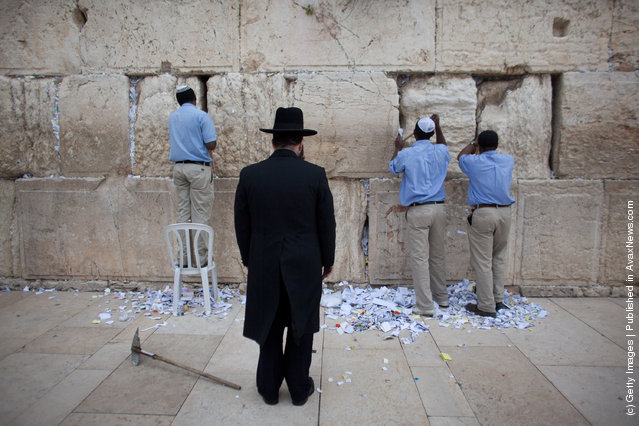
Prayers And Messages To God Are Removed From The Western Wall

Men help remove messages and prayers written by thousands of people addressed to God from the cracks in the Western Wall in preparation for the up coming Jewish Passover holiday on March 28, 2012 in Jerusalem's old city, Israel. All the notes once collected will be buried in a special place at the Mount of Olives.according tro Jewish law. Passover begins in the evening of Friday, April 6 and commemorates the story of the Exodus where the ancient Israelites were freed from slavery in Egypt. (Photo by Uriel Sinai/Getty Images)
Details
29 Mar 2012 12:32:00
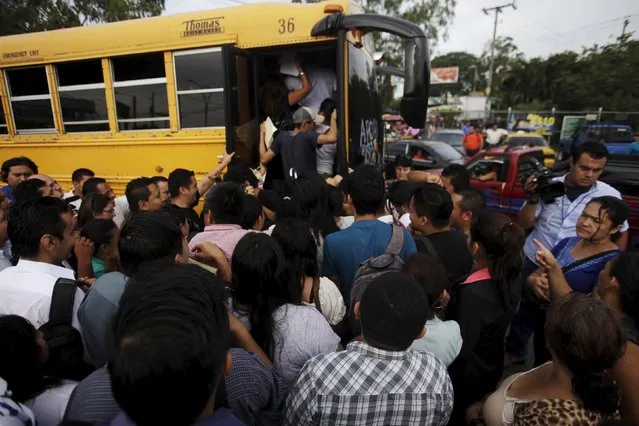
People try to board a goverment bus during the second day of a suspension of public transport services in Apopa, El Salvador July 28, 2015. (Photo by Jose Cabezas/Reuters)

People try to board a goverment bus during the second day of a suspension of public transport services in Apopa, El Salvador July 28, 2015. Violent gangs in El Salvador ordered bus drivers to strike on Monday in a conflict that has killed six people and left thousands of commuters stranded on the streets of the Central American capital, police and bus company officials said. (Photo by Jose Cabezas/Reuters)
Details
29 Jul 2015 11:10:00
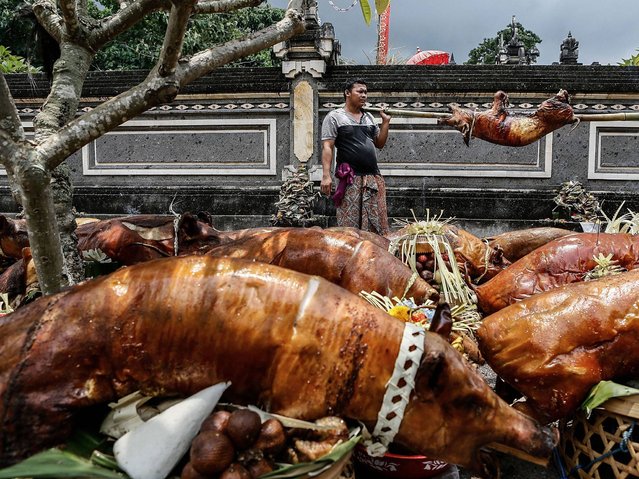
Villager searches for a place for the roasted pigs in Dalem Temple at Timbrah Village in Karangasem. (Photo by Putu Sayoga/Getty Images)

Villager search for a place for the roasted pigs in Dalem Temple at Timbrah Village on February 27, 2014 in Karangasem, Bali, Indonesia. Usaba Dalem is an annual ritual held by the people of Timbrah Village, during this ritual all the villagers will cook roasted pigs and carry them to Dalem Temple as an offering to God and an expression of gratitude for a successful harvest. (Photo by Putu Sayoga/Getty Images)
Details
28 Feb 2014 07:28:00


Tiësto, Mabel – God Is A Dancer (Official Video)
Details
16 Oct 2019 00:01:00
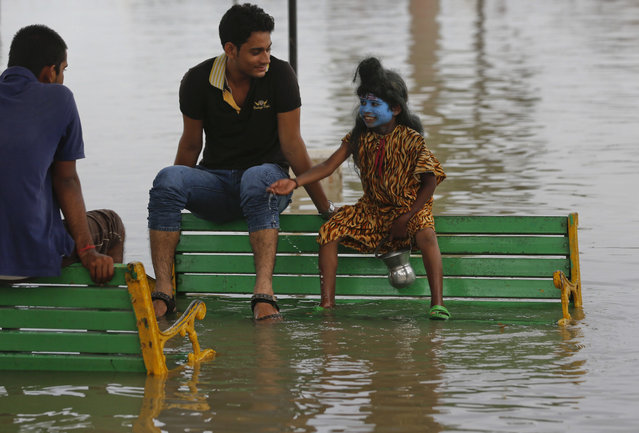
An Indian boy dressed as Hindu god Shiva to attract alms from devotees chats with tourists as they sit on benches partially submerged in flood waters on the banks of the River Ganges in Allahabad, India, Thursday, July 30, 2015. The Ganges, one of India's largest rivers is flooded following monsoon rains. (Photo by Rajesh Kumar Singh/AP Photo)

An Indian boy dressed as Hindu god Shiva to attract alms from devotees chats with tourists as they sit on benches partially submerged in flood waters on the banks of the River Ganges in Allahabad, India, Thursday, July 30, 2015. The Ganges, one of India's largest rivers is flooded following monsoon rains. (Photo by Rajesh Kumar Singh/AP Photo)
Details
05 Aug 2015 13:11:00
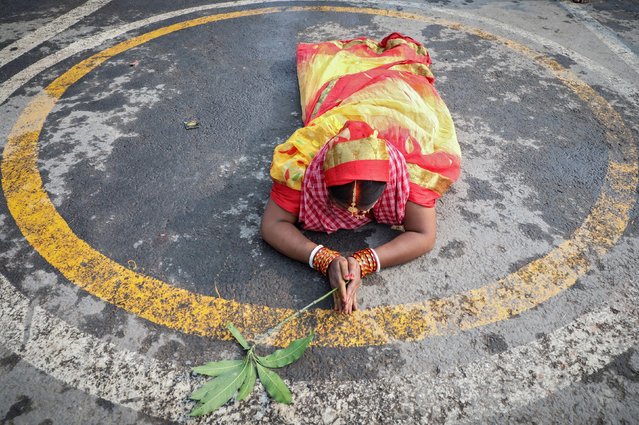
A Hindu devotee lies on the banks of river Ganges she worships the Sun god during the religious festival of Chhath Puja, amidst the spread of the coronavirus disease (COVID-19), in Kolkata, India November 20, 2020. (Photo by Rupak De Chowdhuri/Reuters)

A Hindu devotee lies on the banks of river Ganges she worships the Sun god during the religious festival of Chhath Puja, amidst the spread of the coronavirus disease (COVID-19), in Kolkata, India on November 20, 2020. (Photo by Rupak De Chowdhuri/Reuters)
Details
25 Nov 2020 00:01:00
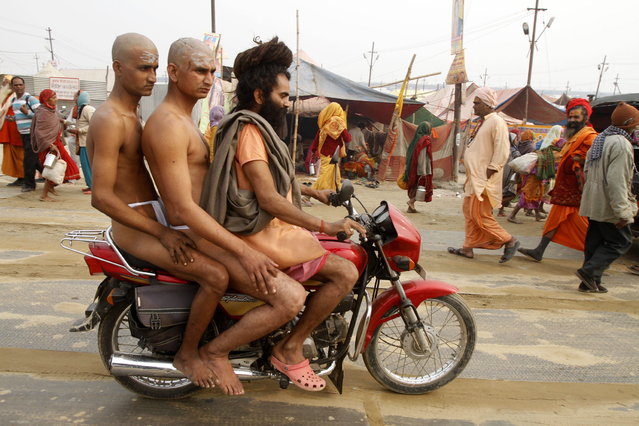
Two Hindu holy men of the Juna Akhara sect  are being take on a motorcycle by their teacher as they got delayed for a rituals that are believed to rid them of all ties in this life and dedicate themselves to serving God as a “Naga” or naked holy men, at Sangam, the confluence of the Ganges and Yamuna River during the Maha Kumbh festival in Allahabad, India, Wednesday, February 6, 2013. (Photo by Rajesh Kumar Singh/AP Photo)

Two Hindu holy men of the Juna Akhara sect are being take on a motorcycle by their teacher as they got delayed for a rituals that are believed to rid them of all ties in this life and dedicate themselves to serving God as a “Naga” or naked holy men, at Sangam, the confluence of the Ganges and Yamuna River during the Maha Kumbh festival in Allahabad, India, Wednesday, February 6, 2013. The significance of nakedness is that they will not have any worldly ties to material belongings, even something as simple as clothes. This ritual that transforms selected holy men to Naga can only be done at the Kumbh festival. (Photo by Rajesh Kumar Singh/AP Photo)
Details
07 Feb 2013 10:11:00


“Kumbh Mela is a mass Hindu pilgrimage in which Hindus gather at the Ganges river. The normal Kumbh Mela is celebrated every 3 years, the Ardh (half) Kumbh Mela is celebrated every six years at Haridwar and Prayag, the Purna (complete) Kumbh takes place every twelve years, at four places (Prayag (Allahabad), Haridwar, Ujjain, and Nashik). The Maha (great) Kumbh Mela which comes after 12 “Purna Kumbh Melas”, or 144 years, is held at Allahabad.

The last Ardh Kumbh Mela was held over a period of 45 days beginning in January 2007, more than 70 million Hindu pilgrims took part in the Ardh Kumbh Mela at Prayag, and on January 15, the most auspicious day of the festival of Makar Sankranti, more than 5 million participated. The previous Maha Kumbh Mela, held in 2001, was attended by around 60 million people, making it at the time the largest gathering anywhere in the world in recorded history”. – Wikipedia

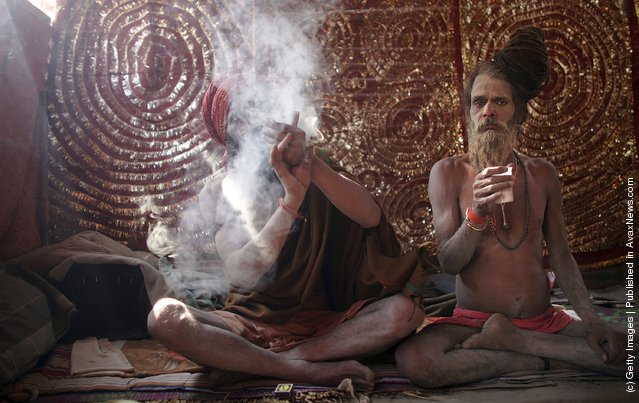
Photo: Sadhus (holy men) smoke at their camp near the ritual site at Sangam, the confluence of the Ganges, Yamuna and mythical Saraswati rivers during the Ardh Kumbh Mela festival (Half Pitcher festival) January 18, 2007 in Allahabad, India. Millions of Hindu pilgrims have flocked to the largest religious gathering in the world which lasts for 45 days in northern India. The festival commemorates the mythical conflict between gods and demons over a pitcher filled with the “nectar of immortality”. Devotees believe that taking a holy dip in the Ganges at this time washes away their sins and paves the path to salvation. (Photo by Mario Tama/Getty Images)

Details
30 Jun 2011 10:27:00