Loading...
Done
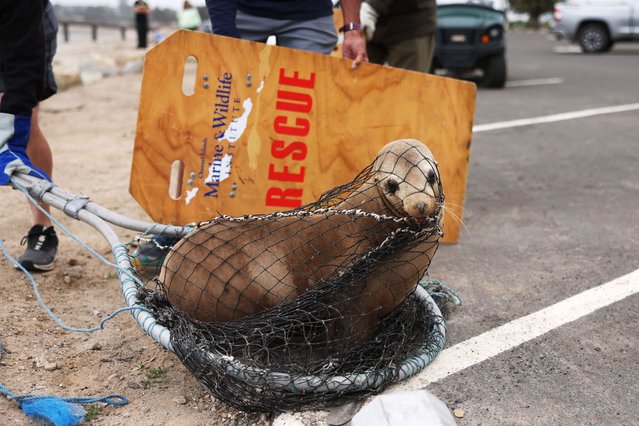
A sick California sea lion with possible domoic acid poisoning is rescued to be evaluated by volunteers from CIMWI (Channel Islands Marine & Wildlife Institute) in Santa Barbara, California, on March 25, 2025. Over a hundred sea lions, dolphins and other marine mammals, including birds, have been sickened by domoic acid poisoning from algal blooms in Southern California since February, US media reported. (Photo by David Swanson/AFP Photo)

A sick California sea lion with possible domoic acid poisoning is rescued to be evaluated by volunteers from CIMWI (Channel Islands Marine & Wildlife Institute) in Santa Barbara, California, on March 25, 2025. Over a hundred sea lions, dolphins and other marine mammals, including birds, have been sickened by domoic acid poisoning from algal blooms in Southern California since February, US media reported. (Photo by David Swanson/AFP Photo)
Details
02 Apr 2025 04:29:00
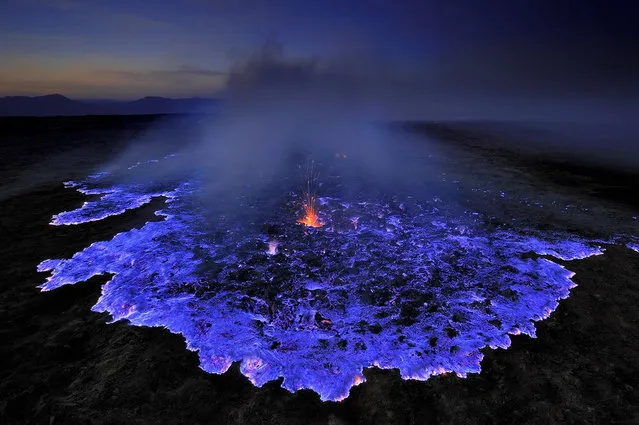
Blue Lava, Kawah Ijen Volcano, Indonesia

Located in East Java, Indonesia, Kawah Ijen is a volcano is home to the largest acidic crater lake in the world. What turns the waters of the lake in the 1 km caldera its beautiful turquoise color are the highly sulfuric gases emitted from the volcano underneath.
Details
07 May 2014 12:20:00
A car passes through an area of the boardwalk hit by strong waves in Havana, Cuba, 05 February 2024. The Cuban Institute of Meteorology (Insmet) recorded strong gusts of wind of up to 104 kilometers per hour and strong waves in the west of the island due to a cold front associated with an “extratropical low”. (Photo by Ernesto Mastrascusa/EPA)

A car passes through an area of the boardwalk hit by strong waves in Havana, Cuba, 05 February 2024. The Cuban Institute of Meteorology (Insmet) recorded strong gusts of wind of up to 104 kilometers per hour and strong waves in the west of the island due to a cold front associated with an “extratropical low”. (Photo by Ernesto Mastrascusa/EPA)
Details
09 Apr 2024 05:44:00
A bride gets tested for the coronavirus disease (COVID-19) at a nucleic acid testing site, following the coronavirus disease (COVID-19) outbreak in Shanghai, China on November 15, 2022. (Photo by Aly Song/Reuters)

A bride gets tested for the coronavirus disease (COVID-19) at a nucleic acid testing site, following the coronavirus disease (COVID-19) outbreak in Shanghai, China on November 15, 2022. (Photo by Aly Song/Reuters)
Details
23 Nov 2022 04:11:00
A man disinfects the personal protection suit of a medical worker at a nucleic acid testing station, following the coronavirus disease (COVID-19) outbreak, in Beijing, China, June 16, 2022. (Photo by Thomas Peter/Reuters)

A man disinfects the personal protection suit of a medical worker at a nucleic acid testing station, following the coronavirus disease (COVID-19) outbreak, in Beijing, China, June 16, 2022. (Photo by Thomas Peter/Reuters)
Details
21 Jun 2022 05:49:00
A protester, wearing a dress in the colours of the Ukrainian flag, is detained by security after she covered herself in fake blood on the stairs on the Festival Palace ahead of the screening of the film “Acide” during the 76th edition of the Cannes Film Festival in Cannes, southern France, on May 21, 2023. (Photo by Christophe Simon/AFP Photo)

A protester, wearing a dress in the colours of the Ukrainian flag, is detained by security after she covered herself in fake blood on the stairs on the Festival Palace ahead of the screening of the film “Acide” during the 76th edition of the Cannes Film Festival in Cannes, southern France, on May 21, 2023. (Photo by Christophe Simon/AFP Photo)
Details
22 Aug 2024 03:35:00
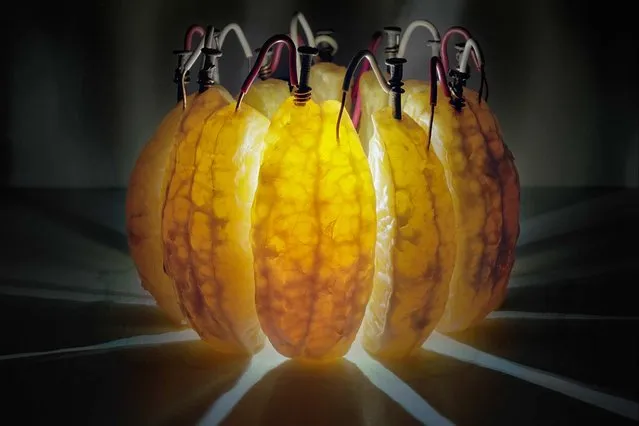
Wedges of an orange generate enough current and electrical juice – 3.5 volts – to power an LED. The fruit’s citric acid helps electrons flow from galvanized nails to copper wire in this 14-hour exposure. This image was published in September’s Visions of Earth, a trio of photos that appear in each issue of National Geographic. (Photo by Caleb Charland/National Geographic)

Wedges of an orange generate enough current and electrical juice – 3.5 volts – to power an LED. The fruit’s citric acid helps electrons flow from galvanized nails to copper wire in this 14-hour exposure. This image was published in September’s Visions of Earth, a trio of photos that appear in each issue of National Geographic. (Photo by Caleb Charland/National Geographic)
Details
06 Jan 2014 12:09:00
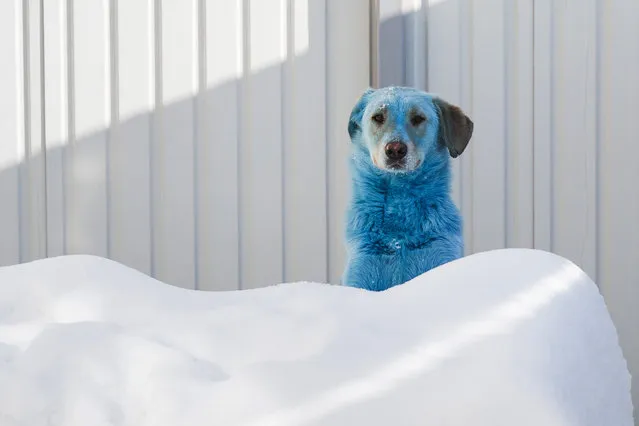
A dog at the Zoozashchita-NN veterinary clinic in Nizhny Novgorod, Russia on February 19, 2021. On February 13, 13 stray dogs with bright blue fur were found and caught at the Dzerzhinskoye Steklo (Dzerzhinsk Glass) factory producing acrylic glass and prussic acid in the city of Dzerzhinsk. The dogs' fur tested positive for the Prussian blue pigment; now the dogs are under supervision at the Zoozashchita-NN vet clinic in Nizhny Novgorod. (Photo by Mikhail Solunin/TASS)

A dog at the Zoozashchita-NN veterinary clinic in Nizhny Novgorod, Russia on February 19, 2021. On February 13, 13 stray dogs with bright blue fur were found and caught at the Dzerzhinskoye Steklo (Dzerzhinsk Glass) factory producing acrylic glass and prussic acid in the city of Dzerzhinsk. The dogs' fur tested positive for the Prussian blue pigment; now the dogs are under supervision at the Zoozashchita-NN vet clinic in Nizhny Novgorod. (Photo by Mikhail Solunin/TASS)
Details
11 Jan 2022 07:20:00