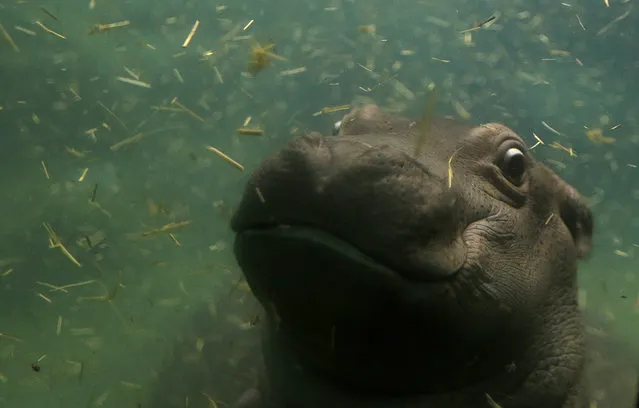
A baby hippo swims under the water in its enclosure at Prague Zoo, Czech Republic, February 24, 2016. The baby was born on January 28, and is yet to be named. (Photo by David W. Cerny/Reuters)
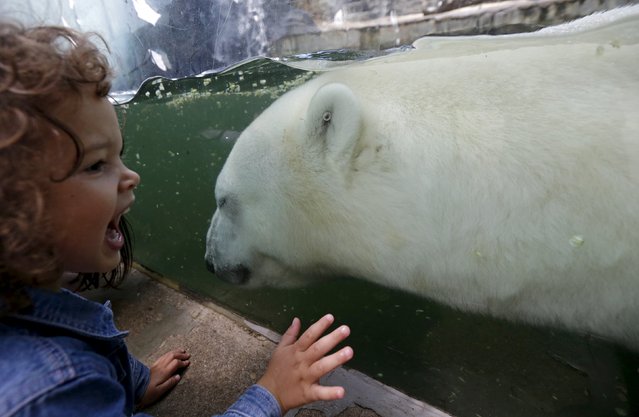
A child looks at a polar bear swimming under a water in its enclosure on a hot summer day at Prague Zoo, Czech Republic, July 30, 2015. (Photo by David W. Cerny/Reuters)
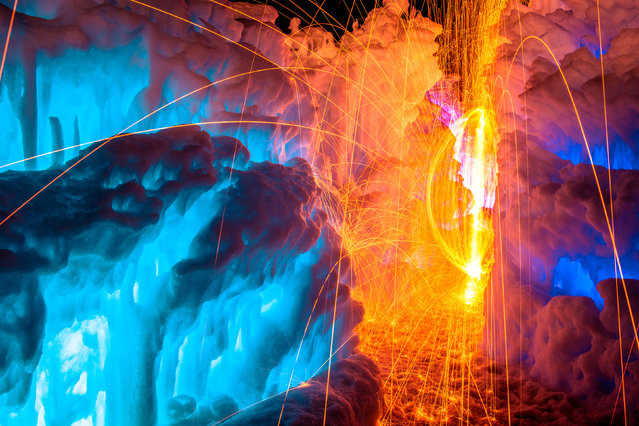
A photographer has discovered a spectacular way of keeping warm during winter – using fire to heat up icy locations. Sam Scholes uses long-exposures to capture the movement of fire in front of ice-covered backdrops. After lighting steel wool his friend Scott Stringham swings the flaming object in order to make swirling patterns. The result of this technique – captured at Midway Ice Castles in Utah is a vibrant image with the warm light dancing across the cold scenes. (Photo by Sam Scholes/Caters News)
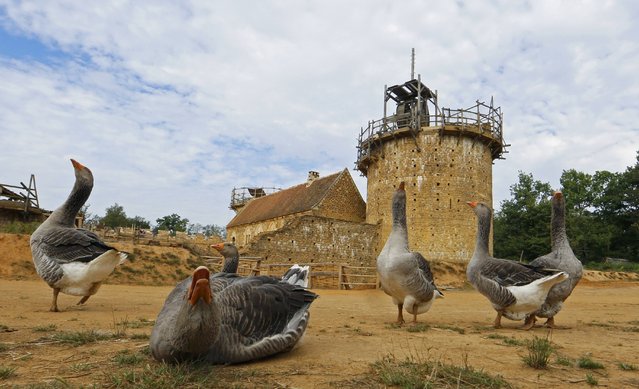
A view of the construction site of the Chateau de Guedelon near Treigny in the Burgundy region of France, September 13, 2016. Blacksmiths, stonemasons and quarry men are hard at work in a Burgundy forest building a 13th-century-style castle using the most basic tools and materials, replicating the methods used hundreds of years ago to better understand them. (Photo by Jacky Naegelen/Reuters)
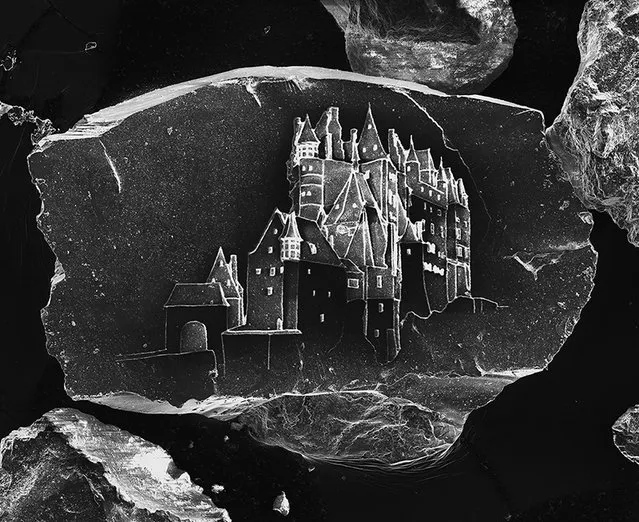
Artist Vik Muniz is known for his gigantic composite installations and sculptures created from thousands of individual objects. In this new collaboration with artist and MIT researcher Marcelo Coelho, Muniz takes the opposite approach and explores the microscopic with a new series of sandcastles etched onto individual grains of sand.
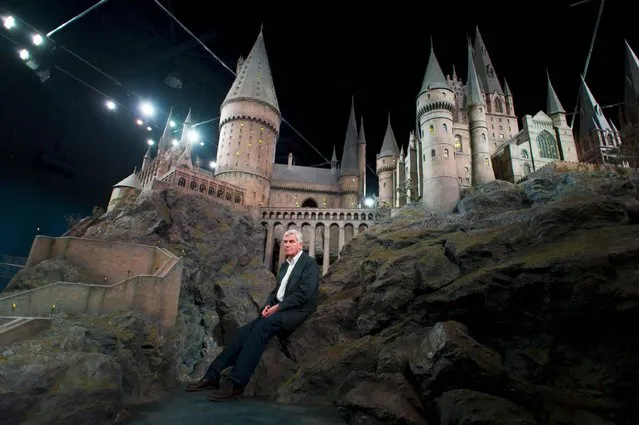
Production Designer Stuart Craig was on hand today at Warner Bros. Studio Tour London - The Making of Harry Potter to reveal one of the best kept secrets of the tour: the incredibly detailed model of Hogwarts castle used in the films.
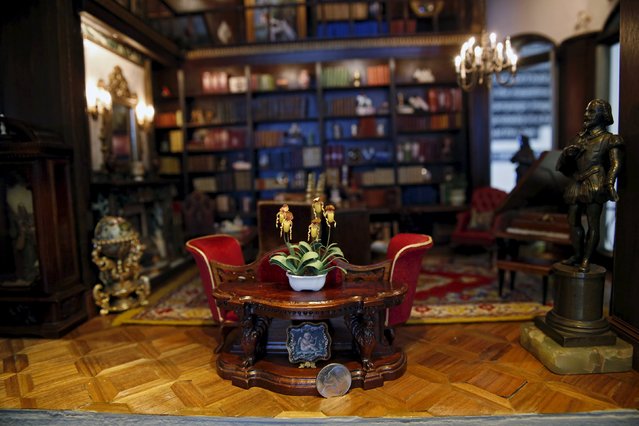
Miniature books and furniture are displayed in the "library" of the Astolat Castle, a 3 metre (9 foot) tall dollhouse, currently on display in New York November 14, 2015. Appraised at $8.5 million, the Astolat Castle, weighs 363 kg (800 pounds) and has 29 rooms, according to local media. (Photo by Lucas Jackson/Reuters)
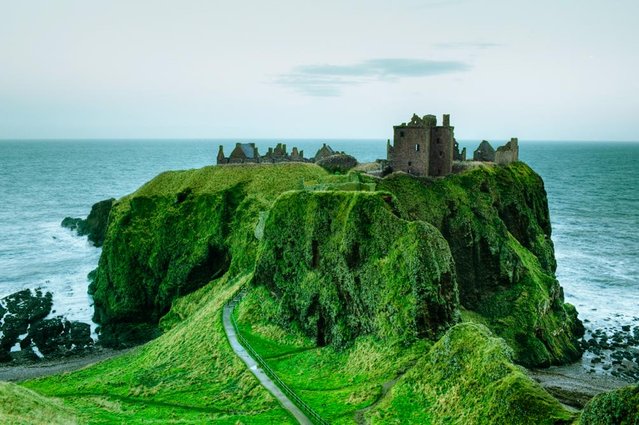
Dunnottar Castleis a ruined medieval fortress located upon a rocky headland on the north-east coast of Scotland, about 3 kilometres (1.9 mi) south of Stonehaven. The surviving buildings are largely of the 15th and 16th centuries, but the site is believed to have been fortified in the Early Middle Ages. Dunnottar has played a prominent role in the history of Scotland through to the 18th-century Jacobite risings because of its strategic location and the strength of its situation. Dunnottar is best known as the place where the Honours of Scotland, the Scottish crown jewels, were hidden from Oliver Cromwell's invading army in the 17th century. The property of the Keiths from the 14th century, and the seat of the Earl Marischal, Dunnottar declined after the last Earl forfeited his titles by taking part in the Jacobite rebellion of 1715. The castle was restored in the 20th century and is now open to the public.