Loading...
Done
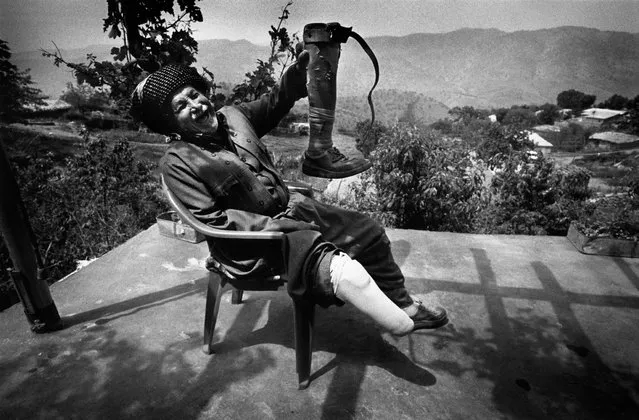
Ismail Mustafa, seen in 2007. “I was collecting mushrooms on the hill near here. I didn’t see the mine. There was a huge explosion. When I woke up I saw that both my legs were gone; I thought my life was over. My brother and another guy were with me. They made a stretcher from sticks and tied it together with clothing. It took two hours to get off the mountain. ‘My daughter has also been injured. She found a shell and brought it into the house and put it on the fire. She didn’t know what she was doing at the time – she was only three. She is blind and has lost an arm”. (Photo by Sean Sutton for the Mines Advisory Group/The Guardian)

Ismail Mustafa, seen in 2007. “I was collecting mushrooms on the hill near here. I didn’t see the mine. There was a huge explosion. When I woke up I saw that both my legs were gone; I thought my life was over. My brother and another guy were with me. They made a stretcher from sticks and tied it together with clothing. It took two hours to get off the mountain. ‘My daughter has also been injured. She found a shell and brought it into the house and put it on the fire. She didn’t know what she was doing at the time – she was only three. She is blind and has lost an arm”. (Photo by Sean Sutton for the Mines Advisory Group/The Guardian)
Details
08 Sep 2017 09:33:00
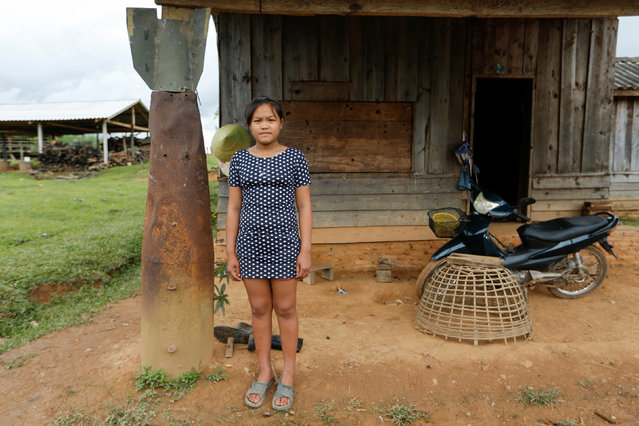
A girl poses at an entrance of her house next to a bomb dropped by the U.S. Air Force planes during the Vietnam War, in the village of Ban Napia in Xieng Khouang province, Laos September 3, 2016. (Photo by Jorge Silva/Reuters)

A girl poses at an entrance of her house next to a bomb dropped by the U.S. Air Force planes during the Vietnam War, in the village of Ban Napia in Xieng Khouang province, Laos September 3, 2016. From 1964 to 1973, U.S. warplanes dropped more than 270 million cluster munitions on Laos, one-third of which did not explode, according to the Lao National Regulatory Authority. (Photo by Jorge Silva/Reuters)
Details
06 Sep 2016 10:30:00
A glamour model Lacey Banghard attends a photocall for PETA to encourage pet owners to have their cats and dogs sterilised at Picadilly Circus on January 22, 2013 in London, England. (Photo by Ben Pruchnie)

A glamour model Lacey Banghard attends a photocall for PETA to encourage pet owners to have their cats and dogs sterilised at Picadilly Circus on January 22, 2013 in London, England. (Photo by Ben Pruchnie)
Details
23 Jan 2013 08:41:00
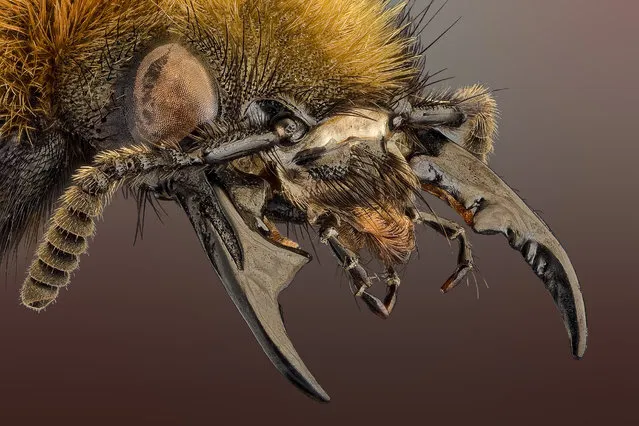
Emus hirtus (Linnaeus, 1758). (Andrea Hallgass)

Emus hirtus (Linnaeus, 1758). (Photo by Andrea Hallgass)
Details
06 Dec 2012 11:32:00
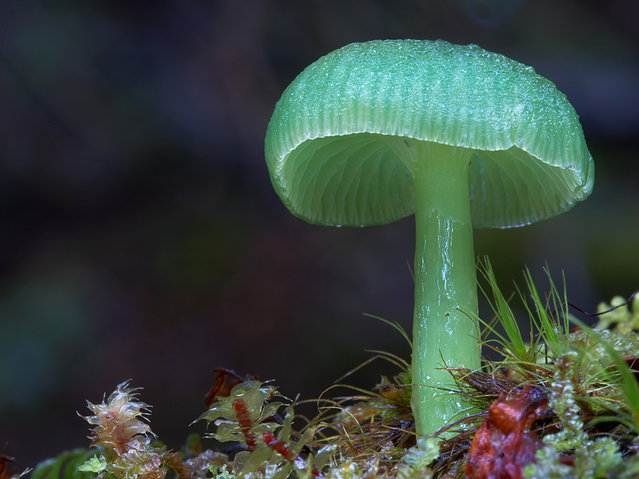
Hygrocybe graminicolor. (Photo and caption by Steve Axford)

Hygrocybe graminicolor. (Photo and caption by Steve Axford)
Details
19 May 2013 07:11:00
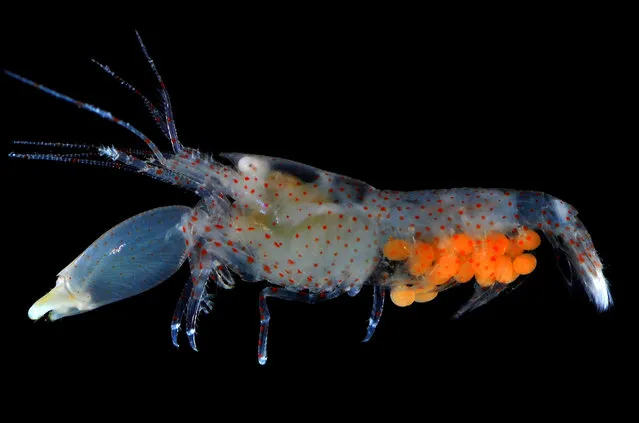
Synalpheus iocasta; Singapore Marine. (Arthur Anker)

Synalpheus iocasta; Singapore Marine. (Photo by Arthur Anker)
Details
26 Apr 2013 09:27:00
Nikon Small World Photomicrography Competition 2012. Honorable Mention. “Snow crystal, illuminated with colored lights (5x)”. (Photo by Dr. Kenneth Libbrecht, California Institute of Technology (Caltech), Department of Physics, Pasadena, California, USA)

Most people know Nikon as a purveyor of pro and consumer-grade digital cameras. But the company's expertise with optics bleeds over into related markets – it's one of the science community's major suppliers of microscopes. And each year the company asks the community to send it some of their favorite images of tiny objects. A panel of scientists and journalists have chosen the best of this past year's submissions, which Nikon has placed on its Small World site.

Photo: Honorable Mention. “Snow crystal, illuminated with colored lights (5x)”. (Photo by Dr. Kenneth Libbrecht, California Institute of Technology (Caltech), Department of Physics, Pasadena, California, USA)
Details
25 Oct 2012 13:49:00
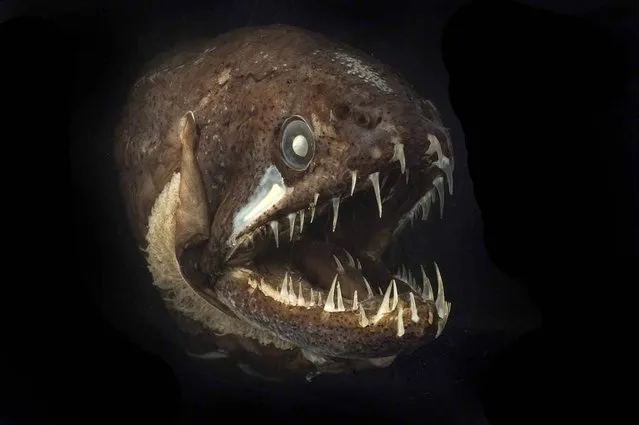
Imagine living in the sea where it is permanently dark, cold, and food is hard to find. For many animals at depth, it may be weeks to months between meals. If you find something to eat, you have to hang on to it

Imagine living in the sea where it is permanently dark, cold, and food is hard to find. For many animals at depth, it may be weeks to months between meals. If you find something to eat, you have to hang on to it. This is why so many deep-sea fishes have lots of big teeth. This dragonfish, spotted off the coast of Australia, even has teeth on its tongue. They would be terrifying animals ... if they weren’t the size of a banana. (Photo by Julian Finn/Museum Victoria)
Details
21 May 2012 12:14:00