Loading...
Done
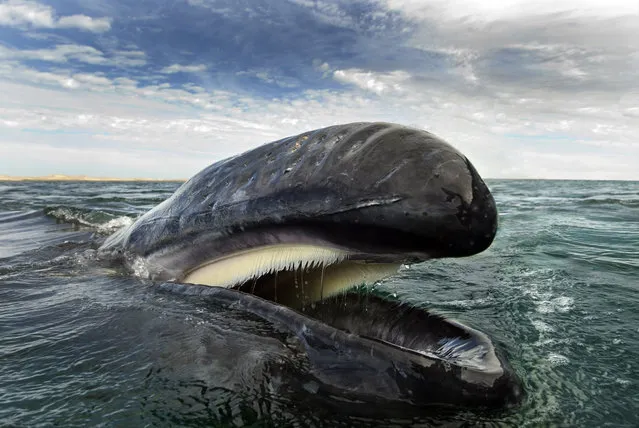
Gray whale feeding at the surface and showing it's baleen. (Photo by Christopher Swann/Biosphoto)

Gray whale feeding at the surface and showing it's baleen. (Photo by Christopher Swann/Biosphoto)
Details
11 Jun 2017 07:23:00
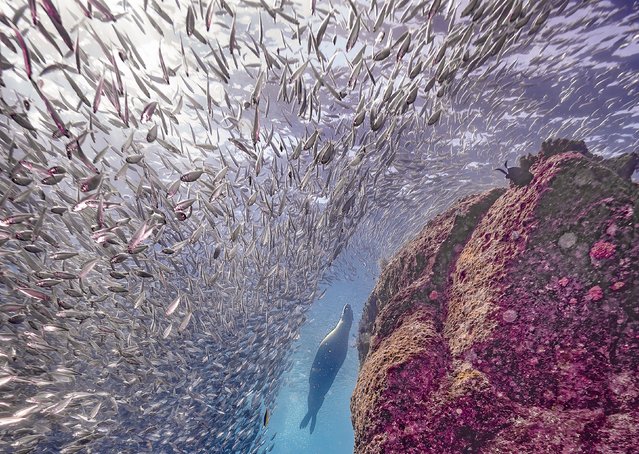
Sea lions make dinner plans in the Gulf of California early July 2024. The gulf is a primary source of sardines and anchovies, two of Mexico’s top marine resources. (Photo by Glenn Ostle/Solent News)

Sea lions make dinner plans in the Gulf of California early July 2024. The gulf is a primary source of sardines and anchovies, two of Mexico’s top marine resources. (Photo by Glenn Ostle/Solent News)
Details
04 Oct 2024 04:04:00
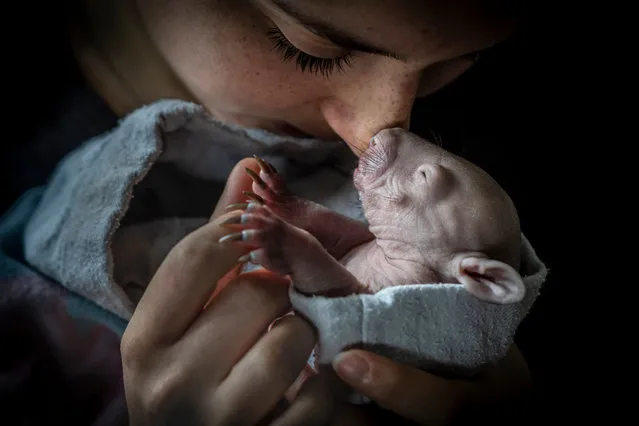
Nose to Nose; Human/Nature winner. “Doug Gimesy was documenting work at the Joey and Bat Sanctuary near Melbourne when he met a wombat (Vombatus ursinus) whose mother had been killed by a car. Gimesy watched as a young veterinary student bottle-fed the orphaned joey, then touched her nose to the joey’s in a tender moment of interspecies bonding”. (Photo by Doug Gimesy/BigPicture)

Nose to Nose; Human/Nature winner. “Doug Gimesy was documenting work at the Joey and Bat Sanctuary near Melbourne when he met a wombat (Vombatus ursinus) whose mother had been killed by a car. Gimesy watched as a young veterinary student bottle-fed the orphaned joey, then touched her nose to the joey’s in a tender moment of interspecies bonding”. (Photo by Doug Gimesy/BigPicture)
Details
25 Jun 2023 05:33:00
1st Place in Wildlife: A male orangutan peers from behind a tree while crossing a river in Borneo, Indonesia. (Photo by Jayaprakash Joghee Bojan/National Geographic Nature Photographer of the Year contest 2017)

1st Place in Wildlife: A male orangutan peers from behind a tree while crossing a river in Borneo, Indonesia. (Photo by Jayaprakash Joghee Bojan/National Geographic Nature Photographer of the Year contest 2017)
Details
15 Dec 2017 06:34:00
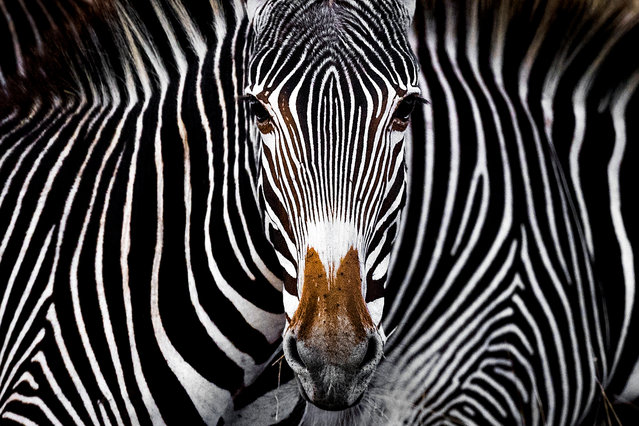
The Grevy’s Illusion by Yaron Schmid, USA: a Grevy’s zebra staring at the camera in Lewa, Kenya. Third place – wildlife. (Photo by Yaron Schmid/The Nature Conservancy Global Photo Contest 2019)

The Grevy’s Illusion by Yaron Schmid, USA: a Grevy’s zebra staring at the camera in Lewa, Kenya. Third place – wildlife. (Photo by Yaron Schmid/The Nature Conservancy Global Photo Contest 2019)
Details
24 Sep 2019 00:05:00
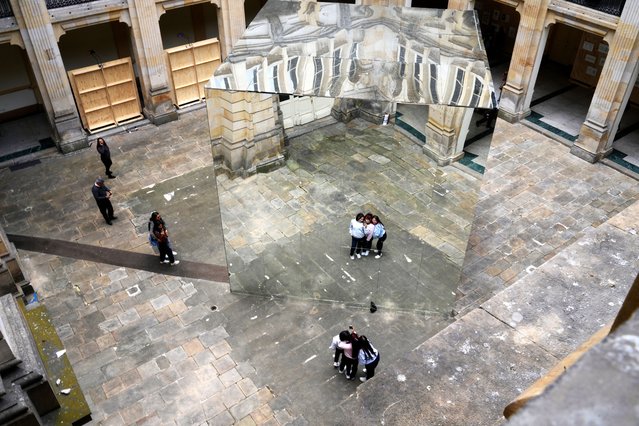
A trio poses for a photo in front of the art installation Surrender (Flag) by John Gerrard of Ireland displayed in a courtyard of the Palacio de San Francisco, as part of the first art biennial in Bogota, Colombia, Tuesday, September 23, 2025. (Photo by Fernando Vergara/AP Photo)

A trio poses for a photo in front of the art installation Surrender (Flag) by John Gerrard of Ireland displayed in a courtyard of the Palacio de San Francisco, as part of the first art biennial in Bogota, Colombia, Tuesday, September 23, 2025. (Photo by Fernando Vergara/AP Photo)
Details
18 Nov 2025 04:11:00
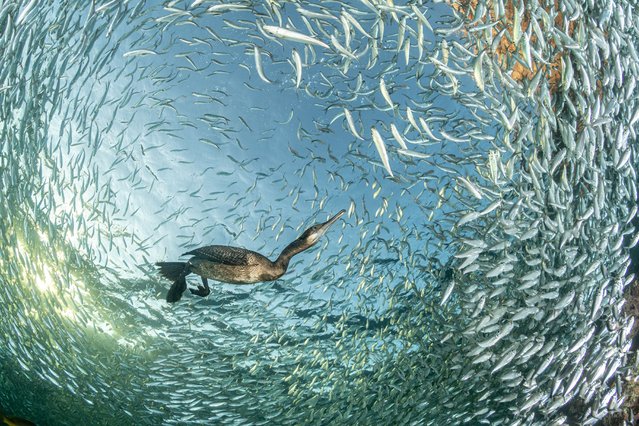
Entitled Feasting at Sunset, this photo of a Brandt’s cormorant among pilchards was the winner of the Birds in the Environment category in the 2025 Bird Photographer of the Year competition. (Photo by Franco Banfi/The Guardian)

Entitled Feasting at Sunset, this photo of a Brandt’s cormorant among pilchards was the winner of the Birds in the Environment category in the 2025 Bird Photographer of the Year competition. (Photo by Franco Banfi/The Guardian)
Details
07 Dec 2025 06:27:00
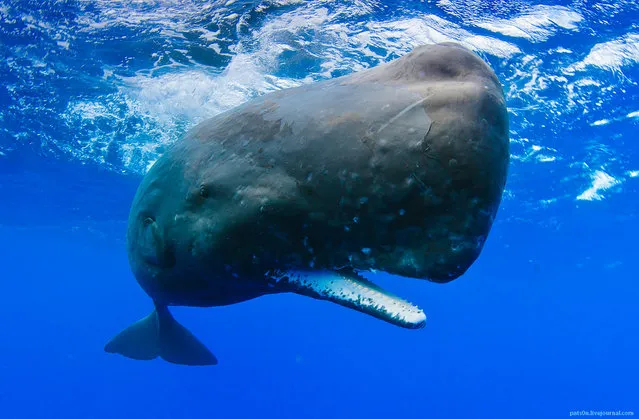
“Sperm whale opening it's huge mouth, Ogasawara Islands, Japan. Sperm whales are the biggest carnivorous animals on the planet. Each teeth in the mouth of adult specimen weights more than 1 kilogram. Interestingly enough that modern marine biologists believe that these teeth despite being fearsome play little role in capturing and eating giant squid – with their main function being mainly ritual aggression between males!”. (Alexander Safonov)

“Sperm whale opening it's huge mouth, Ogasawara Islands, Japan. Sperm whales are the biggest carnivorous animals on the planet. Each teeth in the mouth of adult specimen weights more than 1 kilogram. Interestingly enough that modern marine biologists believe that these teeth despite being fearsome play little role in capturing and eating giant squid – with their main function being mainly ritual aggression between males!”. (Photo by Alexander Safonov)
Details
30 Nov 2012 11:22:00