Loading...
Done
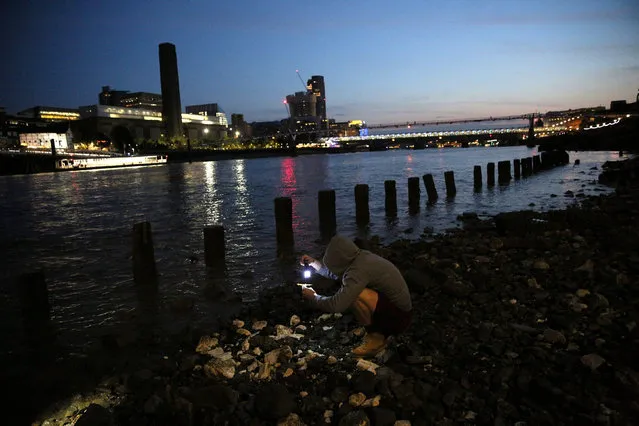
A mudlark uses a torch to look for items on the bank of the River Thames in London, Britain June 06, 2016. Mudlarking is believed to trace its origins to the 18th and 19th century, when scavengers searched the Thames' shores for items to sell. These days, history and archaeology fans are the ones hoping to find old relics such as coins, ceramics, artifacts or everyday items from across centuries. They wait for the low tide and then scour specific areas of exposed shores. "If you're in a field you could be out all day long, with the river you're restricted to about two or three hours," mudlark Nick Stevens said. While many just use the naked eye for their searches, others rely on metal detectors for which a permit from the Port of London Authority is needed. Digging also requires consent. (Photo by Neil Hall/Reuters)

A mudlark uses a torch to look for items on the bank of the River Thames in London, Britain June 06, 2016. Mudlarking is believed to trace its origins to the 18th and 19th century, when scavengers searched the Thames' shores for items to sell. These days, history and archaeology fans are the ones hoping to find old relics such as coins, ceramics, artifacts or everyday items from across centuries. their finds with the Portable Antiquities Scheme. Any item over 300 years old must be recorded. (Photo by Neil Hall/Reuters)
Details
27 Aug 2016 10:43:00
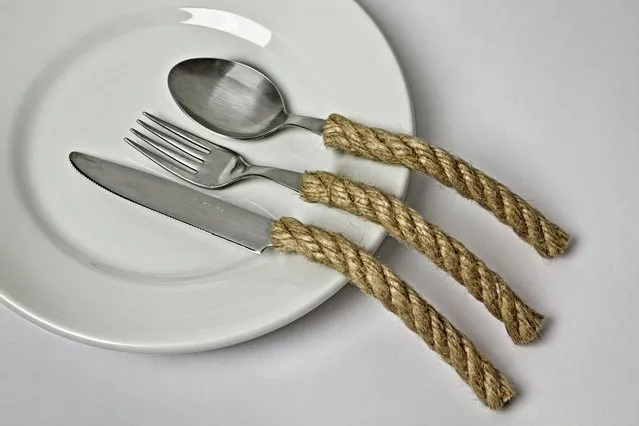
Cuttlery with rope handles. (Photo by Giuseppe Colarusso/Caters News)

An artist has created series of wacky images turning everyday items into hilarious and all but impossible to use objects. Giuseppe Colarusso, 49, fashioned the unique work to make people question the functionality of the likes of cutlery, garden tools and office equipment. The set of playful pictures, entitled “Improbabilita”, makes some items impossible to use, others improbable and some given a completely new function altogether. From a dice with no spots, to a ping pong paddle with a hole in it, the items have all been given a quirky twist. Photo: Cuttlery with rope handles. (Photo by Giuseppe Colarusso/Caters News)
Details
27 Jun 2013 07:37:00
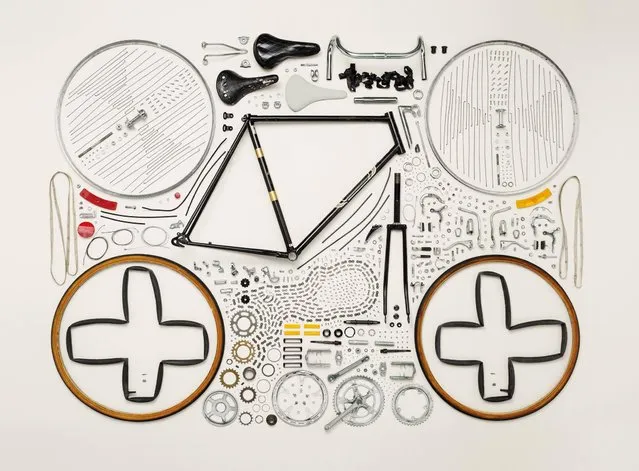
Deconstructed Objects By Todd McLellan

It is simply staggering how complicated some items really are. We never think about it, but some items that we use every day consist of hundreds of parts meticulously put together and working perfectly. Todd McLellan is a photographer who based his newest book “Things Come Apart” on the complexity of various old and new tech. By carefully taking apart various items and arranging all of the parts in perfect order, Todd has allowed us not only to look inside various appliances, but also to appreciate the astounding complexity of these items. Just like the human mind, we are so used to seeing and talking with people that we forget just how complicated their minds really are. It would be great if we could “take apart” the human mind in order to gain some insight into the person’s thoughts and desires. However, very few people are capable of doing it, while the rest will remain blind to the obvious. (Photo by Todd McLellan)
Details
15 Nov 2014 12:30:00
A girl carries a bag of recyclable items she collected from a landfill on the outskirts of Sanaa, Yemen November 16, 2016. (Photo by Mohamed al-Sayaghi/Reuters)

A girl carries a bag of recyclable items she collected from a landfill on the outskirts of Sanaa, Yemen November 16, 2016. (Photo by Mohamed al-Sayaghi/Reuters)
Details
16 Dec 2016 10:26:00
Ty, a 15-year-old boy, poses for a picture while collecting usable items at a landfill dumpsite outside Siem Reap March 19, 2015. Ty, who finished  six-grade primary school, said he makes 5 USD per month working at the dumpsite. (Photo by Athit Perawongmetha/Reuters)

Ty, a 15-year-old boy, poses for a picture while collecting usable items at a landfill dumpsite outside Siem Reap March 19, 2015. Ty, who finished six-grade primary school, said he makes 5 USD per month working at the dumpsite. (Photo by Athit Perawongmetha/Reuters)
Details
22 Mar 2015 11:13:00
A woman rolls a marijuana cigarette during the first “Expo Cannabis” fair  in Montevideo December 14, 2014. Expo Cannabis offers conferences about different topics such as the medicinal use of cannabis and cultivation techniques as well as displaying hemp goods, cannabis cultivation items and seeds. (Photo by Andres Stapff/Reuters)

A woman rolls a marijuana cigarette during the first “Expo Cannabis” fair in Montevideo December 14, 2014. Expo Cannabis offers conferences about different topics such as the medicinal use of cannabis and cultivation techniques as well as displaying hemp goods, cannabis cultivation items and seeds. (Photo by Andres Stapff/Reuters)
Details
16 Dec 2014 12:30:00
A resident removes mud on a street brought by monsoon rains in San Mateo, Rizal, Philippines, August 14, 2016. (Photo by Erik De Castro/Reuters)

A resident removes mud on a street brought by monsoon rains in San Mateo, Rizal, Philippines, August 14, 2016. (Photo by Erik De Castro/Reuters)
Details
16 Aug 2016 09:58:00


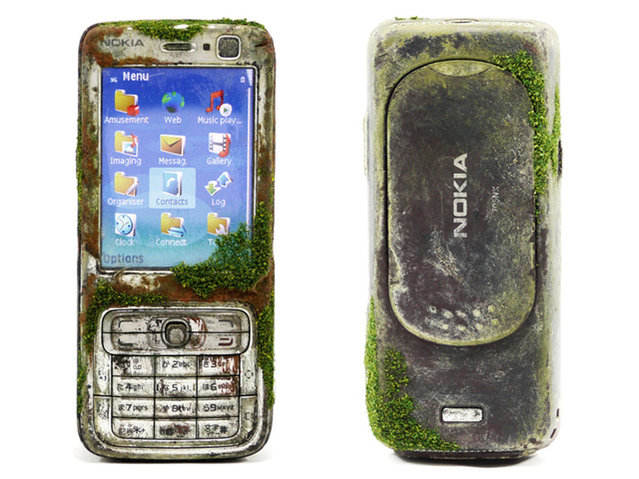
The concept is pretty straightforward – imagining what everyday items might look like in 100 years. In an apocalyptic kind of way. The realness of her paints are mind-boggling.
Details
27 Mar 2013 07:50:00