Loading...
Done
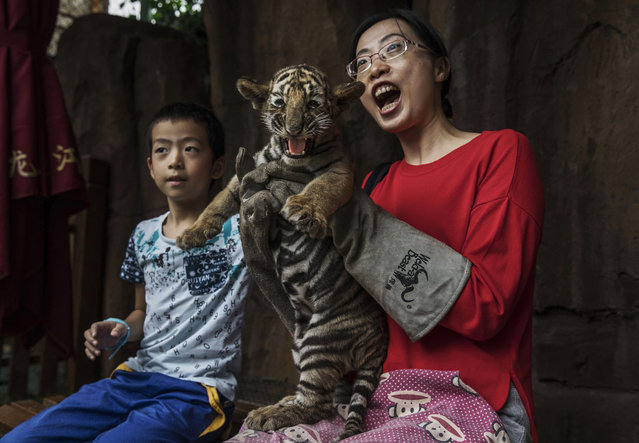
A Chinese tourist wears protective gloves as she holds a baby Siberian tiger as they pose for pictures at the Heilongjiang Siberian Tiger Park on August 16, 2017 in Harbin, northern China. (Photo by Kevin Frayer/Getty Images)

A Chinese tourist wears protective gloves as she holds a baby Siberian tiger as they pose for pictures at the Heilongjiang Siberian Tiger Park on August 16, 2017 in Harbin, northern China. The center is one of two Siberian tiger parks in the Chinese province of Heilongjiang, about 500 kilometers (300 miles) from the border with Russia. It is considered the world's largest for breeding the Siberian, or Amur, tiger which is listed as endangered by the World Wildlife Federation. (Photo by Kevin Frayer/Getty Images)
Details
23 Aug 2017 08:29:00
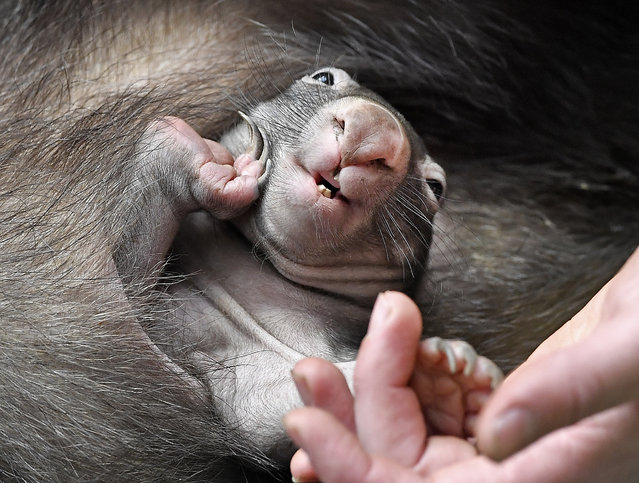
The little new born wombat baby APARI sitting in its mothers pouch at the zoo in Duisburg, Germany, Thursday, March 29, 2018. Wombat mother TINSEL once was found in the pouch of its dead mother on a street in Australia and was raised by zookeepers before she came to Germany. The zoo tried for 40 years in vain to breed a wombat, until APARI was born as the first one last week. (Photo by Martin Meissner/AP Photo)

The little new born wombat baby APARI sitting in its mothers pouch at the zoo in Duisburg, Germany, Thursday, March 29, 2018. Wombat mother TINSEL once was found in the pouch of its dead mother on a street in Australia and was raised by zookeepers before she came to Germany. The zoo tried for 40 years in vain to breed a wombat, until APARI was born as the first one last week. (Photo by Martin Meissner/AP Photo)
Details
01 Apr 2018 00:03:00
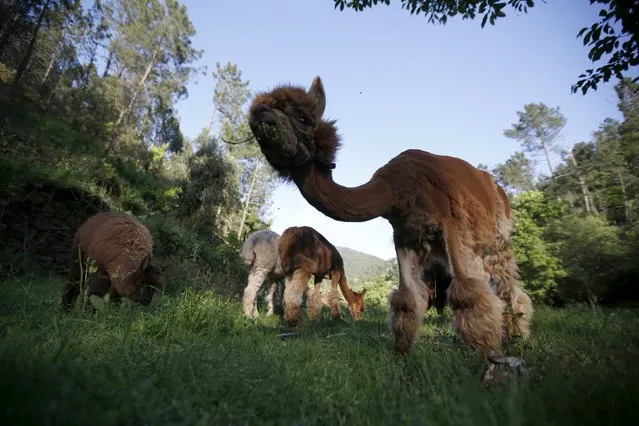
Alpacas of Lisa Vella-Gatt (not pictured) graze at her farm near Benfeita, Portugal May 11, 2015. (Photo by Rafael Marchante/Reuters)

Alpacas of Lisa Vella-Gatt (not pictured) graze at her farm near Benfeita, Portugal May 11, 2015. Lisa came to Portugal from England in 2009 to set up Monte Frio Alpacas, a project where she breeds alpacas, which produce wool. Lisa's 14 alpacas produce about 50 kilos (110 pounds) of wool annually. (Photo by Rafael Marchante/Reuters)
Details
20 May 2015 08:33:00
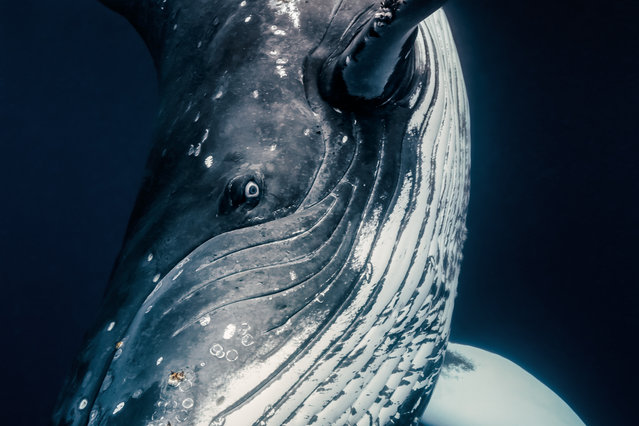
“To look into a whale’s eye is life-changing and humbling. Well, it’s the same with dolphins but they are mostly very fast in the water. A whale’s eye is unexpectedly looking, just like a human eye, kinda checking you out”. (Photo by Rita Kluge/The Guardian)

With the humpback calving season drawing to a close, here’s a look at some of Rita Kluge’s distinctive marine photos from the south Pacific. The Sydney-based photographer fell in love with whales after witnessing southern rights from the New South Wales coastline as they travelled to and from their feeding grounds in the Antarctic. She has since been to Tonga, where humpbacks breed and calf in winter months, to photograph them in the water. (Photo by Rita Kluge/The Guardian)
Details
26 Oct 2016 11:09:00
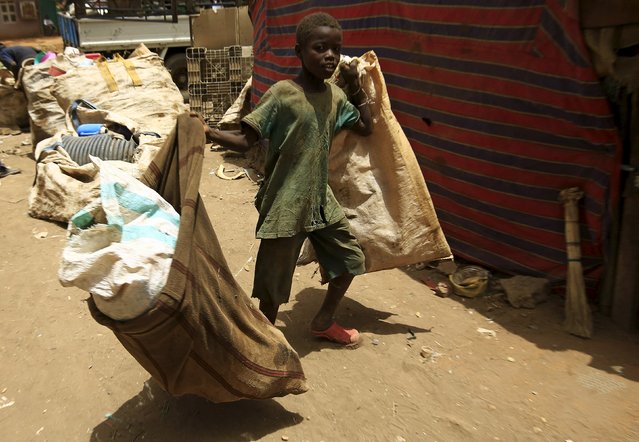
A boy carries empty sacks after bringing different types of plastic materials to a recycling station in Khartoum North April 16, 2015. People bring bottles and other plastic materials to the station for recycling, and get paid in return. (Photo by Mohamed Nureldin Abdallah/Reuters)

A boy carries empty sacks after bringing different types of plastic materials to a recycling station in Khartoum North April 16, 2015. People bring bottles and other plastic materials to the station for recycling, and get paid in return. (Photo by Mohamed Nureldin Abdallah/Reuters)
Details
20 Apr 2015 12:39:00
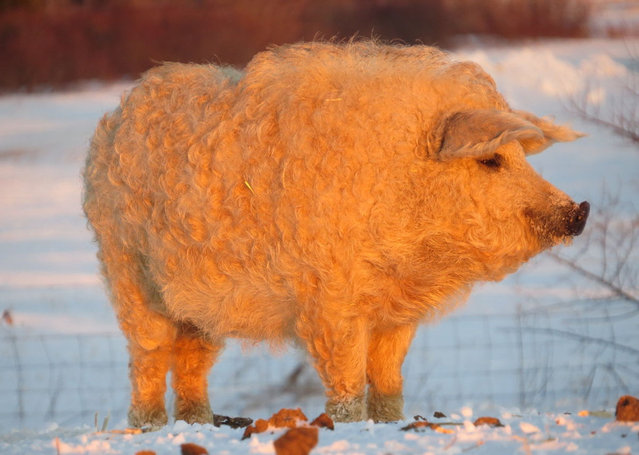
Mangalitsa The Hairy Pig

When you look at the picture of a furry pig that resembles a sheep from a distance, you may think that this may be the result of the work of some crazy scientist that tinkered with the pig’s genome. However, in this case, this is not true. Mangalica is a natural breed of pigs, which were bred in Europe for their lard. This breed of pigs is very unique, since the only other breed of pigs which had a long coat was Loncolnshire Curly Coat, which is now extinct. In the past, these pigs were quite popular, since they were able to produce a lot of lard. However, when the demand for pig lard dwindled, the population of these pigs rapidly decreased, making it a “rare breed”.
Details
01 Dec 2014 13:42:00
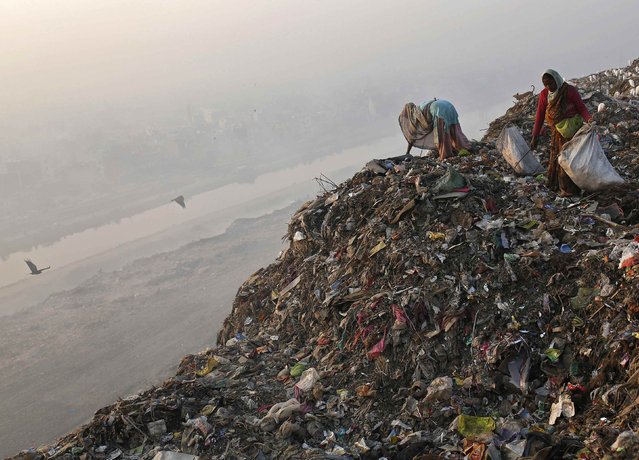
Rag pickers collect recyclable material at a garbage dump in New Delhi November 19, 2014. (Photo by Ahmad Masood/Reuters)

Rag pickers collect recyclable material at a garbage dump in New Delhi November 19, 2014. (Photo by Ahmad Masood/Reuters)
Details
20 Nov 2014 12:41:00
Fireplace for children, Trondheim, Norway, by Haugen/Zohar. The children of Trondheim come to sit around the fire and tell stories in this whimsical cone hut, made with materials recycled from a construction site. (Photo by Jason Havneraas/The Guardian)

Fireplace for children, Trondheim, Norway, by Haugen/Zohar. The children of Trondheim come to sit around the fire and tell stories in this whimsical cone hut, made with materials recycled from a construction site. (Photo by Jason Havneraas/The Guardian)
Details
17 Mar 2017 00:04:00