Loading...
Done
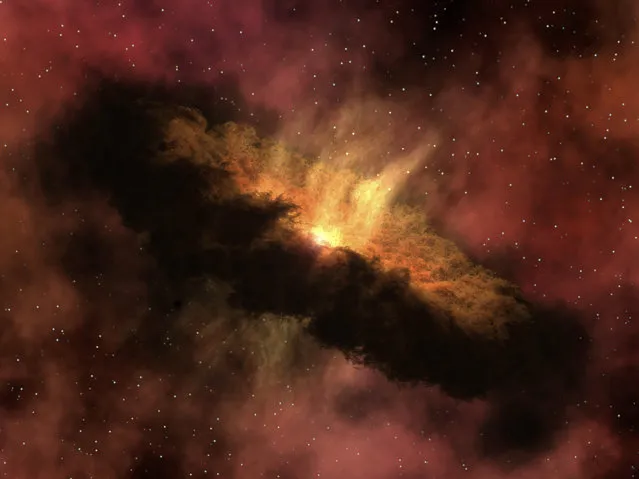
A fledgling solar system containing deep within it enough water vapor to fill all the oceans on Earth five times, located in our Milky Way galaxy about 1,000 light years from Earth in the constellation Perseus. (Photo by Reuters/NASA/JPL-Caltech)

A fledgling solar system containing deep within it enough water vapor to fill all the oceans on Earth five times, located in our Milky Way galaxy about 1,000 light years from Earth in the constellation Perseus. (Photo by Reuters/NASA/JPL-Caltech)
Details
28 Sep 2016 11:01:00
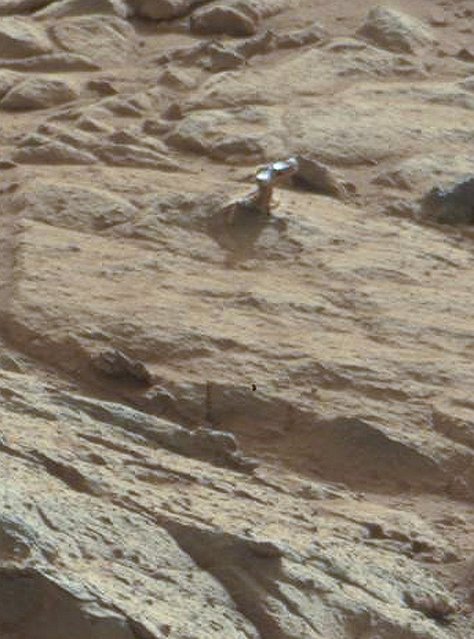
Another Weird Shiny Thing on Mars

“The Curiosity Mars rover has imaged a small metallic-looking protuberance on a rock. Visible (in the image below the green lines point to it), the protuberance appears to have a high albedo and even projects a shadow on the rock below...”
Details
06 Feb 2013 18:41:00
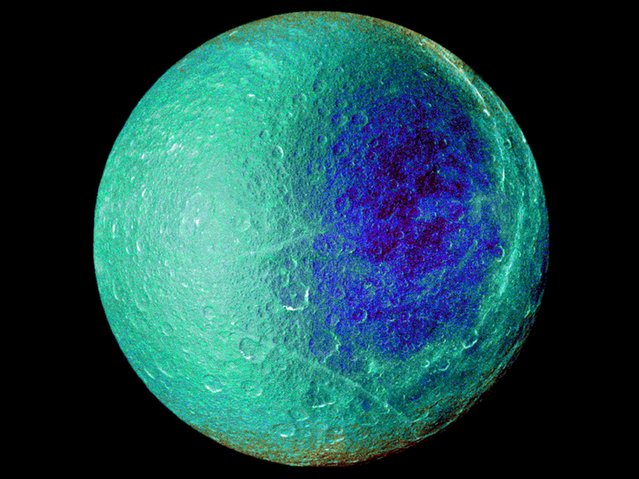
Hemispheric color differences on Saturn's moon Rhea are apparent in this false-color view from NASA's Cassini spacecraft in this March 2, 2010 file photo. (Photo by Reuters/NASA/JPL/SSI)

Hemispheric color differences on Saturn's moon Rhea are apparent in this false-color view from NASA's Cassini spacecraft in this March 2, 2010 file photo. (Photo by Reuters/NASA/JPL/SSI)
Details
16 Nov 2015 08:14:00
Carlos Boozer

Carlos Boozer #5 of the Chicago Bulls grabs a rebound next to David West #30 of the New Orleans Hornets at the United Center on March 7, 2011 in Chicago, Illinois. The Bulls defeated the Hornets 85-77.


Details
07 Mar 2011 15:44:00
Handout grab taken from YouTube of Commander Chris Hadfield who has said goodbye to life on the International Space Station by making a cover version of David Bowie's Space Oddity. Issue date: Monday May 13, 2013. (Photo by Commander Chris Hadfield/YouTube/PA Wire)

Handout grab taken from YouTube of Commander Chris Hadfield who has said goodbye to life on the International Space Station by making a cover version of David Bowie's Space Oddity. Issue date: Monday May 13, 2013. (Photo by Commander Chris Hadfield/YouTube/PA Wire)
Details
14 May 2013 12:37:00
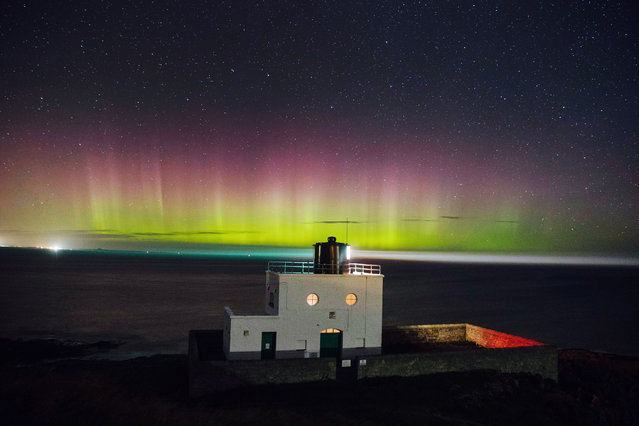
The northern lights, or aurora borealis, appear in the sky over the Bamburgh lighthouse at Stag Rock in Northumberland, England on September 28, 2016. (Photo by Owen Humphreys/PA Wire via ZUMA Press)

The northern lights, or aurora borealis, appear in the sky over the Bamburgh lighthouse at Stag Rock in Northumberland, England on September 28, 2016. (Photo by Owen Humphreys/PA Wire via ZUMA Press)
Details
30 Sep 2016 09:25:00
Csilla Orgel, a geologist of Crew 125 EuroMoonMars B mission, makes her way back to the Mars Desert Research Station (MDRS) in the Utah desert March 3, 2013. (Photo by Jim Urquhart/Reuters)

NASA says it could be another 20 years before humans touch down on Mars, but in a sense, the Mars Society has been exploring the red planet for more than a decade – in Utah. Photo: Csilla Orgel, a geologist of Crew 125 EuroMoonMars B mission, makes her way back to the Mars Desert Research Station (MDRS) in the Utah desert March 3, 2013. The MDRS aims to investigate the feasibility of a human exploration of Mars and uses the Utah desert's Mars-like terrain to simulate working conditions on the red planet. Scientists, students and enthusiasts work together developing field tactics and studying the terrain. All outdoor exploration is done wearing simulated spacesuits and carrying air supply packs and crews live together in a small communication base with limited amounts of electricity, food, oxygen and water. Everything needed to survive must be produced, fixed and replaced on site. (Photo by Jim Urquhart/Reuters)
Details
14 Mar 2013 12:11:00


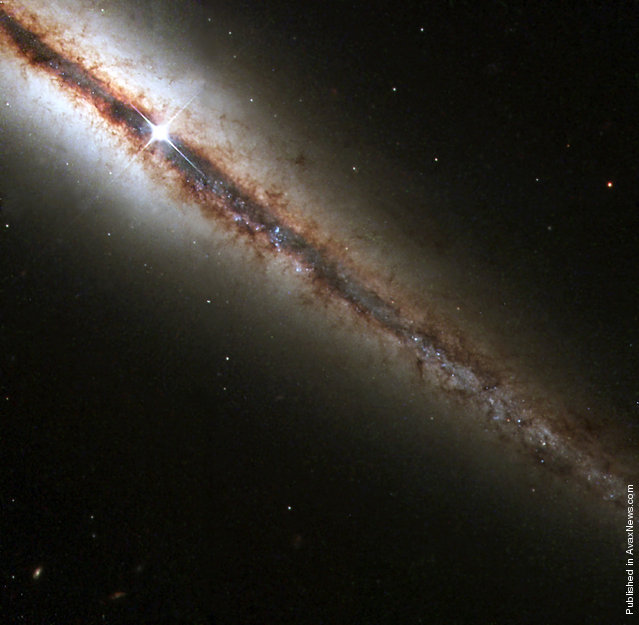
An image produced by the Hubble telescope of the perfectly “edge-on” galaxy, or NGC 4013, March 1, 2001. This new Hubble picture reveals, with great detail, huge clouds of dust and gas extending along, as well as far above, the galaxy's main disk. NGC 4013 is a spiral galaxy, similar to the Milky Way, lying some 55 million light-years from Earth in the direction of the constellation Ursa Major. Viewed face-on, it would look like a nearly circular pinwheel, but NGC 4013 happens to be seen edge-on from our vantage point. Even at 55 million light-years, the galaxy is larger than Hubble's field of view, and the image shows only a little more than half of the object, albeit with unprecedented detail. (Photo Courtesy of NASA/Newsmakers)

Details
28 Feb 2015 22:33:00