Loading...
Done
Royal Flycatcher

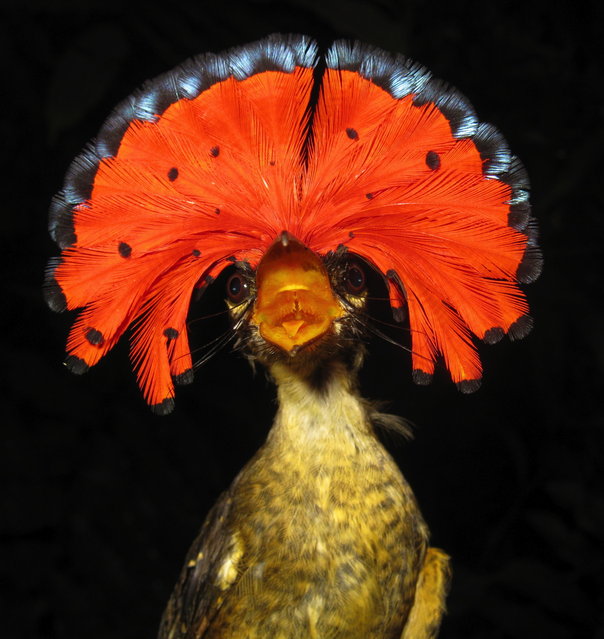
The Royal Flycatchers are birds in the genus Onychorhynchus in the Tityridae family. Depending on authority, it includes a single widespread, or four more localized species. The specific epithet of the type species, coronatus, and the common name of all the species in this genus, Royal Flycatcher, refer to the striking, colourful crest, which is seen displayed very rarely, except after mating, while preening, in courtship as well as being handled.
Details
02 Jun 2013 10:04:00
Waxwings in Balham south London on December 31, 2023. There has been a huge influx of this erruptive species this year. This probably due to severe storms and a shortage of food in their native Scandinavia in the Autumn. (Photo by Jack Hill/The Times)

Waxwings in Balham south London on December 31, 2023. There has been a huge influx of this erruptive species this year. This probably due to severe storms and a shortage of food in their native Scandinavia in the Autumn. (Photo by Jack Hill/The Times)
Details
25 Jan 2024 10:02:00
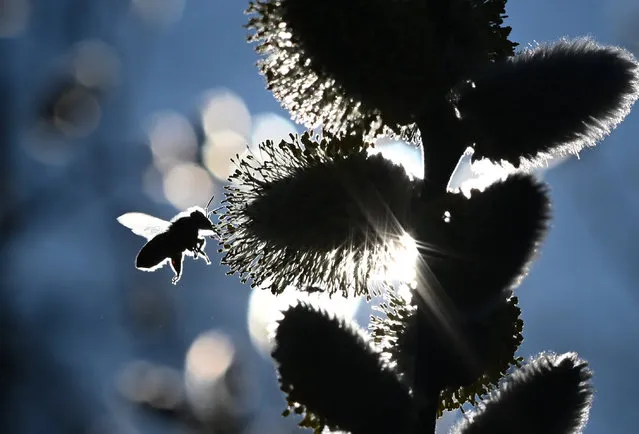
A bee approaching the flowers of a willow in Otzberg, Germany on February 28, 2021. Willow catkins are a protected species and one of the first sources of food for insects in early spring. (Photo by Arne Dedert/DPA)

A bee approaching the flowers of a willow in Otzberg, Germany on February 28, 2021. Willow catkins are a protected species and one of the first sources of food for insects in early spring. (Photo by Arne Dedert/DPA)
Details
10 Apr 2021 05:48:00
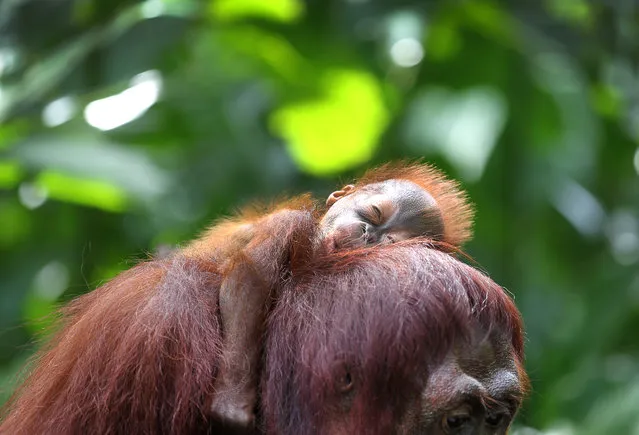
One month-old endangered Bornean Orang Utan sleeps on his mother named Miri on Wednesday, March 6, 2013, in Singapore. The Singapore Zoo is renowned for its flagship animal, the Orang Utan, and exhibits both the endangered Bornean and critically endangered Sumatran sub-species in a social setting. It is also known for its efforts in promoting and educating the public about the importance of wildlife conservation through its educational programs and breeding of these endangered species. (Photo by Wong Maye-E/AP Photo)

One month-old endangered Bornean Orang Utan sleeps on his mother named Miri on Wednesday, March 6, 2013, in Singapore. The Singapore Zoo is renowned for its flagship animal, the Orang Utan, and exhibits both the endangered Bornean and critically endangered Sumatran sub-species in a social setting. It is also known for its efforts in promoting and educating the public about the importance of wildlife conservation through its educational programs and breeding of these endangered species. (Photo by Wong Maye-E/AP Photo)
Details
20 Sep 2013 11:35:00
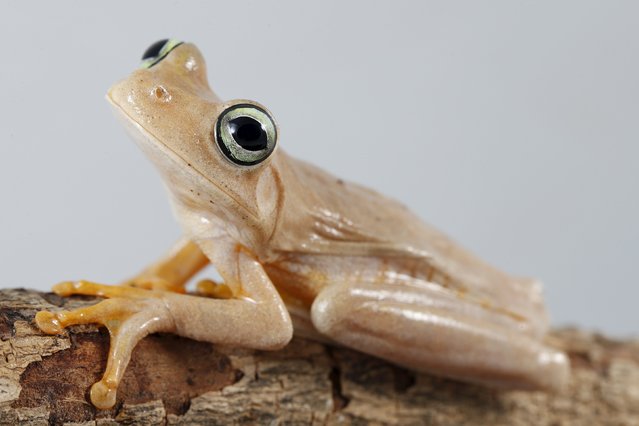
A Hypsiboas crepitans frog is pictured at a terrarium in Caracas November 30, 2015. Venezuelan frogs and toads are in critical danger due to climate change as rising temperatures complicate reproduction and spread a deadly fungus, say scientists, who liken the species to canaries in a coalmine warning of imminent danger. (Photo by Carlos Garcia Rawlins/Reuters)

A Hypsiboas crepitans frog is pictured at a terrarium in Caracas November 30, 2015. Venezuelan frogs and toads are in critical danger due to climate change as rising temperatures complicate reproduction and spread a deadly fungus, say scientists, who liken the species to canaries in a coalmine warning of imminent danger. The survival of a group of nearly 20 frog and toad species, which top Venezuela's list of endangered species, may rest on a small group of academics in a Caracas laboratory attempting to recreate the amphibians' natural reproductive conditions. (Photo by Carlos Garcia Rawlins/Reuters)
Details
17 Dec 2015 08:04:00
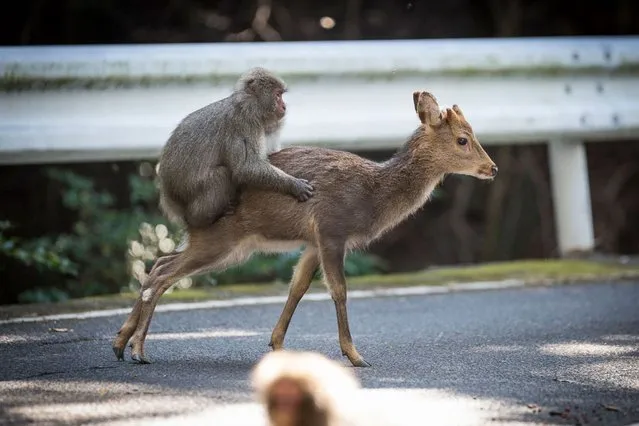
An undated handout picture released on January 10, 2017 by the Issekinicho publishing house shows an inter- species sexual behaviour between a male Japanese macaque and female sika deer, in Yakushima Scientists revealed on January 10, 2017 the “highly unusual” behaviour of a male monkey filmed trying to have s*x with female deer in Japan – a rare case of inter- species nookie. (Photo by Editions Issekinicho/AFP Photo)

An undated handout picture released on January 10, 2017 by the Issekinicho publishing house shows an inter- species sexual behaviour between a male Japanese macaque and female sika deer, in Yakushima Scientists revealed on January 10, 2017 the “highly unusual” behaviour of a male monkey filmed trying to have sеx with female deer in Japan – a rare case of inter- species nookie. (Photo by Editions Issekinicho/AFP Photo)
Details
15 Jan 2017 11:00:00
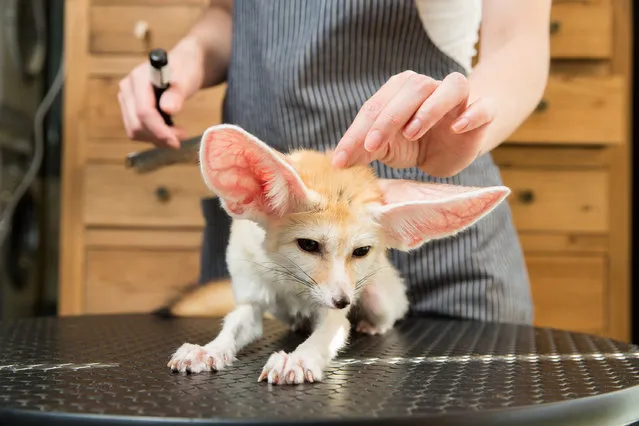
A fennec fox (Vulpes zerda) is groomed in a pet store in central Beijing. Native to the Sahara in North Africa, the species became a popular pet after being depicted as a character in Disney’s 2016 animated movie Zootopia. Individuals can cost between $2,000–$3,000. (Photo by Sean Gallagher/The Guardian)

A dramatic rise in owning exotic pets in China is fuelling global demand for threatened species. The growing trade in alligators, snakes, monkeys, crocodiles and spiders is directly linked to species loss in some of the world’s most threatened ecosystems. Here: A fennec fox (Vulpes zerda) is groomed in a pet store in central Beijing. Native to the Sahara in North Africa, the species became a popular pet after being depicted as a character in Disney’s 2016 animated movie Zootopia. Individuals can cost between $2,000–$3,000. (Photo by Sean Gallagher/The Guardian)
Details
23 Sep 2017 08:04:00
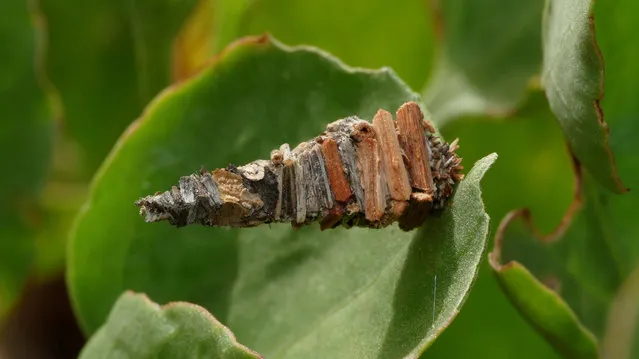
An undated handout photo made available by the Zerynthia Association shows the pupa of an amicta moneiba, a recently discovered species of moth endemic to La Gomera and El Hierro islands in the Canary Islands, Spain (issued 01 July 2020), as those two islands pulled apart from the rest of the Canary Islands 2.5 million years ago. The Institute of Evolutionary Biology of the Spanish National Research Council (CSIC) and the Zerynthia Association have recently discovered two new moth species in El Hierro and La Gomera. (Photo by Yeray Monasterio/Zerynthia/EPA/EFE)

An undated handout photo made available by the Zerynthia Association shows the pupa of an amicta moneiba, a recently discovered species of moth endemic to La Gomera and El Hierro islands in the Canary Islands, Spain (issued 01 July 2020), as those two islands pulled apart from the rest of the Canary Islands 2.5 million years ago. The Institute of Evolutionary Biology of the Spanish National Research Council (CSIC) and the Zerynthia Association have recently discovered two new moth species in El Hierro and La Gomera. (Photo by Yeray Monasterio/Zerynthia/EPA/EFE)
Details
11 Oct 2020 00:01:00