Loading...
Done
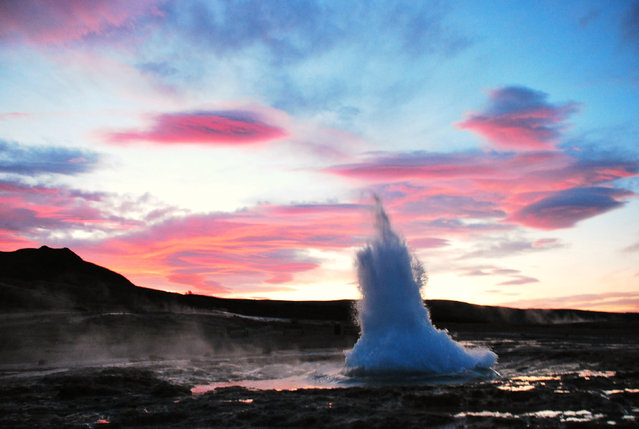
Strokkur geyser against cloudy sky at sunset. Strokkur is a fountain geyser located in a geothermal area beside the Hvítá River in Iceland in the southwest part of the country, east of Reykjavík. It is one of Iceland's most famous geysers, erupting once every 6–10 minutes. Its usual height is 15–20 m, although it can sometimes erupt up to 40 m high. (Photo by Teatsche Dijkhuis/Getty Images/EyeEm)

Strokkur geyser against cloudy sky at sunset. Strokkur is a fountain geyser located in a geothermal area beside the Hvítá River in Iceland in the southwest part of the country, east of Reykjavík. It is one of Iceland's most famous geysers, erupting once every 6–10 minutes. Its usual height is 15–20 m, although it can sometimes erupt up to 40 m high. (Photo by Teatsche Dijkhuis/Getty Images/EyeEm)
Details
18 Oct 2016 12:43:00
Youth category winner: Symphony No 5 by Giacomo Redaelli (Italy). (Photo by Giacomo Redaelli/2019 Nature Photographer of the Year)

Youth category winner: Symphony No 5 by Giacomo Redaelli (Italy). (Photo by Giacomo Redaelli/2019 Nature Photographer of the Year)
Details
16 Nov 2019 00:01:00
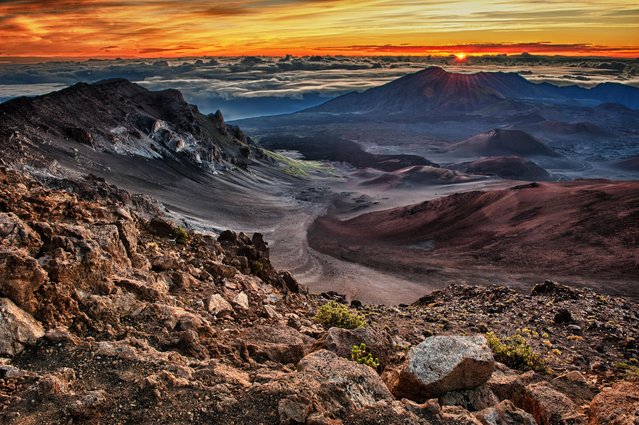
Sunrise over Haleakala Crater, Haleakala National Park, Maui, Hawaii on April 26th, 2011. (Photo by Robert Bush/Alamy Stock Photo)

Sunrise over Haleakala Crater, Haleakala National Park, Maui, Hawaii on April 26th, 2011. (Photo by Robert Bush/Alamy Stock Photo)
Details
20 Apr 2017 09:06:00
A woman leans against one of the stones of the Stonehenge monument on the summer solstice near Amesbury, Britain on June 21, 2017. (Photo by Neil Hall/Reuters)

A woman leans against one of the stones of the Stonehenge monument on the summer solstice near Amesbury, Britain on June 21, 2017. The annual festival attracts hundreds of people to the 5000 year old stone circle to mark the longest day in the northern hemisphere. sunrise was at 4.52am and was celebrated by dancing, music, and ritualistic events around the stones. (Photo by Neil Hall/Reuters)
Details
22 Jun 2017 08:41:00
A instructor (2nd L) from the Philippine Mermaid Swimming Academy assists participants of a monofin swimming summer workshop as they practise floating in the water of a private pool in Paranaque city, metro Manila April 5, 2014. The Philippine Mermaid Swimming Academy workshops, which were originally conducted on the beaches of Boracay Island, central Philippines, currently cost 1,800 pesos per person ($40) for a two-hour session. (Photo by Romeo Ranoco/Reuters)

A instructor (2nd L) from the Philippine Mermaid Swimming Academy assists participants of a monofin swimming summer workshop as they practise floating in the water of a private pool in Paranaque city, metro Manila April 5, 2014. The Philippine Mermaid Swimming Academy workshops, which were originally conducted on the beaches of Boracay Island, central Philippines, currently cost 1,800 pesos per person ($40) for a two-hour session. (Photo by Romeo Ranoco/Reuters)
Details
13 Apr 2014 07:42:00
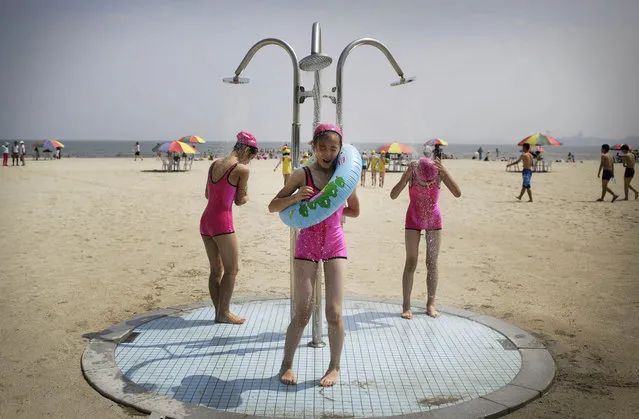
North Korean girls in similar bathing suits stand under a shower at the Songdowon International Children's Camp, Tuesday, July 29, 2014, in Wonsan, North Korea. The camp, which has been operating for nearly 30 years, was originally intended mainly to deepen relations with friendly countries in the Communist or non-aligned world. But officials say they are willing to accept youth from anywhere – even the United States. (Photo by Wong Maye-E/AP Photo)

North Korean girls in similar bathing suits stand under a shower at the Songdowon International Children's Camp, Tuesday, July 29, 2014, in Wonsan, North Korea. The camp, which has been operating for nearly 30 years, was originally intended mainly to deepen relations with friendly countries in the Communist or non-aligned world. But officials say they are willing to accept youth from anywhere – even the United States. (Photo by Wong Maye-E/AP Photo)

Details
31 Jul 2014 10:12:00
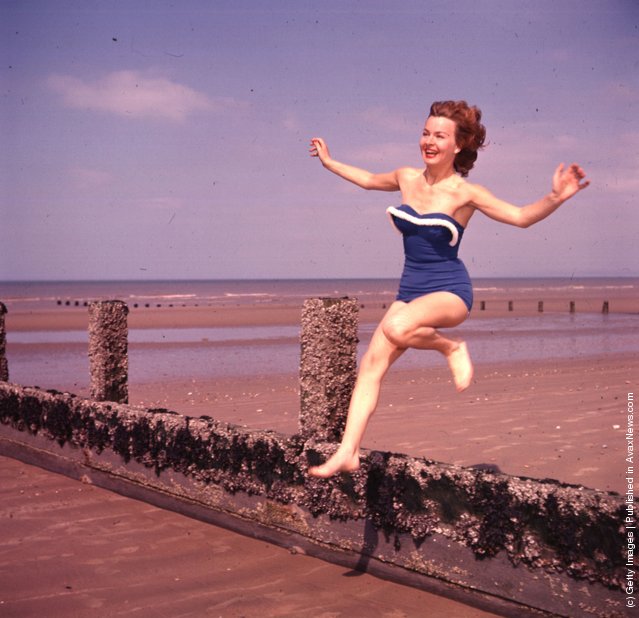
Marianne Brauns jumping a breakwater on the beach

Marianne Brauns jumping a breakwater on the beach, wearing a structured blue swimsuit with white trim. (Photo by Carl Sutton/Hulton Archive/Getty Images). Circa 1950
Details
09 Aug 2011 10:30:00
Cordwood Construction - Natural Building

Cordwood construction is a method of natural building that originated roughly one thousand years ago in Greece and Siberia. This method involves using pieces of wood that slightly protrude from the mortar, giving the walls an attractive appearance. Usually, the walls are made 12 to 24 inches thick. However, in some parts of Canada, the walls can be as thick as 36 inches. This method appeals to many people due to its ease of construction economy of resources. Cordwood Construction can be separated into two main types: mortar-insulation-mortar (M-I-M) and Throughwall. M-I-M is a more preferable and widely used choice as it allows for better insulating properties.
Details
27 Nov 2014 15:10:00