Loading...
Done
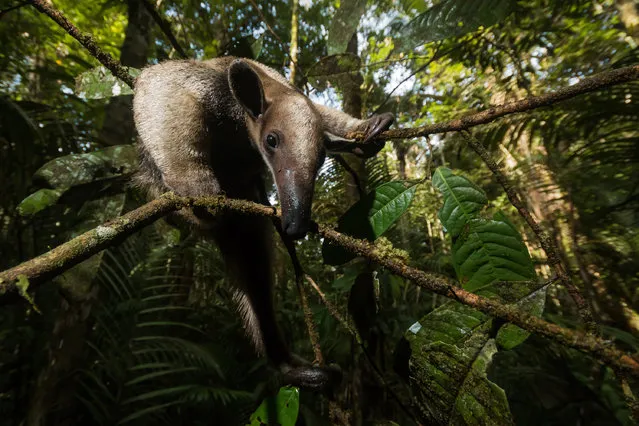
Individuals and populations student winner. Limbing in the Tropics, photographed in Manaus, Brazil. While walking in the Amazon rainforest looking for bat roosts to set up mist nets to capture bats for scientific research, a faint and almost imperceptible noise suddenly caught this photographer’s attention. An anteater was climbing with exceptional ability in a tangled mess of branches and lianas. With an unbelievable calmness, the animal watched the photographer at work and seemed to enjoy being the subject of an impromptu photography session in the most biodiverse ecosystem on Earth. (Photo by Adrià López Baucells/University of Lisbon/British Ecological Society)

Individuals and populations student winner. Limbing in the Tropics, photographed in Manaus, Brazil. While walking in the Amazon rainforest looking for bat roosts to set up mist nets to capture bats for scientific research, a faint and almost imperceptible noise suddenly caught this photographer’s attention. An anteater was climbing with exceptional ability in a tangled mess of branches and lianas. (Photo by Adrià López Baucells/University of Lisbon/British Ecological Society)
Details
05 Dec 2018 00:03:00
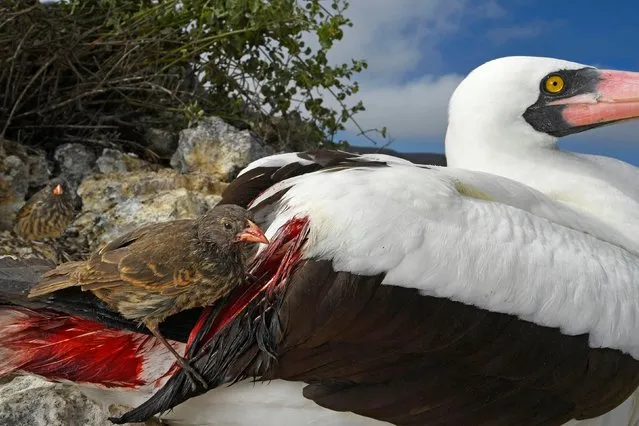
Bloodthirsty by Thomas P Peschak, Germany/South Africa — winner, Behaviour: birds. When rations run short on Wolf Island, in the remote northern Galápagos, the sharp-beaked ground finches become vampires. Their sitting targets are Nazca boobies and other large birds. The finches rely on a scant diet of seeds and insects, which regularly dries up, so they drink blood to survive. ‘I’ve seen more than half a dozen finches drinking from a single Nazca booby,’ says Tom. Rather than leave their nests the boobies tolerate the vampires, and the blood loss doesn’t seem to cause permanent harm. (Photo by Thomas P Peschak/2018 Wildlife Photographer of the Year)

Bloodthirsty by Thomas P. Peschak, Germany/South Africa — winner, Behaviour: birds. When rations run short on Wolf Island, in the remote northern Galápagos, the sharp-beaked ground finches become vampires. Their sitting targets are Nazca boobies and other large birds. The finches rely on a scant diet of seeds and insects, which regularly dries up, so they drink blood to survive. ‘I’ve seen more than half a dozen finches drinking from a single Nazca booby,’ says Tom. Rather than leave their nests the boobies tolerate the vampires, and the blood loss doesn’t seem to cause permanent harm. (Photo by Thomas P. Peschak/2018 Wildlife Photographer of the Year)
Details
19 Oct 2018 00:05:00
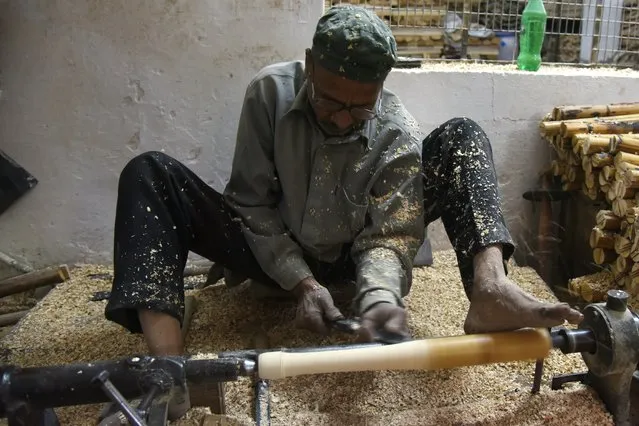
In this photograph taken on December 14, 2016, an Indian craftsman works on unfinished cricket bats in a factory in Meerut, some 70 kms north- east of New Delhi. As Indian factory worker Jitender Singh carves out another big- hitting slab of thick willow he insists MCC proposals to limit the size of cricket bats won' t tame Twenty20 marauders. “I don' t think the thickness matters. It' s more about the balance of the bat and the talent of the batsman”, says Singh, who has made bats for many stars, including South Africa's AB de Villiers. The World Cricket committee of the MCC, the guardians of the game, recommended in December 2016 that limitations be placed on the width and depth of bats because it had become too easy to smash fours and sixes. (Photo by Dominique Faget/AFP Photo)

In this photograph taken on December 14, 2016, an Indian craftsman works on unfinished cricket bats in a factory in Meerut, some 70 kms north- east of New Delhi. (Photo by Dominique Faget/AFP Photo)
Details
11 Jan 2017 14:32:00
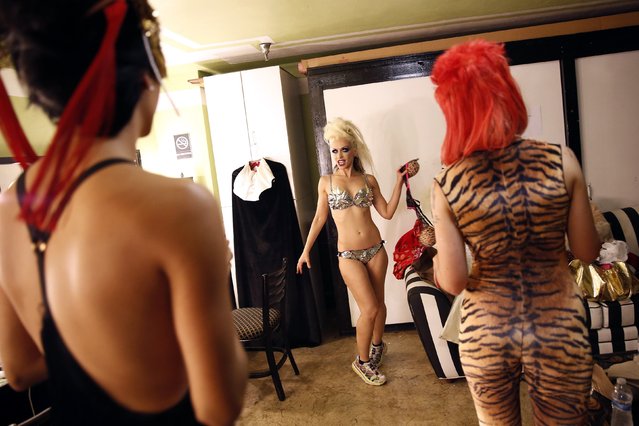
Burlesque dancer and Lucha VaVoom co-founder Rita D'Albert gets dressed before the Lucha VaVoom “Night of the Vampire” performance in Los Angeles, California October 29, 2014. (Photo by Patrick T. Fallon/Reuters)

Burlesque dancer and Lucha VaVoom co-founder Rita D'Albert gets dressed before the Lucha VaVoom “Night of the Vampire” performance in Los Angeles, California October 29, 2014. (Photo by Patrick T. Fallon/Reuters)
Details
01 Nov 2014 14:36:00
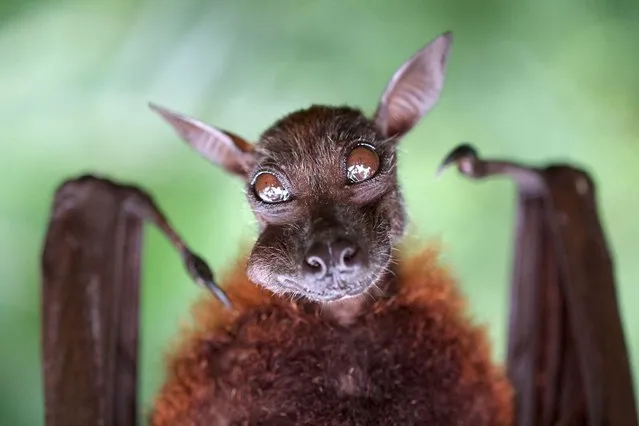
This bat gives a cheeky smile as he gobbles down his food at Singapore Zoo, on September 10, 2013. (Photo by Benny Iskander/HotSpot Media)

This bat gives a cheeky smile as he gobbles down his food at Singapore Zoo, on September 10, 2013. (Photo by Benny Iskander/HotSpot Media)
Details
14 Sep 2013 11:57:00
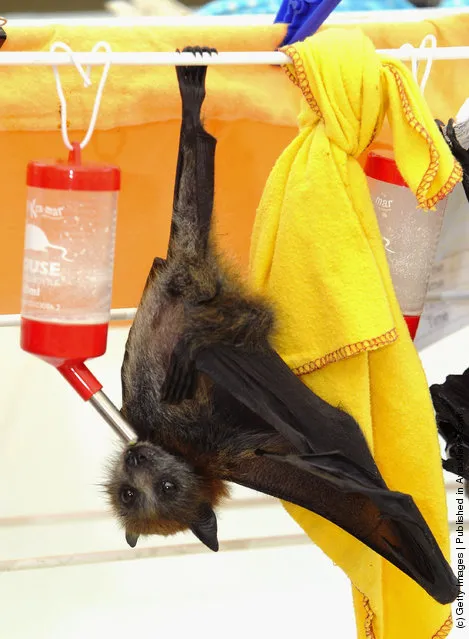
Baby Flying Foxes

A Baby Flying Fox (Pteropus) hangs from a clothes line at a temporary bat rehabilitation centre on December 3, 2008 on the Gold Coast, Australia. (Photo by David Hardenberg/Getty Images)
Details
26 Oct 2011 12:44:00
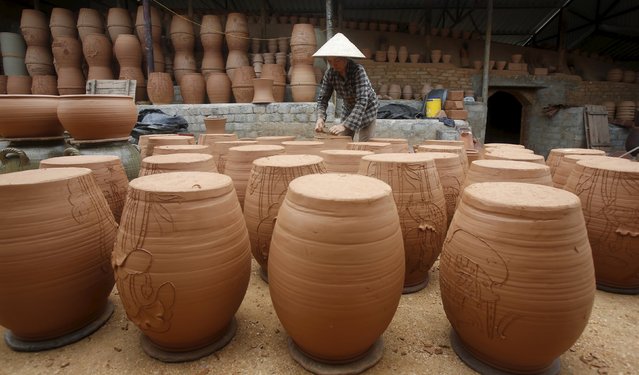
A woman works at a factory producing clay pots at Phu Lang pottery village in Bac Ninh province, Vietnam, May 14, 2015. The village is part of an old pottery triangle in northern Vietnam which includes Bat Trang and Tho Ha, and has been producing pottery since the 13th century, according to local media. (Photo by Reuters/Kham)

A woman works at a factory producing clay pots at Phu Lang pottery village in Bac Ninh province, Vietnam, May 14, 2015. The village is part of an old pottery triangle in northern Vietnam which includes Bat Trang and Tho Ha, and has been producing pottery since the 13th century, according to local media. (Photo by Reuters/Kham)
Details
15 May 2015 10:46:00
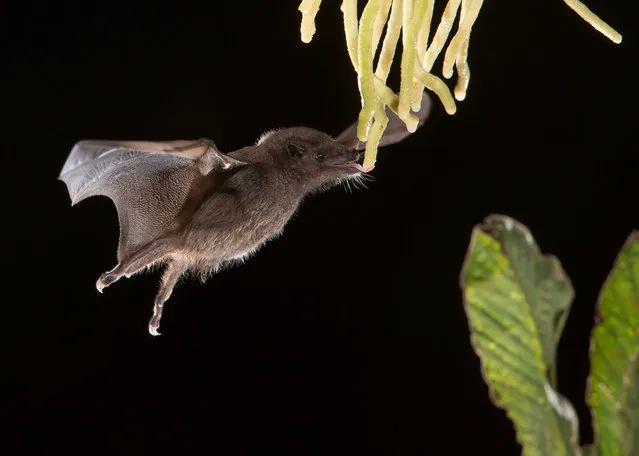
Anoura Geoffroy’s tailless bat by Nicolas Reusens. The Perfect Moment category; Adult runner up. (Photo by Nicolas Reusens/ZSL Animal Photography Prize 2015)

Attracting more than 450 entries from around the world, the winners are selected by a panel of expert judges including ZSL honorary conservation fellow and television presenter Kate Humble, and renowned ornithologist Bill Oddie. Here: Anoura Geoffroy’s tailless bat by Nicolas Reusens. The Perfect Moment category; Adult runner up. (Photo by Nicolas Reusens/ZSL Animal Photography Prize 2015)
Details
22 Nov 2015 08:04:00