Loading...
Done
More than 6 billion people live in countries where serious levels of public sector corruption are fueling inequality and exploitation, according to Transparency International's 2015 index of perceived public sector corruption. The group's annual report measures perceptions of corruption due to the secrecy surrounding most corrupt dealings. Two thirds of the 168 countries assessed were identified as having a serious corruption problem. Somalia, which has been mired in conflict since civil war broke out in 1991, ranks bottom of the list. (Photo by Feisal Omar/Reuters)

More than 6 billion people live in countries where serious levels of public sector corruption are fueling inequality and exploitation, according to Transparency International's 2015 index of perceived public sector corruption. The group's annual report measures perceptions of corruption due to the secrecy surrounding most corrupt dealings. Two thirds of the 168 countries assessed were identified as having a serious corruption problem. Somalia, which has been mired in conflict since civil war broke out in 1991, ranks bottom of the list. (Photo by Feisal Omar/Reuters)
Details
13 May 2016 12:10:00
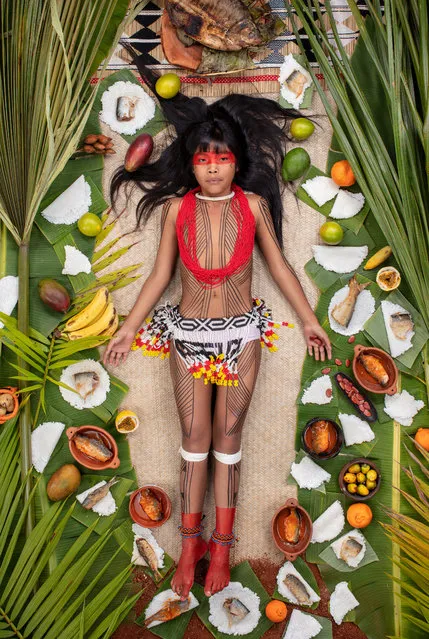
Kawakanih Yawalapiti, 9, Upper Xingu region of Mato Grosso, Brazil, 2018: Kawakanih lives with her tribe, the Yawalapiti, in Xingu national park, a preserve in the Amazon basin of Brazil. The Yawalapiti collect seeds to preserve species unique to their ecosystem, which lies between the rain forest and savannah. Kawakanih’s diet is simple, consisting mainly of fish, cassava, porridge, fruit and nuts. “It takes five minutes to catch dinner”, says Kawakanih. “When you’re hungry, you just go to the river with your net”. (Photo by Gregg Segal/The Guardian)

Photographer Gregg Segal travelled the world to document children and the food they eat in a week. Partly inspired by the increasing problems of childhood obesity, he tracked traditional regional diets as yet unaffected by globalisation, and ironically, found that the healthiest diets were often eaten by the least well off. (Photo by Gregg Segal/The Guardian)
Details
03 Jul 2019 00:03:00
Allie Labutis wears a painted “Merica” on her thigh during the fifth annual Made in America Music Festival in Philadelphia, Pennsylvania September 3, 2016. (Photo by Mark Makela/Reuters)

Allie Labutis wears a painted “Merica” on her thigh during the fifth annual Made in America Music Festival in Philadelphia, Pennsylvania September 3, 2016. (Photo by Mark Makela/Reuters)
Details
05 Sep 2016 11:23:00
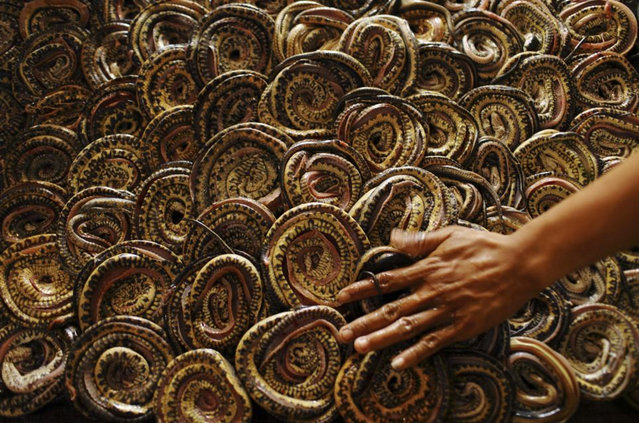
How Snakeskin Handbags Are Made

Images from a snake slaughterhouse at Kapetakan village in Indonesia’s West Java province. Wakira, who is known as “Boss Cobra”, owns the slaughterhouse that produces snake meat and skin. Snake meat is believed by some to be a remedy for skin diseases and asthma, as well as an aid to increase virility. The snake skins, measuring in the hundreds of metres, are sold to bag factories in the West and Central Java provinces on a monthly basis. The price of a bag made from snake skin costs between 150,000 rupiah ($ 15.60) and 300,000 rupiah ($31.20), depending on its size. That snakeskin handbag you’ll buy is costing a hell of a lot more.
Details
20 Feb 2013 12:00:00
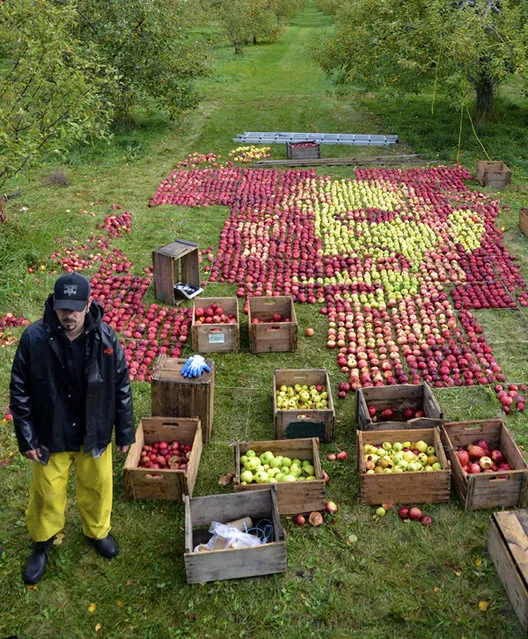
Portrait Of Steve Jobs Made With Apples

The visual artist Olivier Lefebvre wanted to accomplish with his representation of Steve Jobs’ portrait made entirely out of apples – the landart tribute expresses the impact Steve Jobs had on modern technology and the apple silhouette.
Details
07 Sep 2015 08:27:00
What Ali Wore By Zoe Spawton

Every morning at 9:05 AM sharp, a strikingly dapper octogenarian saunters by Zoe Spawton's coffee shop on his way to work in the Berlin borough of Neukölln. That man's name is Ali. He is an 83-year-old Turkish tailor who has been living in Germany for the past 44 years. He has 18 kids, and an impeccable sense of style.
Details
05 Apr 2013 10:44:00
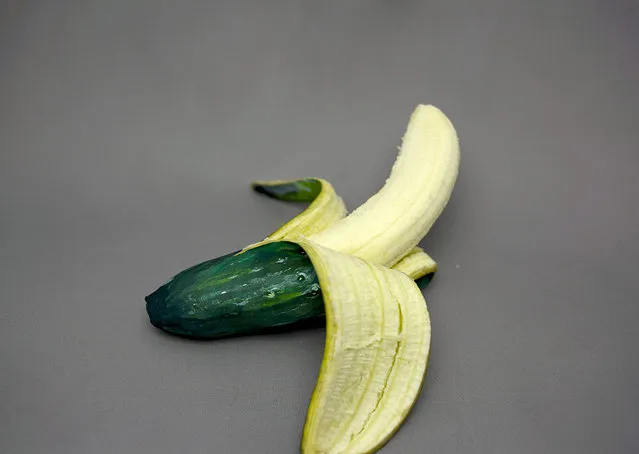
It’s Not What It Seems By Artist Hikaru Cho

Japanese artist Hikaru Cho is already well-known for her bizarre and realistic body paintings, but now the Tokyo-based artist has applied her talent to everyday food items as well. In her playful “It’s Not What It Seems” series, she turns common foods into other kinds of food using only acrylic paint and her extraordinary talent.
Details
22 Mar 2014 11:32:00


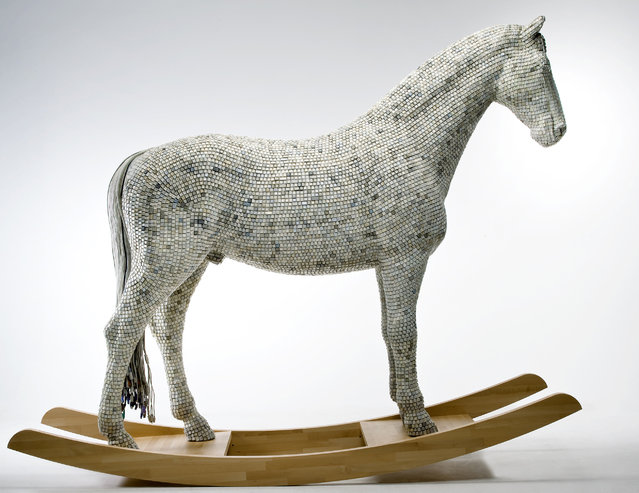
“Hedonism(y) Trojaner” is a sculpture of a horse that is made out of resin and recycled computer keys and cables. The sculpture references the Trojan Horse of myth (and more recently, computing) and was created by Nuremberg, Germany-based artist Babis Pangiotidis.
Details
07 Dec 2012 14:58:00