Loading...
Done
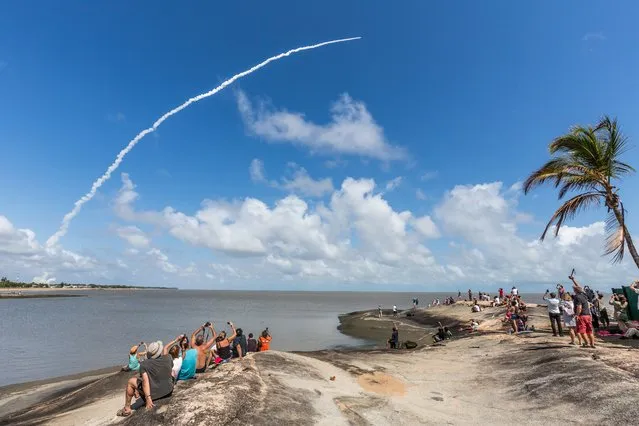
People take photos as an Ariane 5 space rocket with a payload of four Galileo satellites lifts off from ESA's European Spaceport in Kourou, French Guiana, on November 17, 2016. Ariane 5 successfully launched on November 17 four satellites which will be part of the Galileo global satellite navigation system. (Photo by Jody Amiet/AFP Photo)

People take photos as an Ariane 5 space rocket with a payload of four Galileo satellites lifts off from ESA's European Spaceport in Kourou, French Guiana, on November 17, 2016. Ariane 5 successfully launched on November 17 four satellites which will be part of the Galileo global satellite navigation system. (Photo by Jody Amiet/AFP Photo)
Details
18 Nov 2016 15:38:00
What 200 Calories Looks Like In Different Foods Part 3

Some foods have significantly more Calories than others but what does the difference actually look like. Each of the photographs below represents 200 Calories of the particular type of food; the images are sorted from low to high calorie density. When you consider that an entire plate of broccoli contains the same number of Calories as a small spoonful of peanut butter, you might think twice the next time you decide what to eat. According to the U.S. Department of Agriculture, the average adult needs to consume about 2000 – 2500 Calories to maintain their weight. In other words, you have a fixed amount of Calories to "spend" each day; based on the following pictures, which would you eat?


See Also: Ppart 1 _ Part 2
Details
02 Aug 2014 09:53:00
A woman runs through the early morning mist on Hampstead Heath

A woman runs through the early morning mist on Hampstead Heath on September 30, 2011 in London, England. Much of the UK is enjoying a spell of unseasonably hot weather which is expected to last into next week. (Photo by Dan Kitwood/Getty Images)
Details
02 Oct 2011 11:52:00
Photos of Edward Snowden, a contractor at the National Security Agency (NSA), and U.S. President Barack Obama are printed on the front pages of local English and Chinese newspapers in Hong Kong in this illustration photo June 11, 2013. Snowden, who leaked details of top-secret U.S. surveillance programs, dropped out of sight in Hong Kong on Monday ahead of a likely push by the U.S. government to have him sent back to the United States to face charges. (Photo by Bobby Yip/Reuters)

Photos of Edward Snowden, a contractor at the National Security Agency (NSA), and U.S. President Barack Obama are printed on the front pages of local English and Chinese newspapers in Hong Kong in this illustration photo June 11, 2013. Snowden, who leaked details of top-secret U.S. surveillance programs, dropped out of sight in Hong Kong on Monday ahead of a likely push by the U.S. government to have him sent back to the United States to face charges. (Photo by Bobby Yip/Reuters)
Details
20 Jun 2013 10:56:00
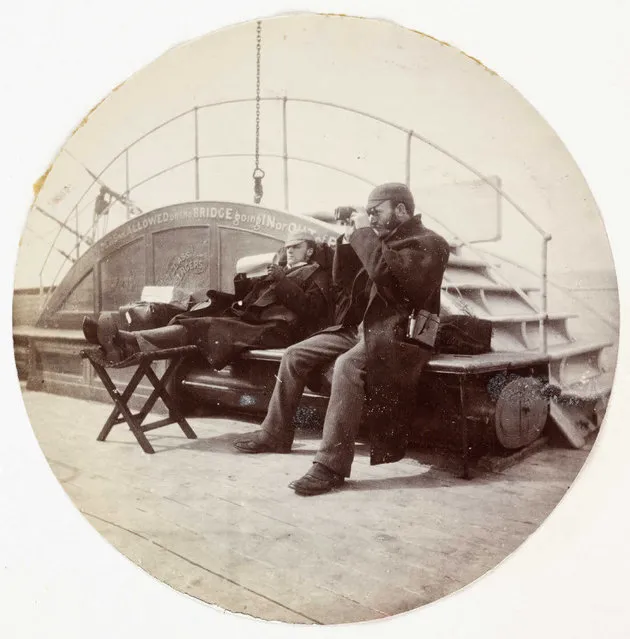
Two men on the deck of a ship, about 1890. (Photo by Collection of National Media Museum/Kodak Museum)

“Today, we take photography for granted. Anyone can take a photograph simply by pressing a button. Yet, it was not always so simple. The invention of photography was announced in 1839, but during its first fifty years taking a photograph was a complicated and expensive business. In 1888, all this was to change following the appearance of a camera that was to revolutionize photography. Popular photography can properly be said to have started 120 years ago with the introduction of the Kodak”. – The UK National Media Museum. Photo: Two men on the deck of a ship, about 1890. (Photo by Collection of National Media Museum/Kodak Museum)
Details
27 May 2014 10:31:00
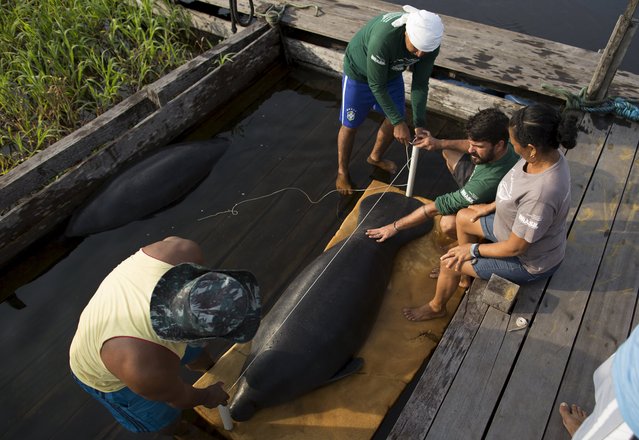
Veterinarian William Guerra Neto (2nd R) and an assistant take measurements of two Amazonian manatees who are being rehabilitated after sustaining injuries from hunting and fishing nets at the Center of Amazonian Manatees at Amana Lake in Maraa, Amazonas state, Brazil, September 21, 2015. (Photo by Bruno Kelly/Reuters)

Veterinarian William Guerra Neto (2nd R) and an assistant take measurements of two Amazonian manatees who are being rehabilitated after sustaining injuries from hunting and fishing nets at the Center of Amazonian Manatees at Amana Lake in Maraa, Amazonas state, Brazil, September 21, 2015. (Photo by Bruno Kelly/Reuters)
Details
30 Sep 2015 08:05:00
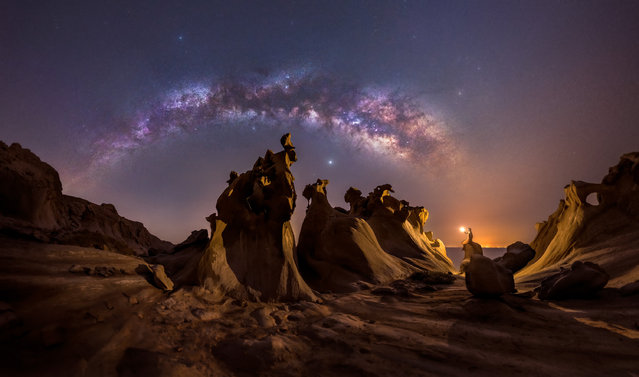
Night lovers; Hormozgan province, Iran. “In this picture, you can see the Milky Way rising on a fascinating spring night on the Persian Gulf coast. The stunning cliffs of this area make every viewer imagine and even talk to them! The light pollution from a faraway city was quite strong, so it was a challenging post-processing process. I’m a nightscaper who tries to achieve an artistic look in my images, and in this image, I tried to convey and capture the magic of this location”. (Photo by Mohammad Hayati/Milky Way Photographer of the Year)

Night lovers; Hormozgan province, Iran. “In this picture, you can see the Milky Way rising on a fascinating spring night on the Persian Gulf coast. The stunning cliffs of this area make every viewer imagine and even talk to them! The light pollution from a faraway city was quite strong, so it was a challenging post-processing process. I’m a nightscaper who tries to achieve an artistic look in my images, and in this image, I tried to convey and capture the magic of this location”. (Photo by Mohammad Hayati/Milky Way Photographer of the Year)
Details
01 Jun 2021 09:42:00
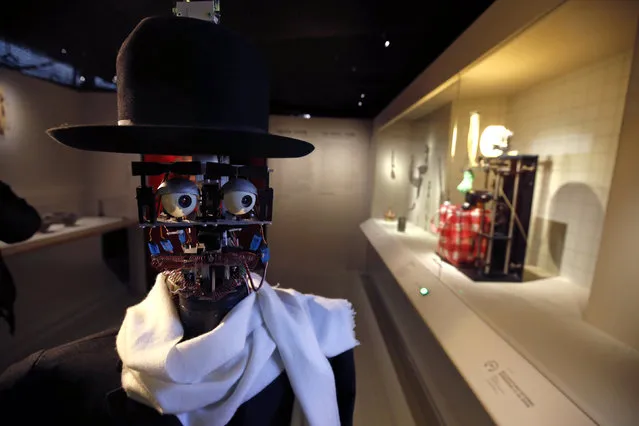
The Berenson robot strolls among visitors during the exhibition “Persona : Oddly Human” at the Quai Branly museum in Paris, France, February 23, 2016. The Berenson robot, developed in France in 2011, is the brainchild of anthropologist Denis Vidal and robotics engineer Philippe Gaussier. Its programming allows it to record reactions of museum visitors to certain pieces of art and then use the data to develop its own unique taste, which allows “Berenson” to judge whether or not it likes a certain work of art within an exhibition. (Photo by Philippe Wojazer/Reuters)

The Berenson robot strolls among visitors during the exhibition “Persona : Oddly Human” at the Quai Branly museum in Paris, France, February 23, 2016. The Berenson robot, developed in France in 2011, is the brainchild of anthropologist Denis Vidal and robotics engineer Philippe Gaussier. Its programming allows it to record reactions of museum visitors to certain pieces of art and then use the data to develop its own unique taste, which allows “Berenson” to judge whether or not it likes a certain work of art within an exhibition. (Photo by Philippe Wojazer/Reuters)
Details
25 Feb 2016 12:26:00