Loading...
Done
Humans of New York

New York City is populated with millions of people that each serve as an essential piece of the city's eclectic pie. The Big Apple's offering of unique and diverse individuals is arguably unmatched. We always hear about what a melting pot this immense metropolis is with its endless supply of quirky characters and the ongoing photo series known as Humans of New York proves it.
Details
18 Sep 2013 09:28:00
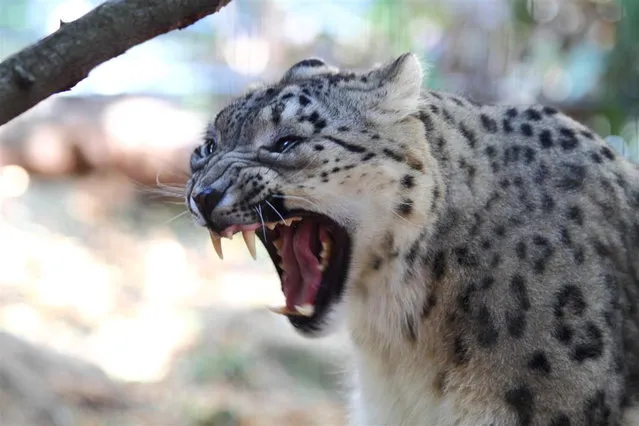
Snow Leopard

The snow leopard (Panthera uncia syn. Uncia uncia) is a large cat native to the mountain ranges of Central and South Asia. It is listed as endangered on the IUCN Red List of Threatened Species because as of 2003, the size of the global population was estimated at 4,080-6,590 adults, of which fewer than 2,500 individuals may reproduce in the wild.
Details
12 May 2014 10:14:00
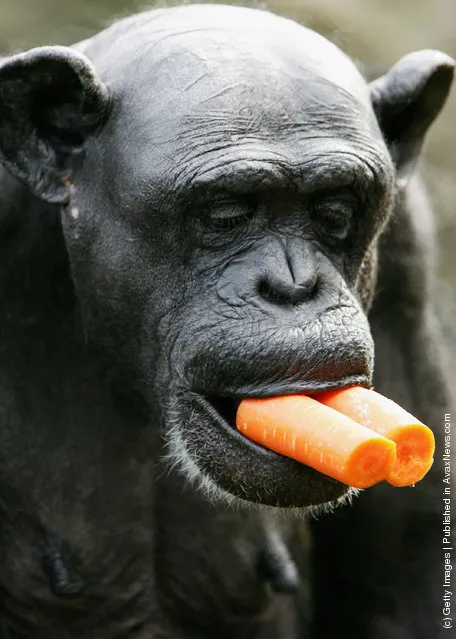
Female Chimpanzee eats carrots

Female Chimpanzee “Fifi” eats carrots as she sits in her enclosure at Taronga Zoo on her 60th birthday May 21, 2007 in Sydney, Australia. Fifi is the oldest of the Zoo's chimp population, which consists of 19 individuals. (Photo by Ian Waldie/Getty Images)
Details
07 Aug 2011 12:48:00
Fireworks at Edinburgh Castle

Shaun Gibson prepares some of the 5.5 tonnes of fireworks at Edinburgh Castle ahead of the city's Hogmanay celebration on December 29, 2011 in Edinburgh, Scotland. Over 2,800 individual fireworks from six specialised firing panels will be launched during the display over Edinburgh Castle and gardens. (Photo by Jeff J Mitchell/Getty Images)
Details
30 Dec 2011 11:27:00
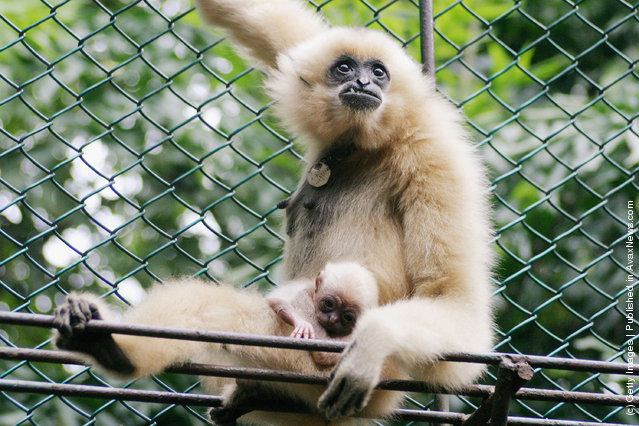
Newborn White-Cheeked Gibbon Nomascus

“Nomascus is the second most speciose genus of gibbons (family Hylobatidae). Originally this genus was a subgenus of Hylobates, and all individuals were considered one species, Hylobates concolor. Species within Nomascus are characterized by 52 chromosomes. Some species are all black, some light with a distinct black tuft of crown fur, and some by distinct, light-colored cheek patches. Nomascus is found from southern China (Yunnan) to southern Vietnam, and also on Hainan Island. One of the genus' species, Nomascus nasutus, has been deemed “the most critically endangered ape species in the world”. All of the species in this genus are endangered or critically endangered”. – Wikipedia

Photo: A newborn White-Cheeked Gibbon clings to its mother in the Nanning Zoo on April 12, 2004 in Nanning, Guangxi province, China. The White-Cheeked Gibbon's natural habitat is Southern China as well as Vietnam and Laos. They are classified as highly endangered and are on the brink of extinction due to poaching and reduction of natural rainforests. (Photo by Getty Images)

Details
12 Aug 2011 11:51:00
Hi everyone!
Today with this post we'd like to start a new tradition on AvaxNews. I'm sure you know what Instagram is, most of you have Instagram gallery of your wonderful photos. In return we are ready to place your brilliant photos on our brilliant website. Of course there will be the owner's name and link to Instagram profile.


Haifa, Israel, May 2013
Details
19 May 2013 10:23:00
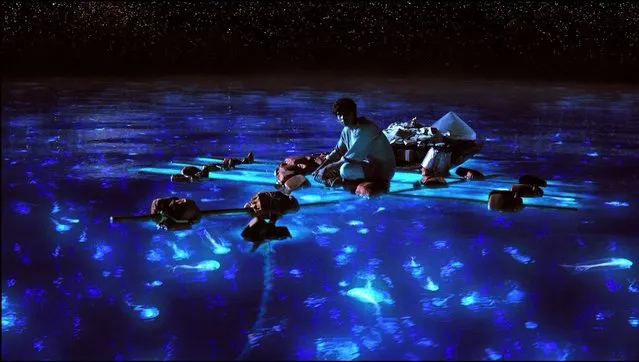
Glowing Bioluminescent Plankton

If you’ve had the unique privilege of witnessing bioluminescent plankton while diving at night, you know firsthand how beautiful the underwater light show can be. For those of us who haven’t experienced it, this unique phenomenon. So what makes this beautiful show possible? In a recent post at online scuba site AquaViews they share some insight we thought you all would find interesting.
Details
04 Jun 2013 10:55:00
Plus Fours Routefinder - Worlds First Navigation System

Invented in 1920′s this could be world’s first navigation system. No satellites or digital screens were used in the making of this portable navigation system. Called Plus Fours Routefinder, this little invention was designed to be worn on your wrist, and the “maps” were printed on little wooden rollers which you would turn manually as you drove along.
Details
19 Mar 2014 15:14:00