A visitor looks at a creation at the Artemide space during Milan Design Week, April 14, 2015. The Milan Design Week will be held until April 19. (Photo by Stefano Rellandini/Reuters)
The possible surface of TRAPPIST-1f, one of seven newly discovered planets in the TRAPPIST-1 system that scientists using the Spitzer Space Telescope and ground based telescopes have discovered. (Photo by Reuters/NASA/JPL-Caltech)
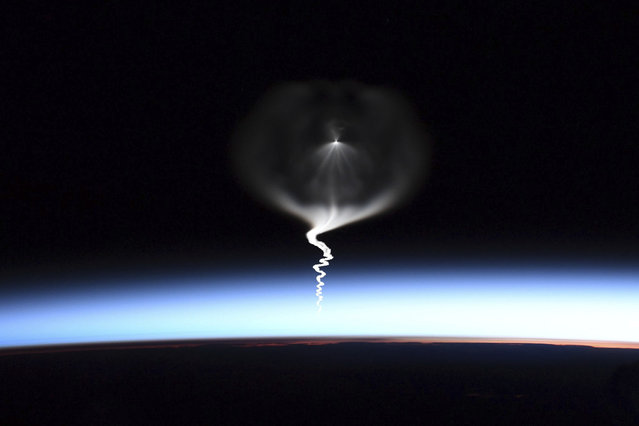
This photo provided by NASA astronaut Christina Koch shows the launch of a Russian Soyuz rocket, as seen from the International Space Station on Wednesday, September 25, 2019. (Photo by Christina Koch/NASA via AP Photo)
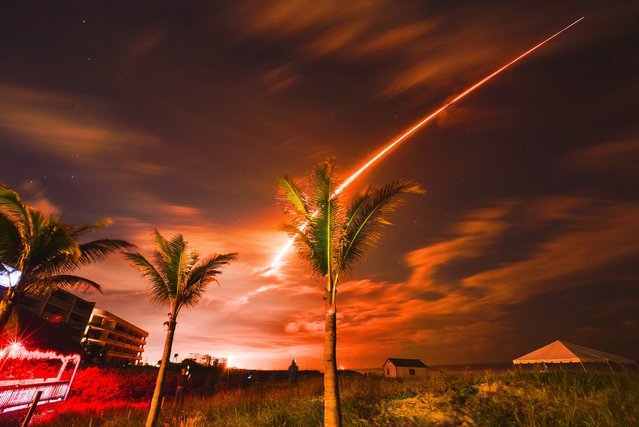
SpaceX launch of a Falcon 9 rocket carrying Starlink satellites on Mission 12-2 on December 23, 2024. The rocket launched from Kennedy Space Center Launch Pad 39A in Florida. (Photo by USA Today)
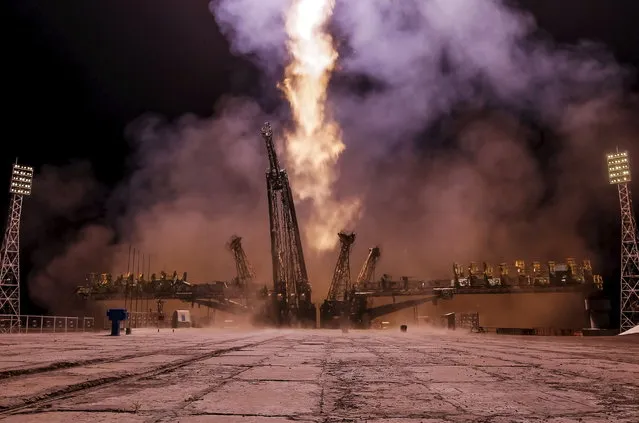
The Soyuz TMA-17M spacecraft carrying the International Space Station (ISS) crew blasts off from the launch pad at the Baikonur cosmodrome, Kazakhstan, July 23, 2015. The Russian rocket carries Russian cosmonaut Oleg Kononenko, U.S. astronaut Kjell Lindgen and Japan astronaut Kimiya Yui. (Photo by Shamil Zhumatov/Reuters)
A general view of Stonehenge during the annual Perseid meteor shower in the night sky in Salisbury Plain, southern England August 13, 2013. The Perseid meteor shower is sparked every August when the Earth passes through a stream of space debris left by comet Swift-Tuttle. Picture taken using a long exposure. (Photo by Kieran Doherty/Reuters)
Measuring just five feet at its widest point, the ultra-thin home was unveiled in the Polish capital of Warsaw on Sunday, October 21, 2012. Photo: The Keret House is squeezed into the space between two apartment buildings in Warsaw. There's a four-inch gap between the apartment buildings to either side. A perforated steel facade was used to allow in more light. (Photo by Andrea Meichsner/The New York Times)
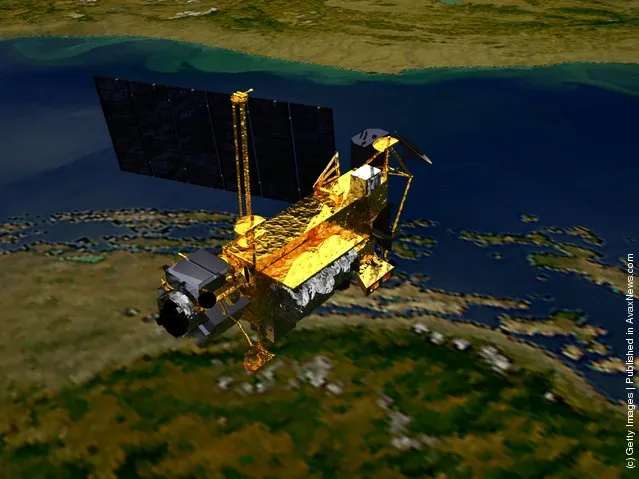
In this artist illustration handout from the National Aeronautics and Space Administration (NASA), the Upper Atmosphere Research Satellite (UARS) is seen. According to NASA, the 12,500 pound satellite will fall from orbit into earth's atmosphere anytime between September 22 through 24. It is estimated that the space craft will break up into about 100 pieces, with an estimated 26 of which could hit the earth over a possible 500 mile debris field. (Illustration by NASA via Getty Images)