Loading...
Done
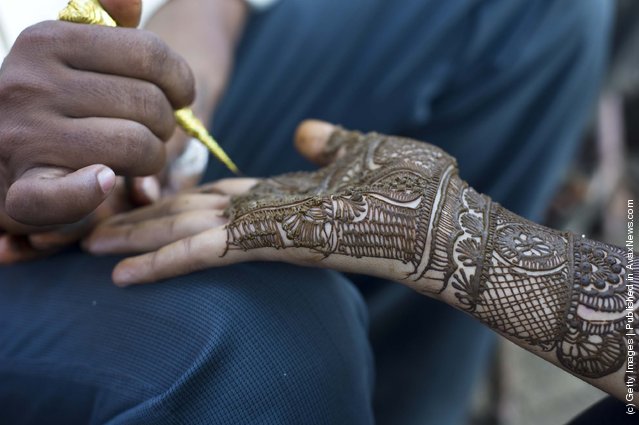
Application of henna or “Mehndi”  to a girls hand in a market in Jaipur, India

“Mehndi or menhdi is the application of henna as a temporary form of skin decoration in India, as well as by expatriate communities from the country. The word mehndi is derived from the Sanskrit word mendhikā. The use of mehndi and turmeric is described in the earliest Vedic ritual books. Haldi (Staining oneself with turmeric paste) as well as mehndi are important Vedic customs as a symbolic representation of the Outer and the Inner Sun. Vedic customs are meant to awaken the “inner light” and so the gold of the inner Sun has an important symbolic function”. – Wikipedia

Photo: Application of henna or “Mehndi” to a girls hand in a market on October 18, 2010 in Jaipur, India. (Photo by Simon de Trey-White/Getty Images)
Details
23 Nov 2011 13:33:00
American model Kaia Gerber (L) and American actress Kate Hudson attend the “Shell” After Party during the Toronto International Film Festival at Elevation Pictures on September 13, 2024. In this dark comedy and body horror about society's obsession with youth and good looks, an actress (Elisabeth Moss) challenges a beauty firm CEO (Kate Hudson) over her company's questionable science. (Photo by ZUMAPRESS.com/The Mega Agency)

American model Kaia Gerber (L) and American actress Kate Hudson attend the “Shell” After Party during the Toronto International Film Festival at Elevation Pictures on September 13, 2024. In this dark comedy and body horror about society's obsession with youth and good looks, an actress (Elisabeth Moss) challenges a beauty firm CEO (Kate Hudson) over her company's questionable science. (Photo by ZUMAPRESS.com/The Mega Agency)
Details
01 Oct 2024 04:15:00
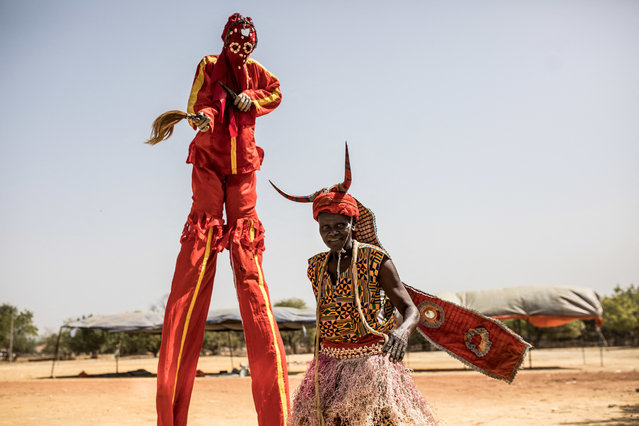
A masquerade dances to drums along the streets during the kankurang Festival in Janjanbureh on January 27, 2024. Listed as a UNESCO World Heritage Site since 2005, Kankurang, a combination of the Mandingo words “kango” and “Kurango”, literally translated as “voice” and “force”, ensures the transmission and teaching of the values and practices that form the basis of Mandingo cultural identity, a West African people whose historical home was the Mali empire. (Photo by Muhamadou Bittaye/AFP Photo)

A masquerade dances to drums along the streets during the kankurang Festival in Janjanbureh on January 27, 2024. Listed as a UNESCO World Heritage Site since 2005, Kankurang, a combination of the Mandingo words “kango” and “Kurango”, literally translated as “voice” and “force”, ensures the transmission and teaching of the values and practices that form the basis of Mandingo cultural identity, a West African people whose historical home was the Mali empire. (Photo by Muhamadou Bittaye/AFP Photo)
Details
13 Mar 2025 01:44:00
A girl dances in front of the digital art installation “Light in Dark” created by teamLab, a collaborative of Japanese digital artists, during a special exhibition of “Shake! Art Exhibition! and Learn and Play! teamLab Future Park” at National Museum of Emerging Science and Innovation (or Miraikan) in Tokyo, Japan, 19 January 2015. The exhibition is held through 01 March 2015. (Photo by Kimimasa Mayama/EPA)

A girl dances in front of the digital art installation “Light in Dark” created by teamLab, a collaborative of Japanese digital artists, during a special exhibition of “Shake! Art Exhibition! and Learn and Play! teamLab Future Park” at National Museum of Emerging Science and Innovation (or Miraikan) in Tokyo, Japan, 19 January 2015. The exhibition is held through 01 March 2015. (Photo by Kimimasa Mayama/EPA)
Details
06 Feb 2015 12:51:00
Merit: A Night at Deadvlei. The night before returning to Windhoek, we spent several hours at Deadveli. The moon was bright enough to illuminate the sand dunes in the distance, but the skies were still dark enough to clearly see the milky way and magellanic clouds. Deadveli means “dead marsh. (Photo and caption by Beth McCarley/National Geographic Traveler Photo Contest)

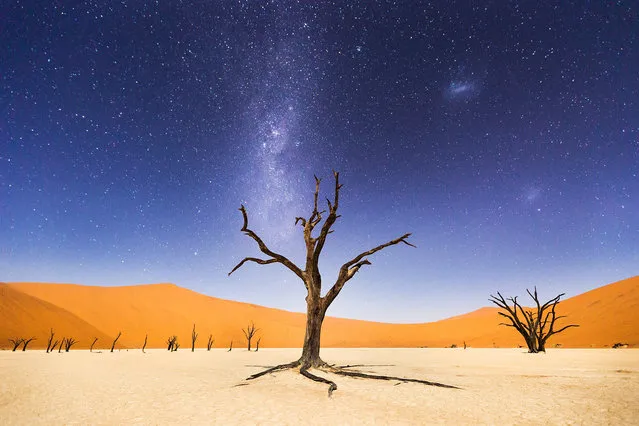
Merit: A Night at Deadvlei. The night before returning to Windhoek, we spent several hours at Deadveli. The moon was bright enough to illuminate the sand dunes in the distance, but the skies were still dark enough to clearly see the milky way and magellanic clouds. Deadveli means “dead marsh. The camelthorn trees are believed to be about 900 years old, but have not decomposed because the environment is so dry. (Photo and caption by Beth McCarley/National Geographic Traveler Photo Contest)
Details
04 Aug 2015 11:50:00
Neil Zeller's snaps were taken across Canada, where he photographs the northern lights dancing across a dark night sky. In one stunning shot, Zeller, 42, even manages to capture a flash of lightning beneath a storm cell while an aurora gives off a magnificent green glow. The photographer, from Calgary, Alberta, describes himself as a night person, and became interested in night photography about 10 years ago. (Photo by Neil Zeller/Caters News)

Neil Zeller's snaps were taken across Canada, where he photographs the northern lights dancing across a dark night sky. In one stunning shot, Zeller, 42, even manages to capture a flash of lightning beneath a storm cell while an aurora gives off a magnificent green glow. The photographer, from Calgary, Alberta, describes himself as a night person, and became interested in night photography about 10 years ago. (Photo by Neil Zeller/Caters News)
Details
01 Jan 2016 08:02:00
A woman spends her time outdoors to observe the ancient festival of Sizdeh Bedar, an annual public picnic day on the 13th day of the Iranian new year, at the Tochal mountainous area northern Tehran, Iran, Sunday, April, 2, 2017. Sizdeh Bedar, which comes from the Farsi words for “thirteen” and “day out”, is a legacy from Iran's pre-Islamic past that hard-liners in the Islamic Republic never managed to erase from calendars. (Photo by Ebrahim Noroozi/AP Photo)

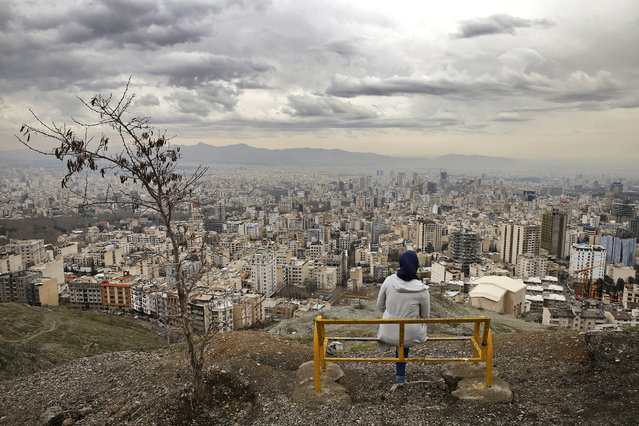
A woman spends her time outdoors to observe the ancient festival of Sizdeh Bedar, an annual public picnic day on the 13th day of the Iranian new year, at the Tochal mountainous area northern Tehran, Iran, Sunday, April, 2, 2017. Sizdeh Bedar, which comes from the Farsi words for “thirteen” and “day out”, is a legacy from Iran's pre-Islamic past that hard-liners in the Islamic Republic never managed to erase from calendars. (Photo by Ebrahim Noroozi/AP Photo)
Details
21 Apr 2017 07:38:00
A Hindu devotee lies on a road as the holy “Rath”, or the chariot of lord Jagannath, passed over her during the Rath Yatra, or chariot procession in Karachi, Pakistan, July 17, 2016. Ratha-jatra is derived from two Odia words ratha/rotho meaning “chariot” and jatra meaning “journey”. The festival involves an annual procession (journey) of a deity's idols. Other names for the festival include ratha jatra or chariot festival. (Photo by Akhtar Soomro/Reuters)

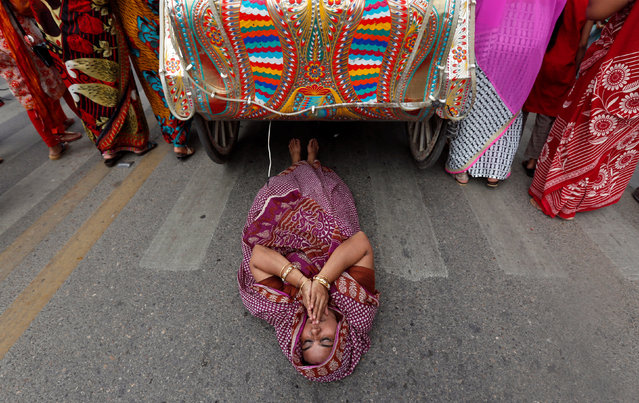
A Hindu devotee lies on a road as the holy “Rath”, or the chariot of lord Jagannath, passed over her during the Rath Yatra, or chariot procession in Karachi, Pakistan, July 17, 2016. Ratha-jatra is derived from two Odia words ratha/rotho meaning “chariot” and jatra meaning “journey”. The festival involves an annual procession (journey) of a deity's idols. Other names for the festival include ratha jatra or chariot festival. (Photo by Akhtar Soomro/Reuters)
Details
18 Jul 2016 12:42:00