Loading...
Done
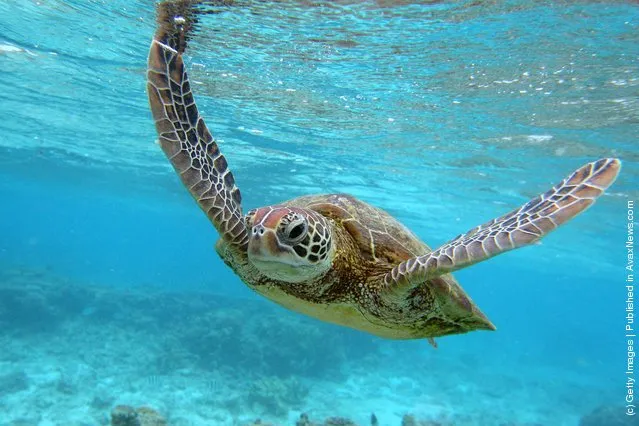
A Hawksbill sea turtle is seen swimming in Lady Elliot Island, Australia

“The Great Barrier Reef is one of the most important sea turtle habitats in the world, with Lady Elliot Island being a key part of that habitat. Every year between November and March the green and loggerhead turtles lumber up the same beach on which they were born more than 50 years ago. These turtles nest on Lady Elliot Island up to nine times in a season, laying between 80 and 120 eggs per clutch. About eight weeks later, young hatchlings leave their nests and head towards the ocean (January to April)”. – Wikipedia

Photo: A Hawksbill sea turtle is seen swimming on January 15, 2012 in Lady Elliot Island, Australia. (Photo by Mark Kolbe/Getty Images)
Details
02 Feb 2012 11:28:00
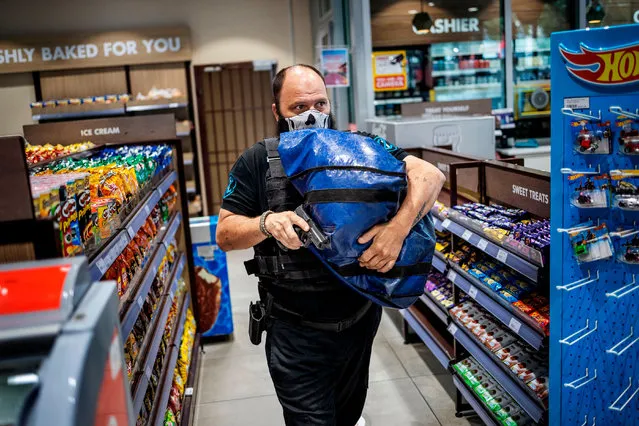
A CIT guard carries his gun handgun while bringing a bag containing cash inside an armoured vehicle during a money collection in Johannesburg's CBD, on December 8, 2020. As the Christmas festive season approaches, cash-in-transit (CIT) companies are gearing up as they continue to be target of crime, with about 3000 money vans traveling daily nationwide. Despite the COVID-19 lockdown, there have been 260 cash-in-transit heist incidents in South Africa this year, with 19 CIT crew members killed. Cash-in-transit heists in the country are often military-style planned operations with criminals recurring to bomb making and assault rifles attacks. (Photo by Michele Spatari/AFP Photo)

A CIT guard carries his gun handgun while bringing a bag containing cash inside an armoured vehicle during a money collection in Johannesburg's CBD, on December 8, 2020. As the Christmas festive season approaches, cash-in-transit (CIT) companies are gearing up as they continue to be target of crime, with about 3000 money vans traveling daily nationwide. Despite the COVID-19 lockdown, there have been 260 cash-in-transit heist incidents in South Africa this year, with 19 CIT crew members killed. Cash-in-transit heists in the country are often military-style planned operations with criminals recurring to bomb making and assault rifles attacks. (Photo by Michele Spatari/AFP Photo)
Details
18 Dec 2020 00:01:00
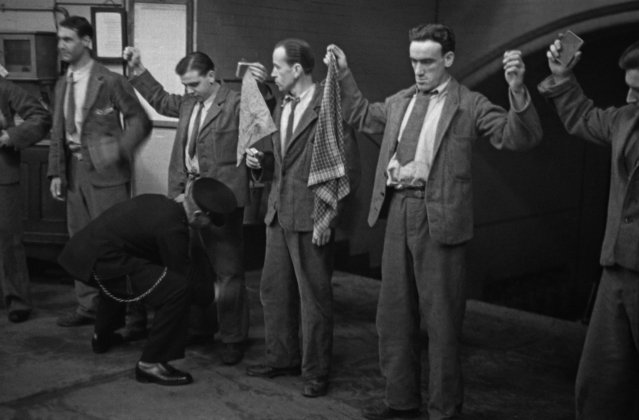
A prison officer frisking prisoners during the “rub-down” at Strangeways Prison in Manchester, UK on November 1948. (Photo by Bert Hardy/Picture Post/Hulton Archive/Getty Images)

Shot by Bert Hardy, the black and white images show prisoners carrying out remedial tasks such as untying knots in post office string and sewing mail bags. Other intriguing shots show lags doing their daily one hour outdoor exercise, being frisked for contraband items by officers during a routine “rub down” and serving evening meals. Strangeways was designed by Alfred Waterhouse and cost £170,000 ($207,910) to build. The prison, famed for its prominent ventilation tower and imposing design, has become a local landmark. Here: A prison officer frisking prisoners during the “rub-down” at Strangeways Prison in Manchester, UK on November 1948. (Photo by Bert Hardy/Picture Post/Hulton Archive/Getty Images)
Details
08 Mar 2017 00:01:00
Nuclear Football

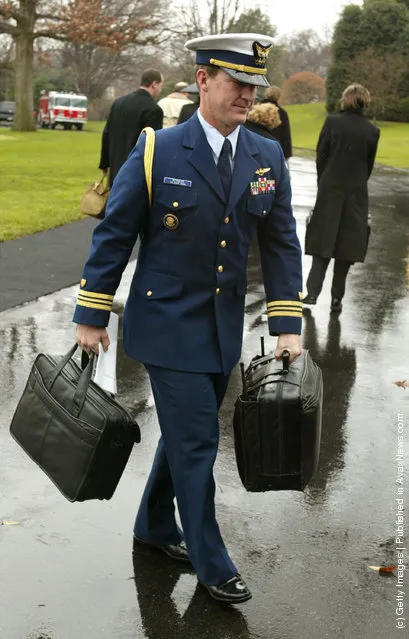
“The nuclear football (also known as the atomic football, the president's emergency satchel, the button, the black box, or just the football) is a briefcase, the contents of which are to be used by the President of the United States of America to authorize a nuclear attack while away from fixed command centers, such as the White House Situation Room. It functions as a mobile hub in the strategic defense system of the United States. It is a metallic Zero Halliburton briefcase carried in a black leather “jacket”. The package weighs around 45 pounds (20 kilograms). A small antenna protrudes from the bag near the handle”. – Wikipedia

Photo: A U.S. Military officer carries the “football”, which carries nuclear launch codes, on South Lawn after returning with U.S. President George W. Bush to the White House January 7, 2002 in Washington, DC. (Photo by Mark Wilson/Getty Images)
Details
06 Aug 2011 12:53:00
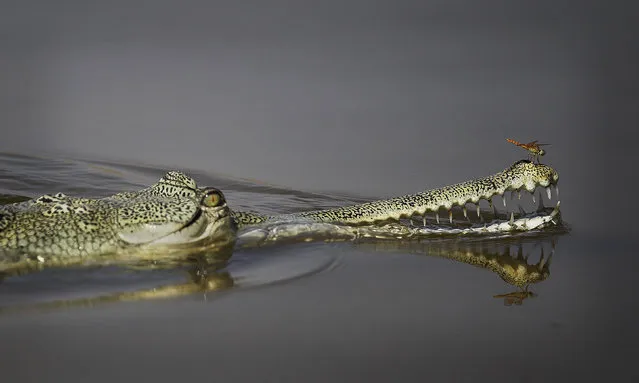
In this photo taken Wednesday, April 30, 2014, a dragonfly sits on the nose of a Gharial, rare crocodile-like creatures, in the River Chambal near Bhopepura village in the northern Indian state of Uttar Pradesh. The narrow 250-mile stretch of the Chambal is a place of crocodiles and jackals, of river dolphins and the occasional wolf. Hundreds of species of birds, storks, geese, babblers, larks, falcons and so many more, nest along the river. (Photo by Altaf Qadri/AP Photo)

In this photo taken Wednesday, April 30, 2014, a dragonfly sits on the nose of a Gharial, rare crocodile-like creatures, in the River Chambal near Bhopepura village in the northern Indian state of Uttar Pradesh. The narrow 250-mile stretch of the Chambal is a place of crocodiles and jackals, of river dolphins and the occasional wolf. Hundreds of species of birds, storks, geese, babblers, larks, falcons and so many more, nest along the river. Endangered birds lay small speckled eggs in tiny pits they dig in the sandbars. Gharials, rare crocodile-like creatures that look like they swaggered out of the Mesozoic Era, are commonplace here and nowhere else. (Photo by Altaf Qadri/AP Photo)
Details
23 Feb 2015 12:55:00


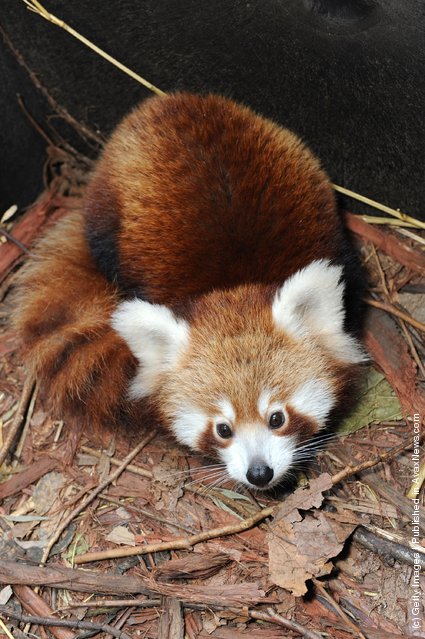
“The red panda (Ailurus fulgens, or shining-cat), is a small arboreal mammal native to the eastern Himalayas and southwestern China. It is the only species of the genus Ailurus. Slightly larger than a domestic cat, it has reddish-brown fur, a long, shaggy tail, and a waddling gait due to its shorter front legs. It feeds mainly on bamboo, but is omnivorous and may also eat eggs, birds, insects, and small mammals. It is a solitary animal, mainly active from dusk to dawn, and is largely sedentary during the day”. – Wikipedia

Photo: In this handout image provided by Taronga Zoo, Seba, a baby Red Panda, explores his new home at Taronga Zoo on April 7, 2011 in Sydney, Australia. The Red Panda cub was born at Christmas and is the 45th to be born at the zoo since 1977. (Photo by Peter Hardin/Taronga Zoo via Getty Images)
Details
07 Apr 2011 08:51:00
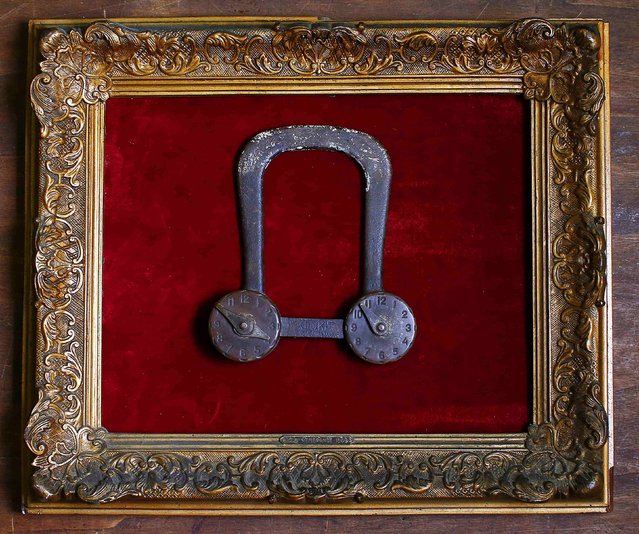
A 19th century bicycle safety lock is displayed in an old frame in the Museum of Domenico Agostinelli in Dragona, near Rome October 30, 2014. (Photo by Tony Gentile/Reuters)

A 19th century bicycle safety lock is displayed in an old frame in the Museum of Domenico Agostinelli in Dragona, near Rome October 30, 2014Italian collector Domenico Agostinelli, 74, has a passion that has led him over the past 60 years to pick up and collect things of all types, from antique art to everyday objects of the past and present. His collection includes a 65-million-year-old dinosaur egg, meteor fragments, a car that once belonged to American mob boss Al Capone, a lock of hair of Italian national hero Giuseppe Garibaldi, toys, weapons, musical instruments of all kinds and many more. (Photo by Tony Gentile/Reuters)
Details
23 Dec 2014 13:29:00
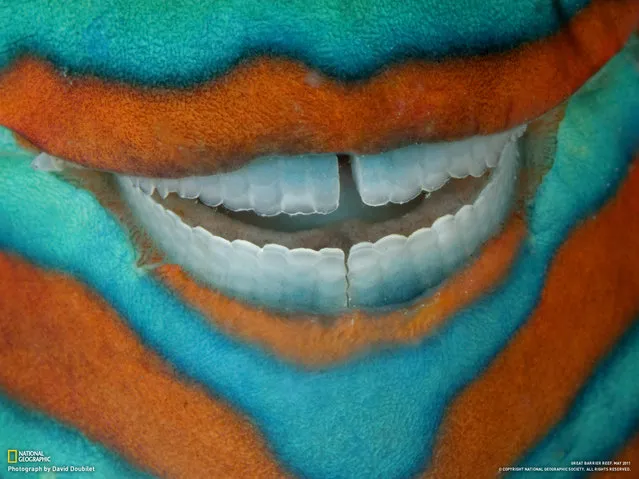
Photographers: David Doubilet

“David Doubilet (born 28 November 1946) is a well known underwater photographer known primarily for his work published in National Geographic Magazine. He was born in New York and started taking photos underwater at the young age of 12. He started with a Brownie Hawkeye in a rubber anesthesiologist's bag to keep the water out of the camera. During his summer holidays, he spent his time along the New Jersey coast. He later worked as a diver and photographer for the Sandy Hook Marine Laboratories in New Jersey. He also spent much time in the Caribbean. While a dive instructor in the Bahamas he found his motivation to capture the beauty of the sea and everything in it”. – Wikipedia. (Photo by David Doubilet/National Geographic)
Details
16 May 2012 12:21:00