Loading...
Done
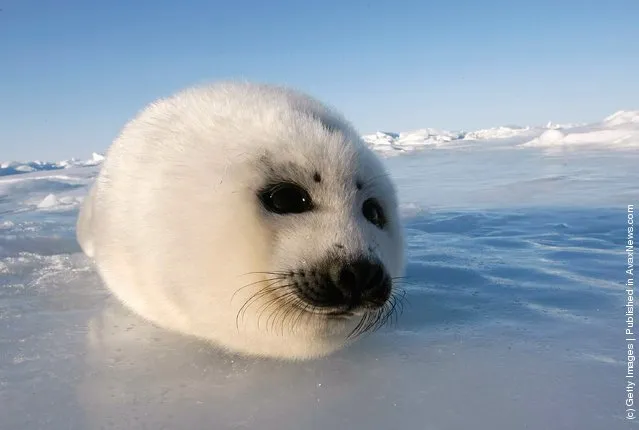
A harp seal pup

“The harp seal or saddleback seal is a species of earless seal native to the northernmost Atlantic Ocean and adjacent parts of the Arctic Ocean. Newborn pups weigh around 11 kilograms (24 lb) and are 80–85 centimetres (31–33 in) long. After birth, the mother only feeds that pup. During the 12 day nursing period, the mother does not eat, losing up to 3 kilograms (7 lb) per day. Harp seal milk contains up to 48% fat, so pups gain over 2.2 kilograms (4.9 lb) per day. During this time, the juvenile's “greycoat” grows in beneath the white neonatal coat, and it weighs 80 pounds (36 kg)”. – Wikipedia

Photo: A harp seal pup lies on an ice floe in the Gulf of Saint Lawrence March 24, 2008 in Charlottetown, Canada. (Photo by Joe Raedle/Getty Images)
Details
19 Sep 2011 15:49:00
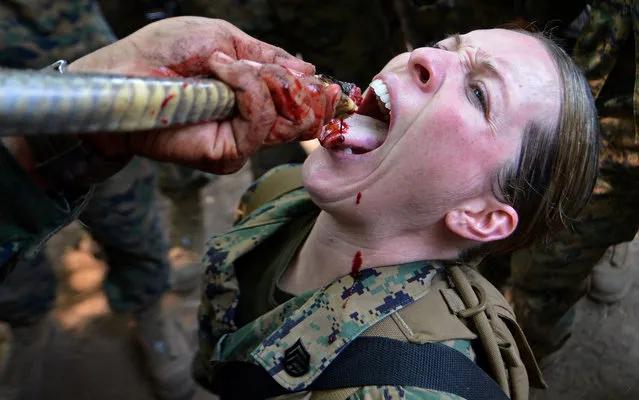
In a military base in the Thai province of Chon Buri February 20 U.S. Marines Navy with Thailand began their studies in jungle survival. The event is held in joint military exercises “Cobra Gold 2013”. During a jungle survival program February 20, 2013 taught by Royal Thai Special Forces in Sannapit, Thailand, U.S. Marines learned to catch cobras and drink their fresh blood, not to mention eat forest insects and pull the heads off of chicken. The training was part of Operation Cobra Gold 13, the 32nd edition of international military exercises hosted by the Thai. According to a U.S. Marines press release, Cobra Gold is the largest exercise of its kind in Asia and incorporates troops from five other nations in addition to the U.S. and Thailand. The Daily Mail reports that the Marines were invited to experience the local custom of drinking cobra blood after being taught to catch and kill cobras in the wild. As CNN notes, Cobra blood is believed to be a panacea and aphrodiasic in parts of Southeast Asia. In Jakarta, vendors can earn over $100 a night selling shots of cobra blood mixed with liquor. (Photo by Pornchai Kittiwongsakul/AFP Photo)

During a jungle survival program February 20, 2013 taught by Royal Thai Special Forces in Sannapit, Thailand, U.S. Marines learned to catch cobras and drink their fresh blood, not to mention eat forest insects and pull the heads off of chicken. The training was part of Operation Cobra Gold 13, the 32nd edition of international military exercises hosted by the Thai. According to a U.S. Marines press release, Cobra Gold is the largest exercise of its kind in Asia and incorporates troops from five other nations in addition to the U.S. and Thailand. The Daily Mail reports that the Marines were invited to experience the local custom of drinking cobra blood after being taught to catch and kill cobras in the wild. As CNN notes, Cobra blood is believed to be a panacea and aphrodiasic in parts of Southeast Asia. In Jakarta, vendors can earn over $100 a night selling shots of cobra blood mixed with liquor. (Photo by Pornchai Kittiwongsakul/AFP Photo)
Details
23 Feb 2013 11:52:00
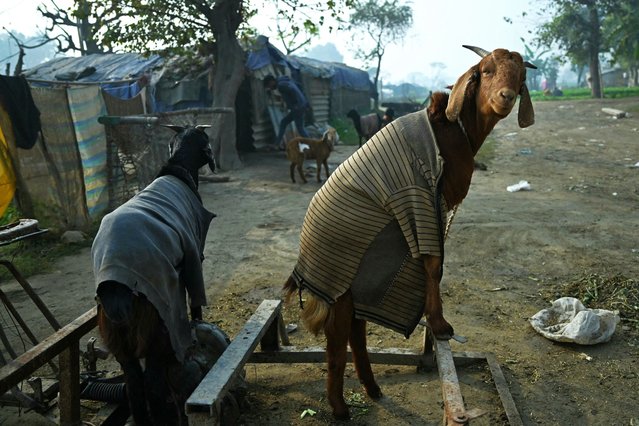
Goats covered with cloth are tied next to a hut on a cold winter morning in New Delhi on December 26, 2023. (Photo by Arun Sankar/AFP Photo)

Goats covered with cloth are tied next to a hut on a cold winter morning in New Delhi on December 26, 2023. (Photo by Arun Sankar/AFP Photo)
Details
04 Jan 2024 19:31:00
A woman yawns as she sits outside a hospital on a cold winter morning in Srinagar January 3, 2019. (Photo by Danish Ismail/Reuters)

A woman yawns as she sits outside a hospital on a cold winter morning in Srinagar January 3, 2019. (Photo by Danish Ismail/Reuters)
Details
18 Jan 2019 00:03:00
Bathers brave the cold waters of the North Sea as they take part in the annual Boxing Day dip at Redcar Beach on December 26, 2019 in Redcar, England. The event attracts hundreds of people each year who take to the cold water wearing fancy dress as they help to raise money for a number of charities. (Photo by James Glossop/The Times)

Bathers brave the cold waters of the North Sea as they take part in the annual Boxing Day dip at Redcar Beach on December 26, 2019 in Redcar, England. The event attracts hundreds of people each year who take to the cold water wearing fancy dress as they help to raise money for a number of charities. (Photo by James Glossop/The Times)
Details
28 Dec 2019 00:07:00
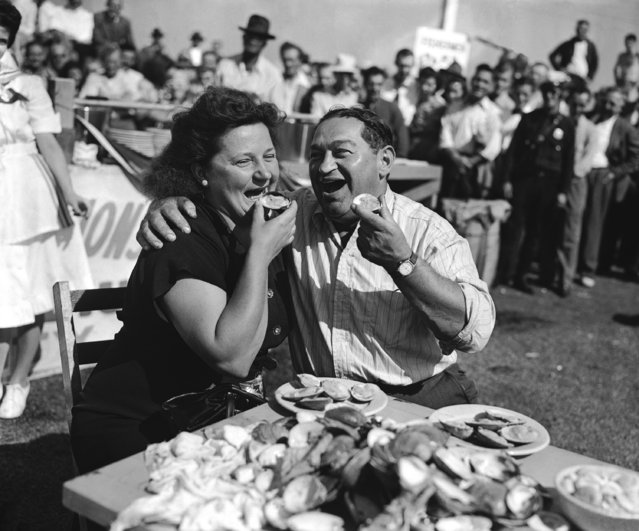
Catherine Hollis of Chester, Pa., and Izzy Weintraub of Atlantic City eat Cherrystone clams at Atlantic City's annual clam-eating contest September 16, 1946. They finished 96 and 66 clams respectively in 20 minutes. (Photo by Sam Myers/AP Photo)

Catherine Hollis of Chester, Pa., and Izzy Weintraub of Atlantic City eat Cherrystone clams at Atlantic City's annual clam-eating contest September 16, 1946. They finished 96 and 66 clams respectively in 20 minutes. (Photo by Sam Myers/AP Photo)
Details
06 Feb 2018 07:17:00
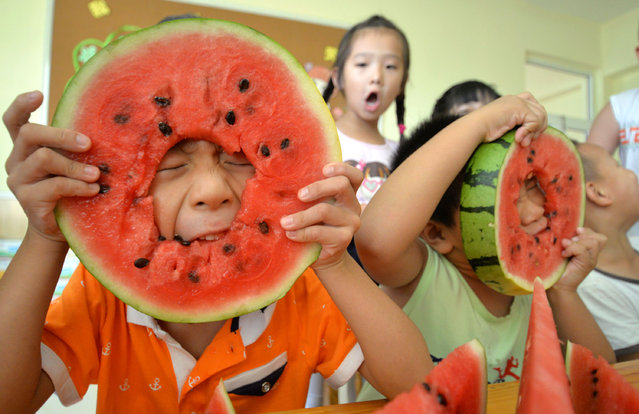
Children eat watermelons to meet the “beginning of autumn” at a kindergarten in Handan, China on August 7, 2015. Chinese tradition to eat watermelons or peaches before that day symbolises “biting away summer”. The solar term ‘beginning of autumn’ falls on 8 August this year. (Photo by Xinhua/REX Shutterstock)

Children eat watermelons to meet the “beginning of autumn” at a kindergarten in Handan, China on August 7, 2015. Chinese tradition to eat watermelons or peaches before that day symbolises “biting away summer”. The solar term ‘beginning of autumn’ falls on 8 August this year. (Photo by Xinhua/REX Shutterstock)
Details
11 Aug 2015 14:29:00
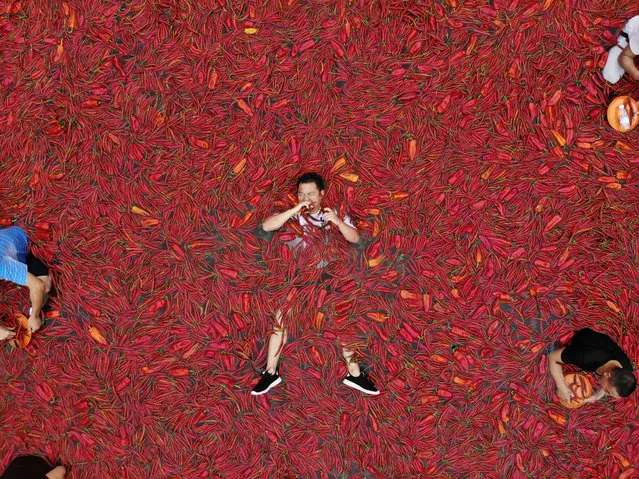
A contestant lies in a chili covered pool eating Chillies during a chili eating contest on July 8, 2018 in Ningxiang, Hunan Province of China. Citizen Tang Shuaihui ate 50 Chillies in one minute winning the contest. (Photo by VCG/Getty Images)

A contestant lies in a chili covered pool eating Chillies during a chili eating contest on July 8, 2018 in Ningxiang, Hunan Province of China. Citizen Tang Shuaihui ate 50 Chillies in one minute winning the contest. (Photo by VCG/Getty Images)
Details
23 Jul 2018 00:01:00