Loading...
Done
New Zealand Cartoon Kleenex Sculpture By Neil Dawsonby

This surreal metal sculpture is created by a famous sculptor, Neil Dawson in New Zealand. The masterpiece is made from steel and painted like if it’s a drawing from a cartoon. The artwork can be visited at Gibbs Farm, that is host to many other art sculptures as well.
Details
22 Jan 2014 13:05:00


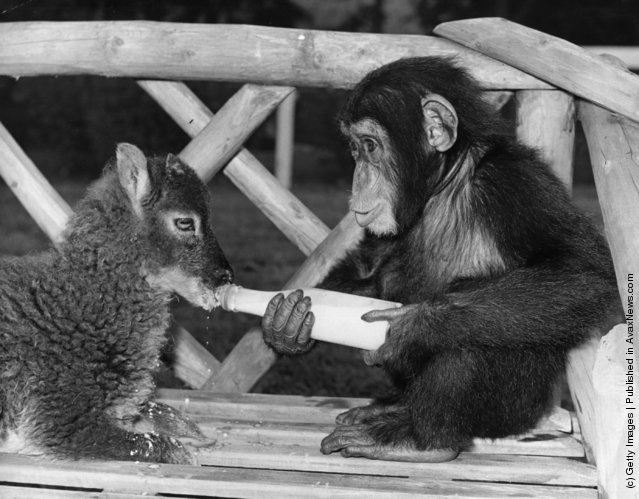
A chimpanzee bottle-feeds a lamb at Southam Zoo Farm in Warwickshire. The owners of the zoo, Mr and Mrs Clews, bring up many of the animals as their pets; the animals, are, as a result, of a friendly disposition. (Photo by Fox Photos/Getty Images). 23rd August 1968
Details
01 Apr 2011 07:47:00
Domestic geese

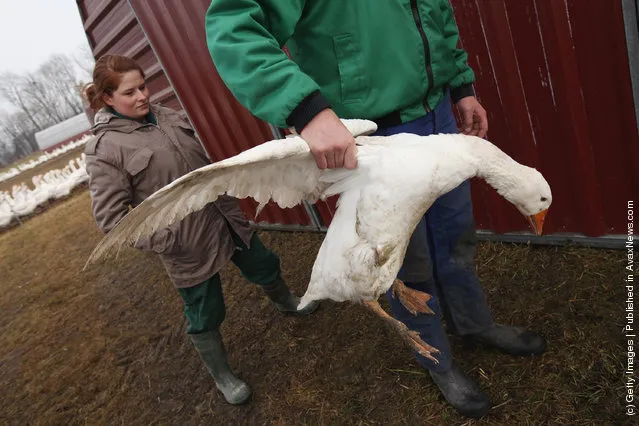
Farmhand Beatrice Jasiewicz (L) looks on as a colleague carries an injured goose on an open field at the Oekohof Kuhhorst organic farm near Berlin on November 24, 2011 in Kuhhorst, Germany. Goose is the traditional Christmas Eve dinner in Germany. (Photo by Sean Gallup/Getty Images)
Details
25 Nov 2011 12:47:00
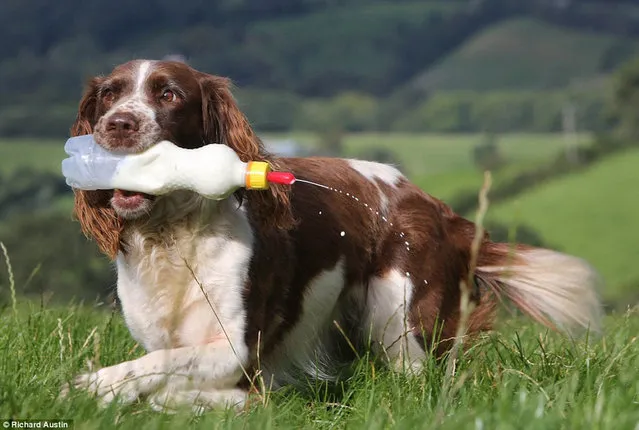
Spaniel Plays Mum For Lambs

A springer spaniel is helping out on her owner's farm – by playing mum for four lambs. Jess even feeds the Dorset Horn lambs, which could not be fed by their own mother, using a bottle held in her mouth.
Details
05 Dec 2012 13:39:00
2013 Running of the Wieners

The Running of the Wieners races are the annual kickoff to Oktoberfest-Zinzinnati. 100 dachshunds race to be crowned the winning wiener at the seventh-annual Hillshire Farm Running of the Wieners on Friday, September 19, 2014. (Photo by Jay Murdock)
Details
07 Oct 2013 06:53:00
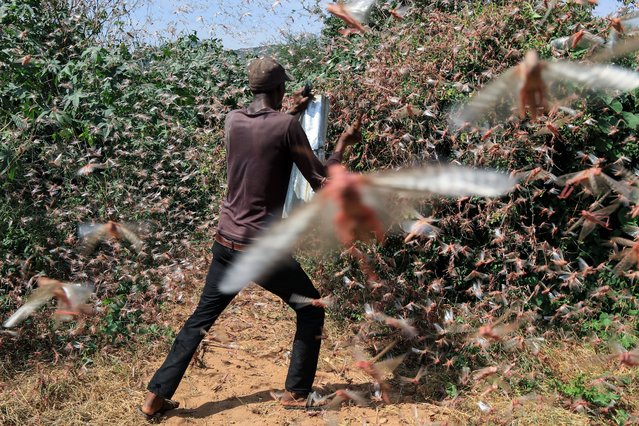
A man uses iron sheet to make noises, as a way of trying to disperse desert locusts that had invaded their farms during the second wave invasion in Kakongo village, in Nuu-Mwingi East, in Kitui, Kenya, 06 February 2021. The second wave invasion of the desert locusts in the country comes at a time where most famers are expecting to harvest their farm produce in the country. According to the United Nations Food and Agriculture Organization (FAO), on 04 February, warned numerous immature desert locust swarms persist in southern Ethiopia and Kenya. Some of the swarms are in community areas and therefore cannot be treated. In Kenya, immature swarms continue to spread westwards across northern and central counties where there are currently about 20 small swarms present, mostly about 50 hectares in size, it said. (Photo by Daniel Irungu/EPA/EFE)

A man uses iron sheet to make noises, as a way of trying to disperse desert locusts that had invaded their farms during the second wave invasion in Kakongo village, in Nuu-Mwingi East, in Kitui, Kenya, 06 February 2021. The second wave invasion of the desert locusts in the country comes at a time where most famers are expecting to harvest their farm produce in the country. (Photo by Daniel Irungu/EPA/EFE)
Details
25 Feb 2021 08:17:00
Indian Runner ducks march past farm buildings at the Vergenoegd wine estate near Cape Town, South Africa, May 16, 2016. (Photo by Mike Hutchings/Reuters)

Indian Runner ducks march past farm buildings at the Vergenoegd wine estate near Cape Town, South Africa, May 16, 2016. Each day, a quack squad of killer ducks are released for the first of two sorties at South Africa's Vergenoegd wine farm in Stellenbosch. Their mission – seek and destroy thousands of pests out to ruin the season's harvest. Fanning out across the vineyards, some 1,000 Indian Runner ducks hone in on their hidden targets with uncanny precision, locating the tiny white dune snails feasting on budding vines. (Photo by Mike Hutchings/Reuters)
Details
27 May 2016 13:06:00
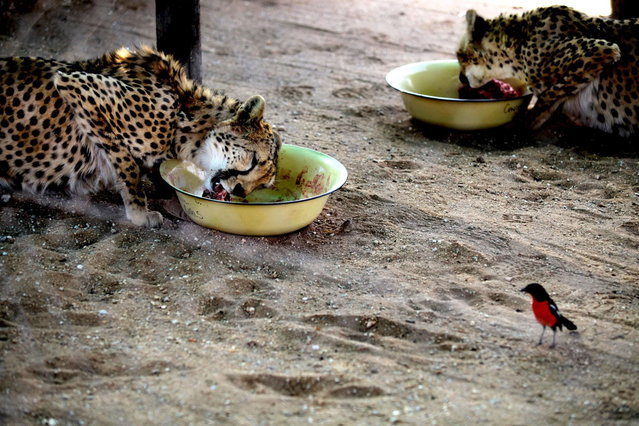
Young cheetahs eat meat at The Cheetah Conservation Fund (CCF) center in Otjiwarongo, Namibia, on August 13, 2013. The CCF started breeding Anatolian livestock dogs to promote cheetah-friendly farming after some 10,000 big cats – the current total worldwide population – were killed or moved off farms in the 1980s.  Up to 1,000 cheetahs were being killed a year, mostly by farmers who saw them as livestock killers. But the use of dogs has slashed losses for sheep and goat farmers and led to less retaliation against the vulnerable cheetah. (Photo by Jennifer Bruce/AFP Photo)

Young cheetahs eat meat at The Cheetah Conservation Fund (CCF) center in Otjiwarongo, Namibia, on August 13, 2013. The CCF started breeding Anatolian livestock dogs to promote cheetah-friendly farming after some 10,000 big cats – the current total worldwide population – were killed or moved off farms in the 1980s. Up to 1,000 cheetahs were being killed a year, mostly by farmers who saw them as livestock killers. But the use of dogs has slashed losses for sheep and goat farmers and led to less retaliation against the vulnerable cheetah. (Photo by Jennifer Bruce/AFP Photo)
Details
29 Aug 2013 10:56:00