Loading...
Done
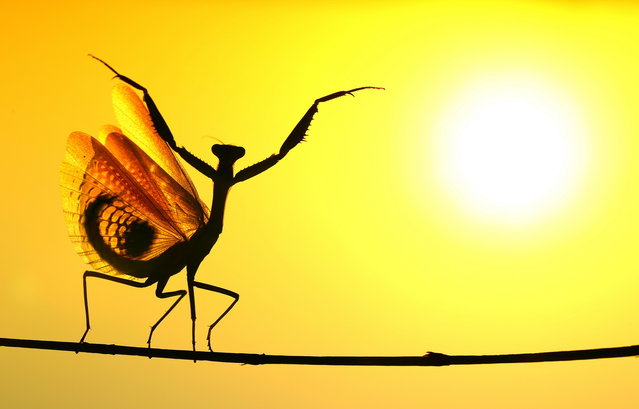
“Sunward”. When the Mediterrenean Mantis opened its wings, It seemed very impressive at the sunshine... Photo location: Nicosia, Cyprus. (Photo and caption by Hasan Baglar/National Geographic Photo Contest)

“Sunward”. When the Mediterrenean Mantis opened its wings, It seemed very impressive at the sunshine... Photo location: Nicosia, Cyprus. (Photo and caption by Hasan Baglar/National Geographic Photo Contest)
Details
01 Oct 2014 10:34:00
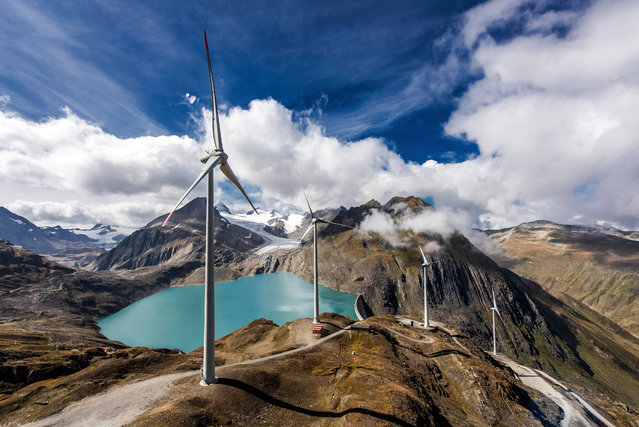
A photograph made available on 30 September 2016 showing wind turbines at the site of the highest wind park in Europe at the Griessee, near the Nufenenpass in the Swiss south Alpes, Valais, Switzerland, on 23 September 2016. The four wind turbines of this wind park were developed by the company SwissWinds GmbH and are inaugurated on, 30 September 2016. (Photo by Olivier Maire/EPA)

A photograph made available on 30 September 2016 showing wind turbines at the site of the highest wind park in Europe at the Griessee, near the Nufenenpass in the Swiss south Alpes, Valais, Switzerland, on 23 September 2016. The four wind turbines of this wind park were developed by the company SwissWinds GmbH and are inaugurated on, 30 September 2016. (Photo by Olivier Maire/EPA)
Details
28 Jan 2017 06:56:00
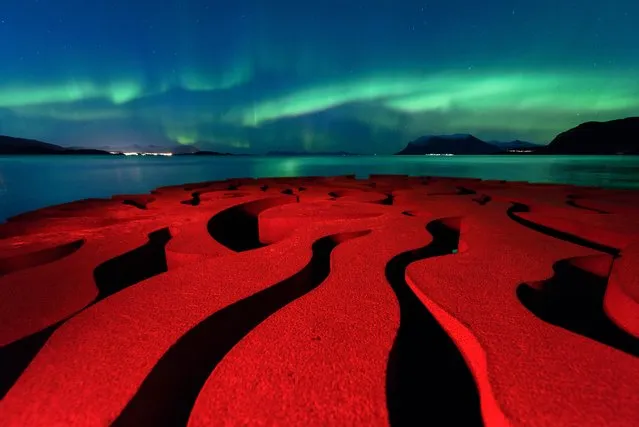
“Seven Magic Points”. The rusty red swirls of the circular, iron sculpture Seven Magic Points in Brattebergan, Norway mirror the rippling aurora above. (Photo by Rune Engebø/Royal Observatory Greenwich’s Astronomy Photographer of the Year 2016/National Maritime Museum)

Gorgeous galaxies and stunning stars make up this selection of pictures from the shortlisted entries for this year’s Insight Astronomy Photographer of the Year award. The winners will be announced on 15 September, and an exhibition of the winning images will be will be displayed in a free exhibition at the Royal Observatory Greenwich’s Astronomy Centre from 17 September. Here: “Seven Magic Points”. The rusty red swirls of the circular, iron sculpture Seven Magic Points in Brattebergan, Norway mirror the rippling aurora above. (Photo by Rune Engebø/Royal Observatory Greenwich’s Astronomy Photographer of the Year 2016/National Maritime Museum)
Details
28 Jul 2016 13:51:00
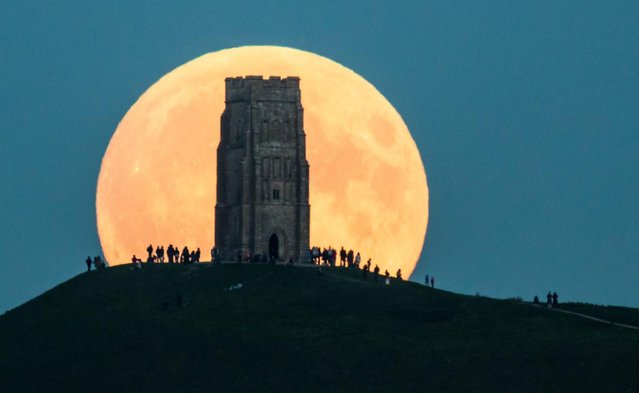
The supermoon rises behind Glastonbury Tor on September 27, 2015 in Glastonbury, England. Tonight's supermoon, so called because it is the closet full moon to the Earth this year, is particularly rare as it coincides with a lunar eclipse, a combination that has not happened since 1982 and won't happen again until 2033. (Photo by Matt Cardy/Getty Images)

The supermoon rises behind Glastonbury Tor on September 27, 2015 in Glastonbury, England. Tonight's supermoon, so called because it is the closet full moon to the Earth this year, is particularly rare as it coincides with a lunar eclipse, a combination that has not happened since 1982 and won't happen again until 2033. (Photo by Matt Cardy/Getty Images)
Details
02 Oct 2015 08:06:00
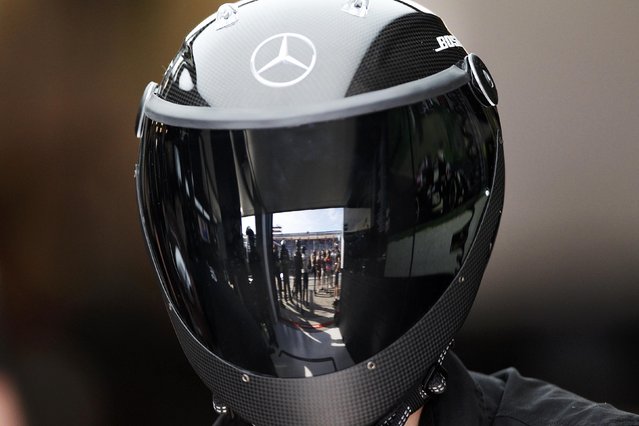
The pit lane is reflected in the visor of a Mercedes Formula One pit crew member during the second practice session of the Australian F1 Grand Prix at the Albert Park circuit in Melbourne March 13, 2015. REUTERS/Brandon Malone

The pit lane is reflected in the visor of a Mercedes Formula One pit crew member during the second practice session of the Australian F1 Grand Prix at the Albert Park circuit in Melbourne March 13, 2015. REUTERS/Brandon Malone
Details
14 Mar 2015 05:48:00
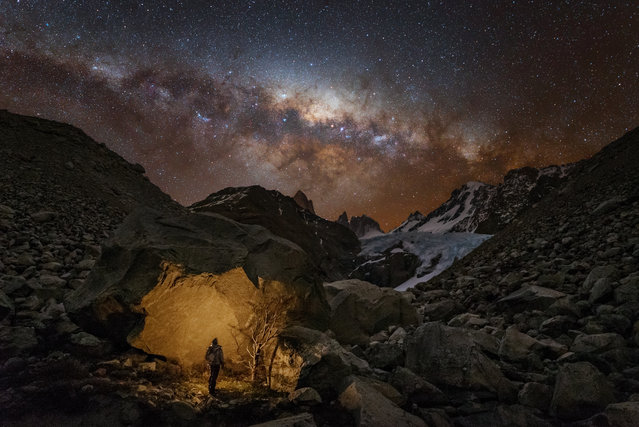
“People and Space”. Winner: Wanderer in Patagonia by Yuri Zvezdny (Russia) A lone stargazer stares up at the stars of our galaxy, the Milky Way, as they stretch across the night sky over the glacier “White Stones” (Piedras Blancas) in the Los Glaciares National Park, Argentina. El Chaltén, Santa Cruz Province, Argentina, 27 September 2016 iOptron Sky-Tracker mount, Sony A7S camera, 18 mm f/2.8 lens, ISO 5000, 30-second exposure Wanderer in Patagonia. (Photo by Yuri Zvezdny/Insight Astronomy Photographer of the Year 2017)

“People and Space”. Winner: Wanderer in Patagonia by Yuri Zvezdny (Russia) A lone stargazer stares up at the stars of our galaxy, the Milky Way, as they stretch across the night sky over the glacier “White Stones” (Piedras Blancas) in the Los Glaciares National Park, Argentina. El Chaltén, Santa Cruz Province, Argentina, 27 September 2016 iOptron Sky-Tracker mount, Sony A7S camera, 18 mm f/2.8 lens, ISO 5000, 30-second exposure Wanderer in Patagonia. (Photo by Yuri Zvezdny/Insight Astronomy Photographer of the Year 2017)
Details
18 Sep 2017 07:09:00
On August 31, 2012, a long filament of solar material that had been hovering in the sun's atmosphere, the corona, erupted out into space at 4:36 p.m. EDT. The coronal mass ejection, or CME, traveled at over 900 miles per second. The CME did not travel directly toward Earth, but did connect with Earth's magnetic environment, or magnetosphere, causing aurora to appear on the night of Monday, September 3. (Photo by NASA/GSFC/SDO)

On August 31, 2012, a long filament of solar material that had been hovering in the sun's atmosphere, the corona, erupted out into space at 4:36 p.m. EDT. The coronal mass ejection, or CME, traveled at over 900 miles per second. The CME did not travel directly toward Earth, but did connect with Earth's magnetic environment, or magnetosphere, causing aurora to appear on the night of Monday, September 3. (Photo by NASA/GSFC/SDO via The Atlantic)
Details
14 Sep 2012 09:01:00
Caoimhe Cooburn-Gray poses for a picture on St. Patrick's day in Dublin, Ireland March 17, 2016. (Photo by Clodagh Kilcoyne/Reuters)

Caoimhe Cooburn-Gray poses for a picture on St. Patrick's day in Dublin, Ireland March 17, 2016. Saint Patrick's Day is a cultural and religious celebration held on 17 March, the traditional death date of Saint Patrick (c. AD 385–461), the foremost patron saint of Ireland. Celebrations generally involve public parades and festivals, céilithe, and the wearing of shamrocks, as well as green or orange attire. (Photo by Clodagh Kilcoyne/Reuters)
Details
18 Mar 2016 12:39:00