Loading...
Done
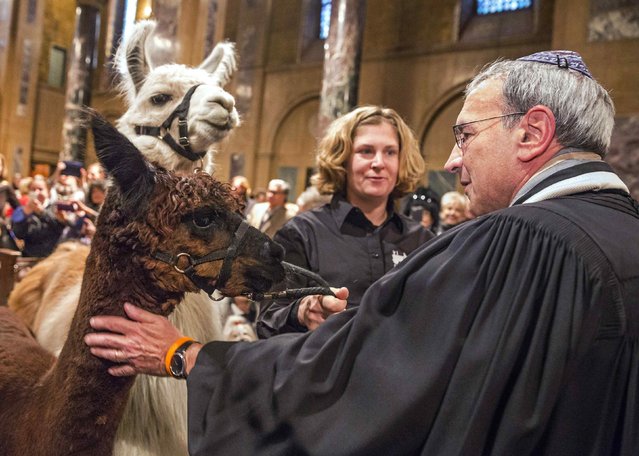
Farm animals are walked down the aisle and blessed by church officials during the “Blessing of the Animals” at the Christ Church United Methodist in Manhattan, New York December 7, 2014. (Photo by Elizabeth Shafiroff/Reuters)

Farm animals are walked down the aisle and blessed by church officials during the “Blessing of the Animals” at the Christ Church United Methodist in Manhattan, New York December 7, 2014. (Photo by Elizabeth Shafiroff/Reuters)
Details
08 Dec 2014 11:39:00
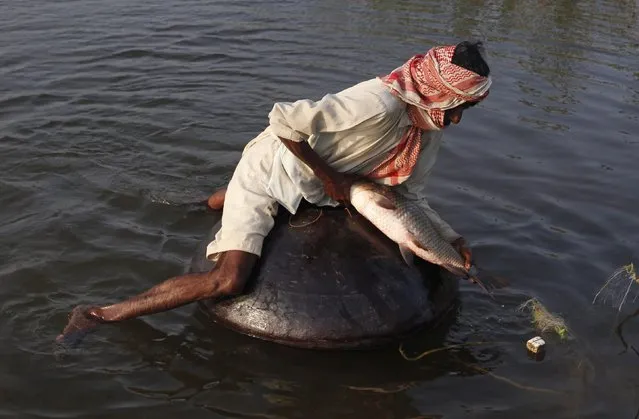
A man uses a floating pitcher to catch a fish after removing it from a net at Keenjhar Lake, near Thatta, February 22, 2015. This technique of fishing using floating pitchers is a unique and traditional one for this community, found only on Keenjhar Lake, one of the largest freshwater lakes in Pakistan, which is famous for its variety of breeding and wintering waterbirds. (Photo by Akhtar Soomro/Reuters)

A man uses a floating pitcher to catch a fish after removing it from a net at Keenjhar Lake, near Thatta, February 22, 2015. This technique of fishing using floating pitchers is a unique and traditional one for this community, found only on Keenjhar Lake, one of the largest freshwater lakes in Pakistan, which is famous for its variety of breeding and wintering waterbirds. (Photo by Akhtar Soomro/Reuters)
Details
23 Feb 2015 13:27:00
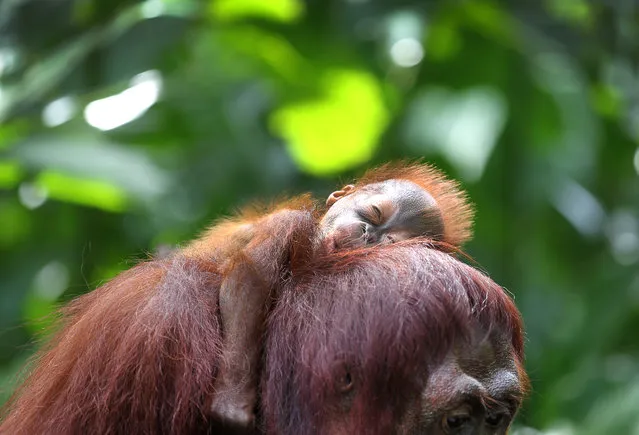
One month-old endangered Bornean Orang Utan sleeps on his mother named Miri on Wednesday, March 6, 2013, in Singapore. The Singapore Zoo is renowned for its flagship animal, the Orang Utan, and exhibits both the endangered Bornean and critically endangered Sumatran sub-species in a social setting. It is also known for its efforts in promoting and educating the public about the importance of wildlife conservation through its educational programs and breeding of these endangered species. (Photo by Wong Maye-E/AP Photo)

One month-old endangered Bornean Orang Utan sleeps on his mother named Miri on Wednesday, March 6, 2013, in Singapore. The Singapore Zoo is renowned for its flagship animal, the Orang Utan, and exhibits both the endangered Bornean and critically endangered Sumatran sub-species in a social setting. It is also known for its efforts in promoting and educating the public about the importance of wildlife conservation through its educational programs and breeding of these endangered species. (Photo by Wong Maye-E/AP Photo)
Details
20 Sep 2013 11:35:00


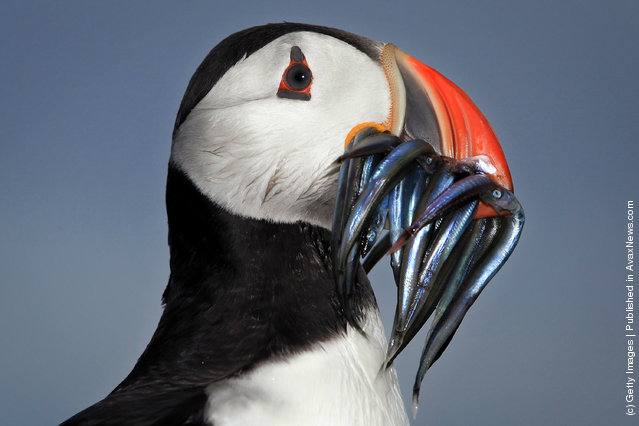
A Puffin returns to it's nest with a beak full of sand eels on June 25, 2011 on Inner Farne, England. The Farne Islands, which are run by the National Trust, are situated two to three miles off the Northumberland coastline. The archipeligo of 16-28 separate islands (depending on the tide) make the summer home to approximately 100,000 pairs of breeding seabirds including around 36,000 Puffins, 32,000 Guillemots and 2,000 pairs of Arctic Terns. The species of birds which nest in internationally important numbers include Shag, Sandwich Tern and Arctic Tern. The coastline around The Farnes are also the breeding ground to one of Europe's largest Grey Seal colonies with around 4,000 adults giving birth to 1500 pups every year. (Photo by Dan Kitwood/Getty Images)

Details
27 Jun 2011 12:58:00
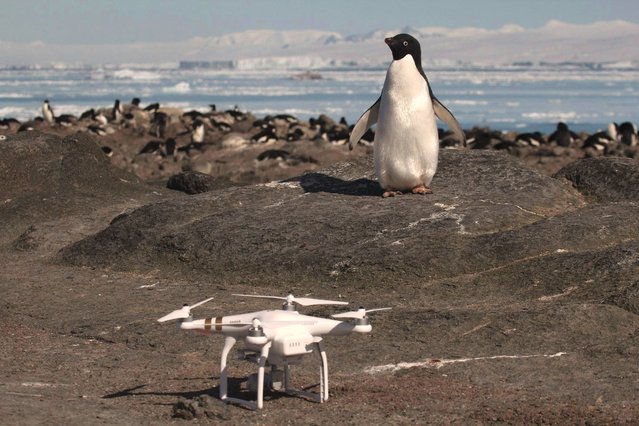
This undated handout photograph released by Stony Brook University/ Louisiana State University on March 2, 2018, shows an Adélie penguin (R) looking at a drone at breeding colony on Heroina Island, Danger Islands, Antarctica. A thriving “hotspot” of some 1.5 million Adelie penguins has been discovered on the remote Danger Islands in the east Antarctic, surprised scientists announced on March 2, 2018. (Photo by Rachael Herman/AFP Photo/Louisiana State University AND Stony Brook University)

This undated handout photograph released by Stony Brook University/ Louisiana State University on March 2, 2018, shows an Adélie penguin looking at a drone at breeding colony on Heroina Island, Danger Islands, Antarctica. A thriving “hotspot” of some 1.5 million Adelie penguins has been discovered on the remote Danger Islands in the east Antarctic, surprised scientists announced on March 2, 2018. (Photo by Rachael Herman/AFP Photo/Louisiana State University AND Stony Brook University)
Details
04 Mar 2018 00:03:00
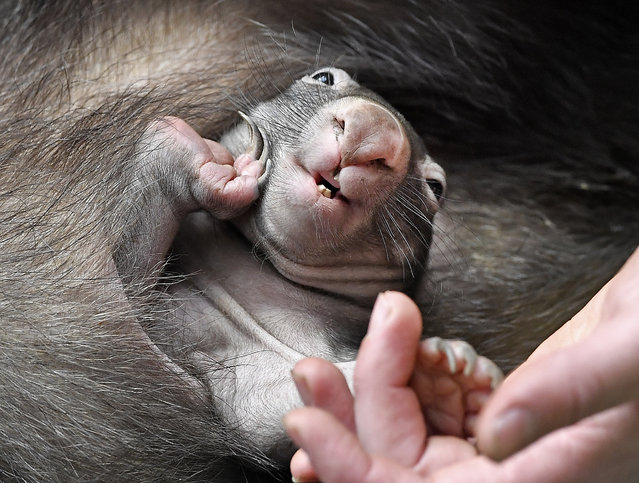
The little new born wombat baby APARI sitting in its mothers pouch at the zoo in Duisburg, Germany, Thursday, March 29, 2018. Wombat mother TINSEL once was found in the pouch of its dead mother on a street in Australia and was raised by zookeepers before she came to Germany. The zoo tried for 40 years in vain to breed a wombat, until APARI was born as the first one last week. (Photo by Martin Meissner/AP Photo)

The little new born wombat baby APARI sitting in its mothers pouch at the zoo in Duisburg, Germany, Thursday, March 29, 2018. Wombat mother TINSEL once was found in the pouch of its dead mother on a street in Australia and was raised by zookeepers before she came to Germany. The zoo tried for 40 years in vain to breed a wombat, until APARI was born as the first one last week. (Photo by Martin Meissner/AP Photo)
Details
01 Apr 2018 00:03:00
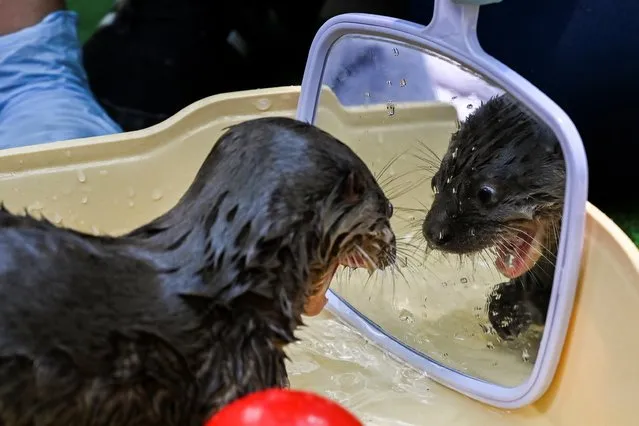
A river otter (lontra longicaudis) of 6-weeks-old looks in the mirror during a bath in the Animal Welfare Unit of the Zoo in Cali, Colombia, on October 22, 2019. The baby otter was found abandoned brought to the Cali Zoo for breeding, for its extensive experience in raising these species. According to the International Union for Conservation of Nature the river otter (lontra longicaudis) are in danger of extinction, because of mining, agriculture, pollution of rivers and housing construction in their habitat. (Photo by Luis Robayo/AFP Photo)

A river otter (lontra longicaudis) of 6-weeks-old looks in the mirror during a bath in the Animal Welfare Unit of the Zoo in Cali, Colombia, on October 22, 2019. The baby otter was found abandoned brought to the Cali Zoo for breeding, for its extensive experience in raising these species. According to the International Union for Conservation of Nature the river otter (lontra longicaudis) are in danger of extinction, because of mining, agriculture, pollution of rivers and housing construction in their habitat. (Photo by Luis Robayo/AFP Photo)
Details
27 Oct 2019 00:03:00
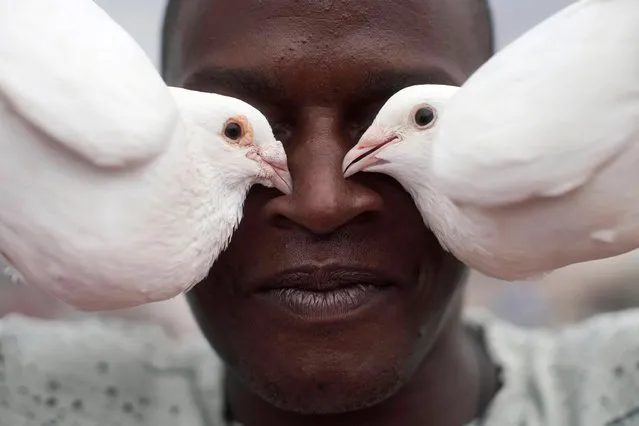
Pigeon fancier Yonisbel Santana poses for a photo at his rooftop in Havana, Cuba, May 18, 2021. Havana's pigeon keepers crane out of a window, intently watching the grey birds take flight. Mostly staying indoors due to the country's worst outbreak of COVID-19 since the coronavirus pandemic began in March last year, Cubans are increasingly breeding pigeons as a form of escape. (Photo by Alexandre Meneghini/Reuters)

Pigeon fancier Yonisbel Santana poses for a photo at his rooftop in Havana, Cuba, May 18, 2021. Havana's pigeon keepers crane out of a window, intently watching the grey birds take flight. Mostly staying indoors due to the country's worst outbreak of COVID-19 since the coronavirus pandemic began in March last year, Cubans are increasingly breeding pigeons as a form of escape. (Photo by Alexandre Meneghini/Reuters)
Details
13 Jul 2021 11:09:00