Dancers perform a routine at the Renault display at the Beijing International Automotive Exhibition in Beijing, Tuesday, April 26, 2016. (Photo by Mark Schiefelbein/AP Photo)
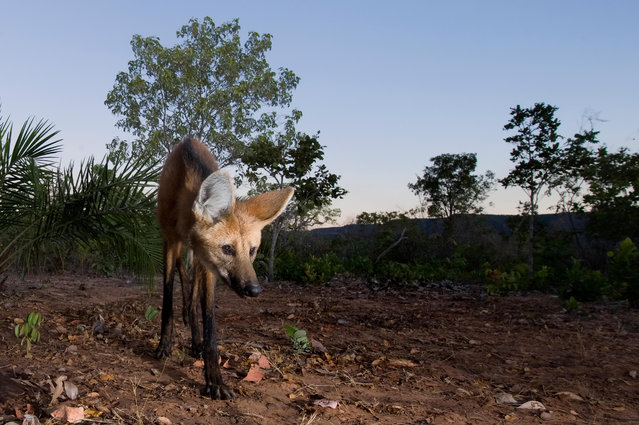
Global wildlife populations will decline by 67% by 2020 unless urgent action is taken to reduce human impact on species and ecosystems, warns the biennial Living Planet Index report from WWF (World Wide Fund for Nature) and ZSL (Zoological Society of London). From elephants to eels, here are some of the wildlife populations most affected by human activity. Here: The maned wolf is among the large mammals in the Brazilian Cerrado that are threatened by the increasing conversion of grasslands into farmland for grazing and growing crops. (Photo by Ben Cranke/Nature Picture Library/Alamy Stock Photo)
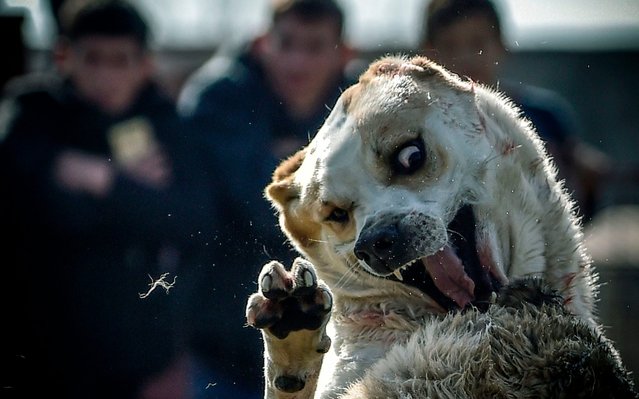
Two wolfhounds take part in a dogfight in a stadium in the Kyrgyzstan capital Bishkek on November 5, 2017, during fights organized by a local breeders aiming to improve the Asian Shepherd breed, organizers said. (Photo by Vyacheslav Oseledko/AFP Photo)
Manman Luk, a freelance model and make up artist, poses inside her 100-square-foot (9-square-metre) sub-divided unit, paying a monthly rent of HK4,700 ($606) in Hong Kong, China January 6, 2017. (Photo by Bobby Yip/Reuters)
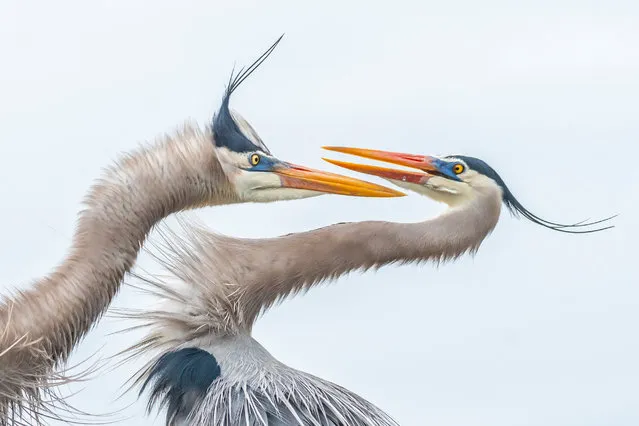
Wakodahatchee wetlands, Delray Beach, Florida, US. Equipped with sinewy necks and spear-like bills, great blue herons can lunge with fearsome speed to strike their aquatic prey. Adults will also employ rapid stabbing motions as one aspect of their complex courtship displays; they’re seemingly dangerous moves, but fitting to the intensity of mating season. (Photo by Melissa Rowell/Audubon Photography Awards)
A model displays the collection of Italian luxury brand Diesel at its China's first flagship shop unveiling ceremony, at Henglong Plaza on November 26, 2005 in Shanghai, China. (Photo by China Photos/Getty Images)