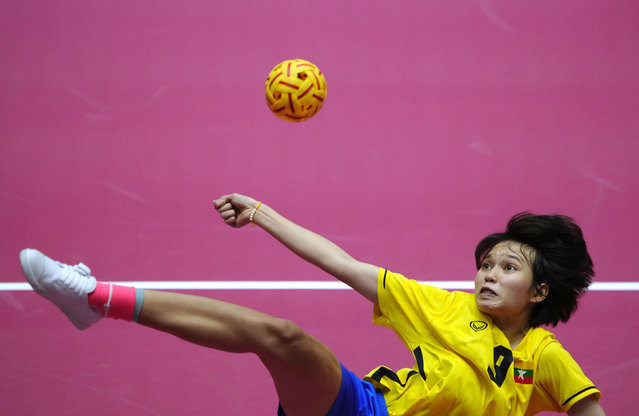
Myanmar's Theiri Aung, seen in action during the women's sepak takraw semifinal against Vietnam, at the Southeast Asian Games in Hanoi, on May 17, 2022. (Photo by Athit Perawongmetha/Reuters)
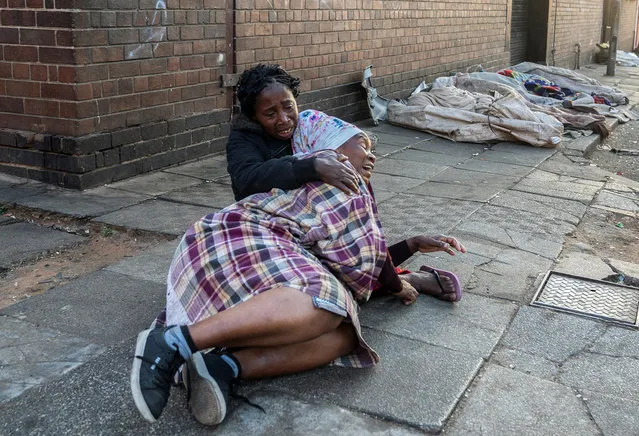
Women react after a deadly blaze in the early hours of the morning, in Johannesburg, South Africa on August 31, 2023. (Photo by Shiraaz Mohamed/Reuters)
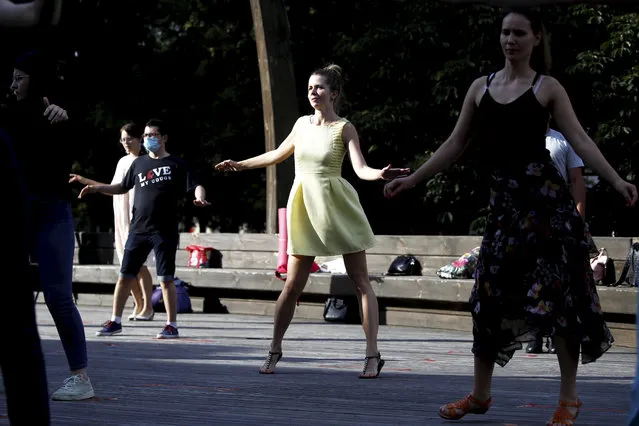
People attend a master class in Latin American dances on the deck outside No 84 Pavilion in VDNKh Exhibition Centre in Moscow, Russia on July 4, 2020. The event opens this year's season of outdoor dancing in VDNKh. (Photo by Artyom Geodakyan/TASS)
(L-R) Sofía Vergara and Heidi Klum attend Netflix's Primetime Emmy afterparty at Hilex on September 15, 2024 in Los Angeles, California. (Photo by Roger Kisby/Getty Images for Netflix)
Following a large air raid by German bombers, local people, coming out of their air raid shelters found a bus standing on end in a large crater, in Balham, London, October 15, 1940. (Photo by AP Photo)
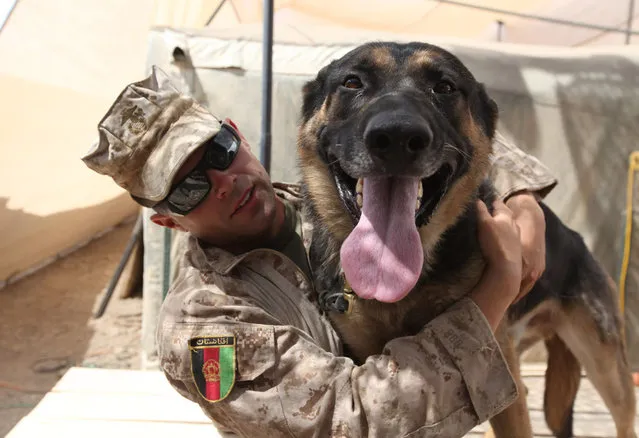
Throughout the course of the long war in Afghanistan, Coalition troops have relied on thousands of military working dogs to help keep them safe, and make their jobs easier. The dogs are trained to detect explosives, to find illegal drugs, to search for missing comrades, or target enemy combatants. Not only are they active on the front lines, but behind the lines they serve as therapy dogs, service dogs, and loyal companions. They also share the same risks as the ground troops, suffering injuries and sometimes death on the battlefields. Gathered here are images of these dogs and their handlers in Afghanistan and back home, from over the past several years, part of the ongoing series here on Afghanistan.
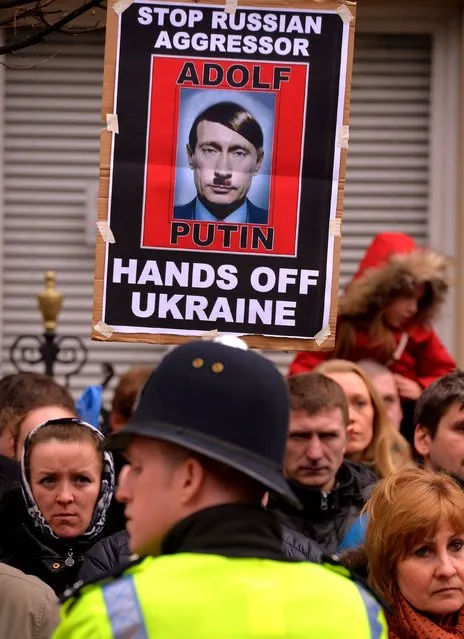
British-based Ukrainians gather outside the Russian Embassy in London to protest against the build-up of troops in the Crimea region, on March 2, 2014. The demonstrators chanted and held banners demanding “Hands off Ukraine”. (Photo by John Stillwell/PA Wire)