Loading...
Done
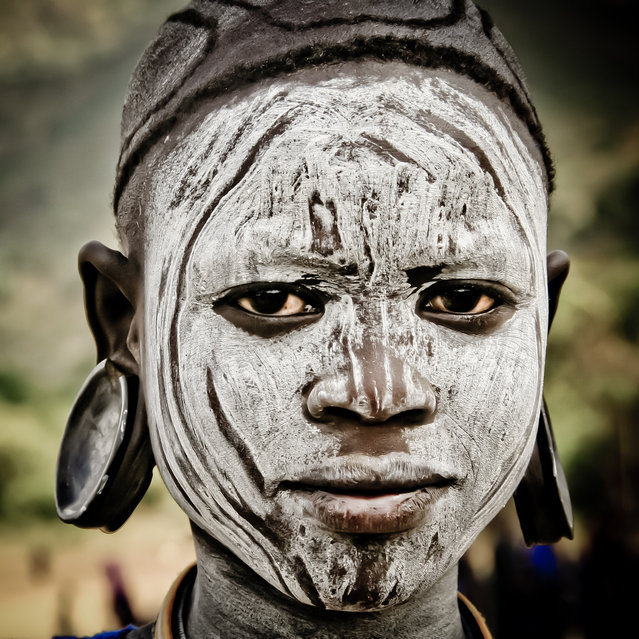
Omo River People, Ethiopia

“The Omo River is an important river of southern Ethiopia. Its course is entirely contained within the boundaries of Ethiopia, and empties into Lake Turkana on the border with Kenya. The lower valley of the Omo is currently believed by some to have been a crossroads for thousands of years as various cultures and ethnic groups migrated around the region. To this day, the people of the Lower Valley of the Omo, including the Mursi, Suri, Nyangatom, Dizi and Me'en, are studied for their diversity”. – Wikipedia (Photo by Hamerscat)

SEE ALSO: «Ethiopia By Brent Stirton»

Details
04 Oct 2012 09:05:00
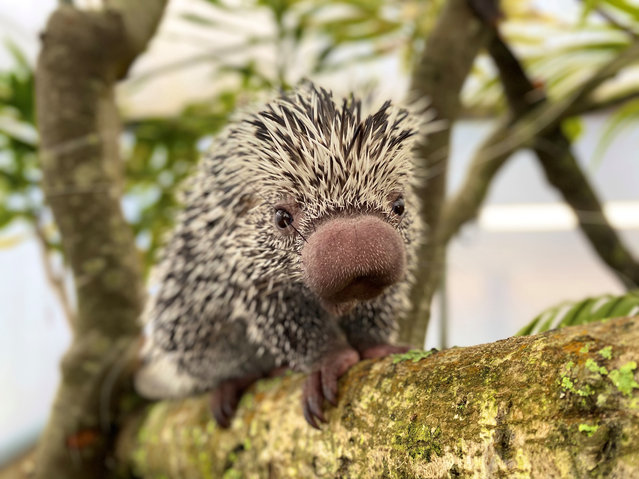
Runner-up, Heart and Minds: Nifty nose, by Samantha Allworthy at Longleat. Species: prehensile tailed porcupines. (Photo by Samantha Allworthy/BIAZA 2020 Photography Competition)

The British and Irish Association of Zoos and Aquariums (BIAZA) has announced the winning images in its annual photography competition. The 2020 winners show the important work of zoos and aquariums at an immensely challenging time. After months of closures, these conservation organisations are reeling from the financial impacts of the coronavirus pandemic. Here: Runner-up, Heart and Minds: Nifty nose, by Samantha Allworthy at Longleat. Species: prehensile tailed porcupines. (Photo by Samantha Allworthy/BIAZA 2020 Photography Competition)
Details
24 Jul 2020 00:03:00
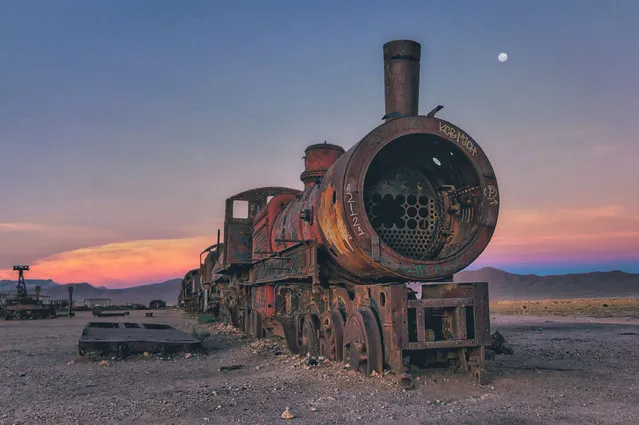
Many of the trains and locomotives are British imports and have been eroded by the harsh Bolivian climate. (Photo by Chris Staring/Rex Features/Shutterstock)

Chris Staring photographs a mysterious train graveyard in the heart of southern Bolivia, where the skeletons of British steam locomotives and rail cars rust away on the edge of the world’s largest salt flats. More than 100 rail cars and locomotives can be found in different states of decay in the train graveyard. (Photo by Chris Staring/Rex Features/Shutterstock)
Details
03 Jul 2016 10:46:00
Visual artist Ben Heine at work in his studio while he creates one of his “anamorphic illusions” in Rochefort, Belgium

An arm holding a giant gun appears to explode through a wall, while elsewhere a man walks a tiger on a leash. These breathtaking pencil drawings are the work of 31-year-old artist Ben Heine, who lives and works in Rochefort, Belgium. The “anamorphic illusions”, part of the artist's “Pencil Vs Camera” series, appear slightly distorted unless viewed from the exact same perspective in which they were created. Photo: Visual artist Ben Heine at work in his studio while he creates one of his “anamorphic illusions” in Rochefort, Belgium. (Photo by Ben Heine/Barcroft Media)
Details
23 Mar 2014 11:00:00
Photo Art by John Wilhelm Part 3

John Wilhelm is a photographer and family man from Switzerland. For him the most important thing after the family is the photography. The images that you are viewing in this post, are some of the John Wilhelm's creative photos that he took from his family and using the photo manipulation technique, he was able to create amazing artworks.


See Also: Part 1 _ Part 2
Details
10 Sep 2014 10:00:00
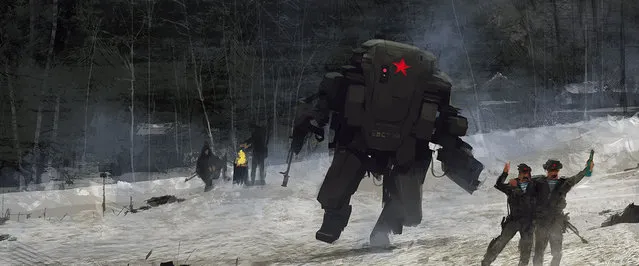
Concept Artist And Illustrator Jakub Rozalski Part 1

My name is Jakub and I’m a painter, illustrator & concept artist who lives and work in Poland. My speciality is dark fantasy, character design, concept art and portrait. Since several years I work and paint digitally, but I never gave up traditional drawing and painting. For me the most important in my work, is create unique atmosphere and tell some kind of story through my creations.


Jakub Rozalski

See Also: Part 2
Details
29 Sep 2014 14:50:00
Sculptures By Hu Shaoming

Hu Shaoming is a fantastic artist from China, who has learnt Fine Arts at Guangzhou Academy. The most complex sculpture of all his works is a mechanical seahorse, constructed from many tiny details. The whole composition consists of two complete opposites, including the top part of the seahorse`s head that looks like a golden town, and the bottom which resembles an amazing blue creature. An important problem is reflected in such an idea; it shows how a man forces the nature into submission. The contrast in the opposition of the human buildings and conquered Mother Nature suggests the thought of keeping our natural environment safe.
Details
01 Mar 2015 13:02:00
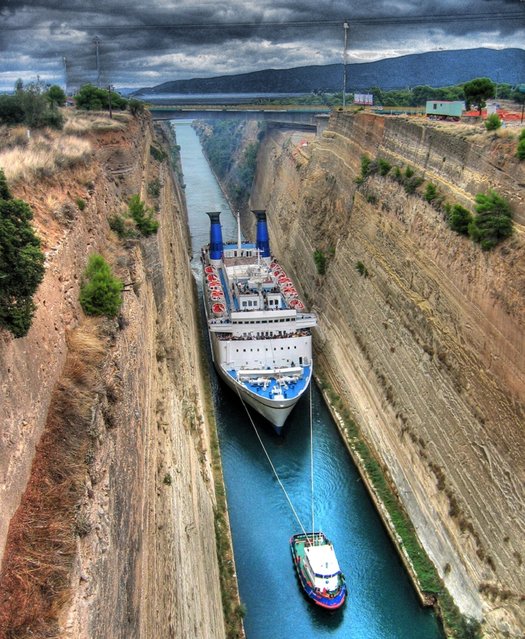
Corinth Canal

The Corinth Canal is a canal that connects the Gulf of Corinth with the Saronic Gulf in the Aegean Sea. It cuts through the narrow Isthmus of Corinth and separates the Peloponnesian peninsula from the Greek mainland, thus effectively making the former an island. The builders dug the canal through the Isthmus at sea level; no locks are employed. It is 6.4 kilometres (4.0 mi) in length and only 21.3 metres (70 ft) wide at its base, making it unpassable for most modern ships. It now has little economic importance.

Details
12 Mar 2013 12:21:00