Loading...
Done
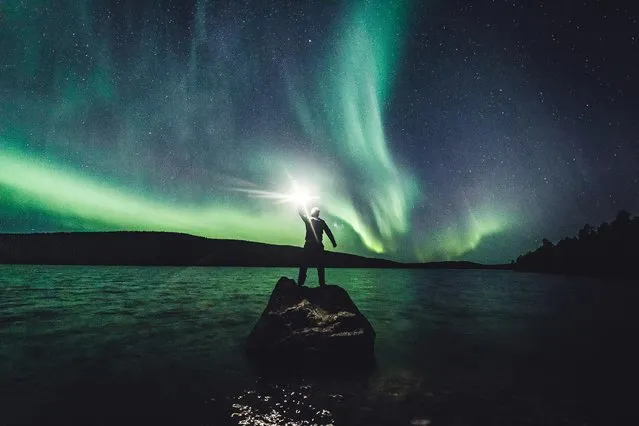
The Aurora Borealis (Northern Lights) is seen in the sky in Ivalo of Lapland, Finland on September 27, 2019. (Photo by Alexander Kuznetsov/Reuters)

The Aurora Borealis (Northern Lights) is seen in the sky in Ivalo of Lapland, Finland on September 27, 2019. (Photo by Alexander Kuznetsov/Reuters)
Details
09 Oct 2019 00:01:00
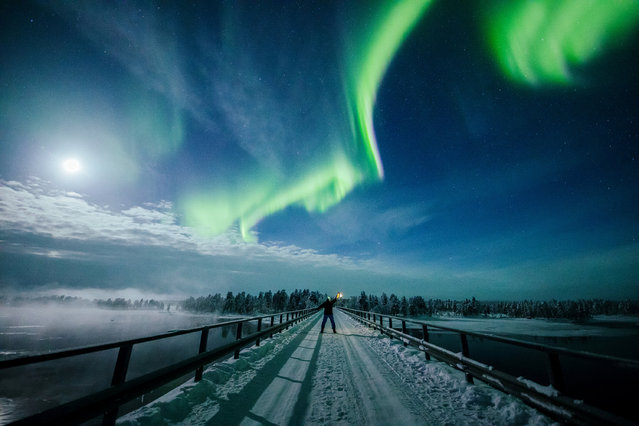
The Aurora Borealis (Northern Lights) is seen over the sky near Inari in Lapland, Finland February 14, 2019. (Photo by Alexander Kuznetsov/Reuters)

The Aurora Borealis (Northern Lights) is seen over the sky near Inari in Lapland, Finland on February 14, 2019. (Photo by Alexander Kuznetsov/Reuters)
Details
02 Mar 2019 00:01:00
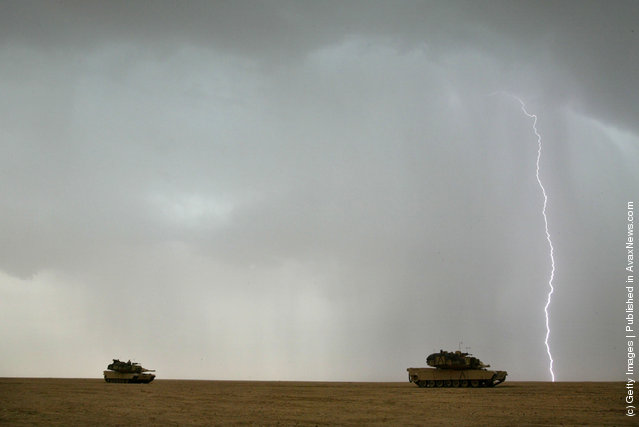
A lighting bolt flashes in the sky as U.S. Army M1A1 Abram tanks roll through the desert

A lighting bolt flashes in the sky as U.S. Army M1A1 Abram tanks roll through the desert December 9, 2002 near the Iraqi border in Kuwait. (Photo by Joe Raedle/Getty Images)
Details
20 Sep 2011 12:45:00
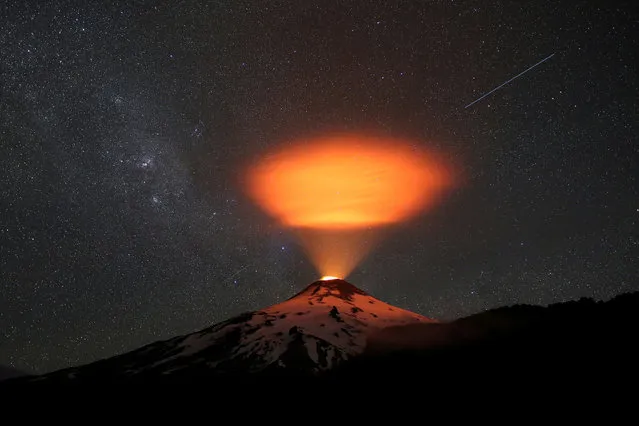
The Villarrica volcano lights up the sky at night seen from Pucon town, Chile on December 14, 2023. (Photo by Cristobal Saavedra Escobar/Reuters)

The Villarrica volcano lights up the sky at night seen from Pucon town, Chile on December 14, 2023. (Photo by Cristobal Saavedra Escobar/Reuters)
Details
22 Dec 2023 00:17:00
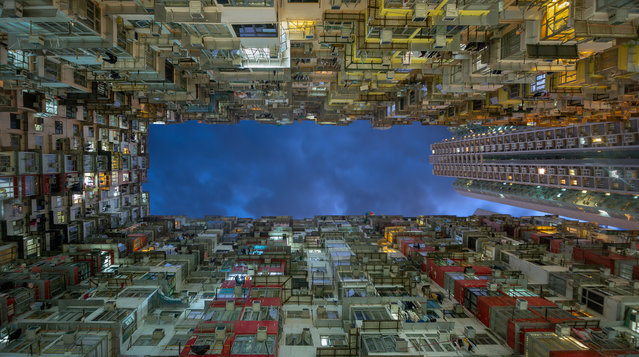
Winner. “I took this vertical image in the Quarry Bay district of Hong Kong during the dusk ‘blue hour’, when there was a perfect balance between the ambient light in the sky and the artificial lights of the high-rise residential buildings”. MICK RYAN, JUDGE: “Quarry Bay is a rich area for great shots and this is a particularly striking image of these old apartments, a unique perspective that was wisely taken as the light fades and the apartment lights come on”. (Photo by Jatinder Heer/The Guardian)

Winner. “I took this vertical image in the Quarry Bay district of Hong Kong during the dusk ‘blue hour’, when there was a perfect balance between the ambient light in the sky and the artificial lights of the high-rise residential buildings”. (Photo by Jatinder Heer/The Guardian)
Details
02 Nov 2018 00:05:00
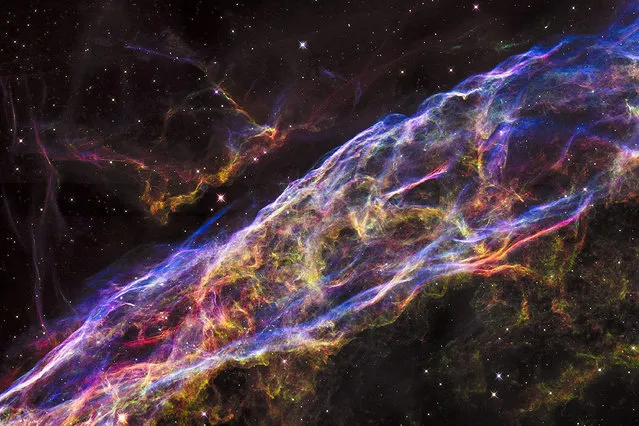
A small section of the expanding remains of the Veil Nebula, a massive star that exploded about 8,000 years ago. The entire nebula is 110 light-years across, covering six full moons on the sky as seen from Earth, and resides about 2,100 light-years away in the constellation Cygnus, the Swan. (Photo by Reuters/NASA/ESA/Hubble)

A small section of the expanding remains of the Veil Nebula, a massive star that exploded about 8,000 years ago. The entire nebula is 110 light-years across, covering six full moons on the sky as seen from Earth, and resides about 2,100 light-years away in the constellation Cygnus, the Swan. (Photo by Reuters/NASA/ESA/Hubble)
Details
29 Feb 2016 11:30:00
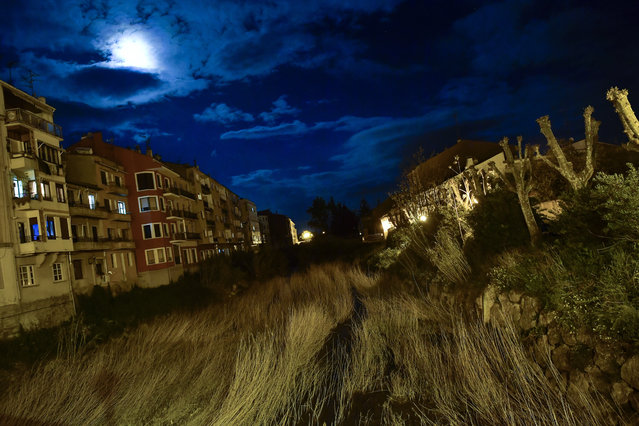
A moon light illuminates the sky through the clouds over a large line of grass between some home houses in the small village of Tafalla, northern Spain, Tuesday, May 1, 2018. (Photo by Alvaro Barrientos/AP Photo)

A moon light illuminates the sky through the clouds over a large line of grass between some home houses in the small village of Tafalla, northern Spain, Tuesday, May 1, 2018. (Photo by Alvaro Barrientos/AP Photo)
Details
25 Sep 2018 00:05:00
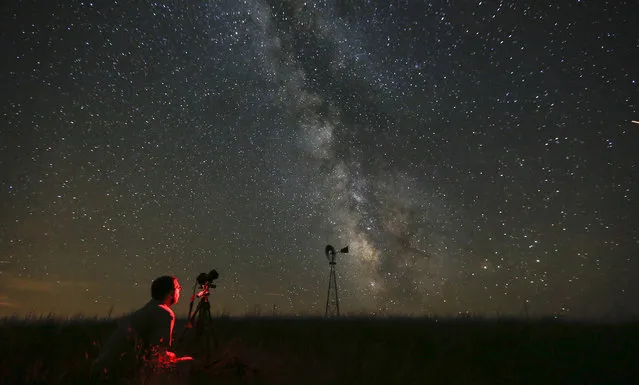
In this Wednesday, July 23, 2014 file photo, Omaha photographer Lane Hickenbottom photographs the night sky in a pasture near Callaway, Neb. With no moon in the sky, the Milky Way was visible to the naked eye. More than one-third of the world’s population can no longer see the Milky Way because of man-made lights, according to a scientific paper by Light Pollution Science and Technology Institute's Fabio Falchi and his team members, published on Friday, June 10, 2016. (Photo by Travis Heying/The Wichita Eagle via AP Photo)

In this Wednesday, July 23, 2014 file photo, Omaha photographer Lane Hickenbottom photographs the night sky in a pasture near Callaway, Neb. With no moon in the sky, the Milky Way was visible to the naked eye. More than one-third of the world’s population can no longer see the Milky Way because of man-made lights, according to a scientific paper by Light Pollution Science and Technology Institute's Fabio Falchi and his team members, published on Friday, June 10, 2016. (Photo by Travis Heying/The Wichita Eagle via AP Photo)
Details
11 Jun 2016 12:37:00