Loading...
Done
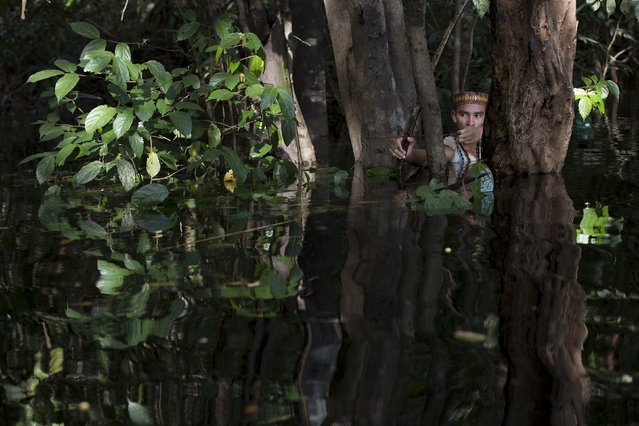
Kambeba Indian, Dream Braga, 18, aims his arrow in a jungle near the village Tres Unidos, Amazon state May 9, 2015. Dream Braga has been shooting fish with a bow and arrow for most of his life. In the Amazonian village where he grew up, that was what kids did for food and fun. (Photo by Bruno Kelly/Reuters)

Kambeba Indian, Dream Braga, 18, aims his arrow in a jungle near the village Tres Unidos, Amazon state May 9, 2015. Dream Braga has been shooting fish with a bow and arrow for most of his life. In the Amazonian village where he grew up, that was what kids did for food and fun. He participated in the Indigenous Archery Project which recruits Amazon native children to compete with modern archery equipment and try for a place on the national team, with the 2016 Olympics in Rio de Janeiro as their ultimate goal. After training with Olympic coaches for three months, he has now been promoted to Brazil's national team. (Photo by Bruno Kelly/Reuters)
Details
17 May 2015 11:19:00
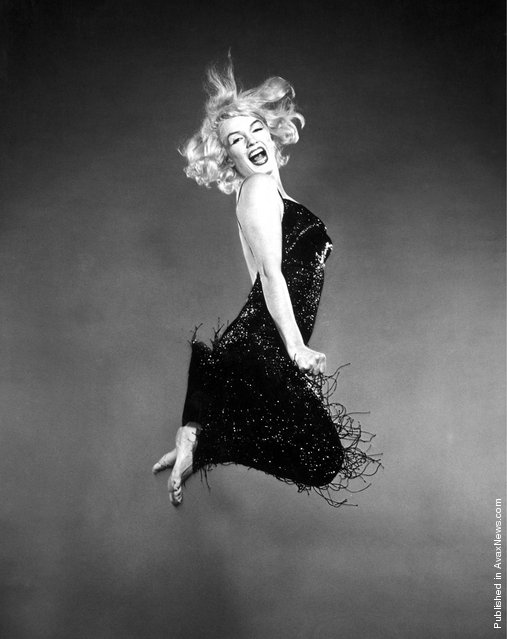
Marilyn Monroe, 'Jumpology', 1959. Photo by Philippe Halsman

“Philippe Halsman (2 May 1906 Riga, Russian Empire – 25 June 1979 New York City) was a Latvian-born American portrait photographer. Many celebrities photographed by Halsman include Alfred Hitchcock, Judy Garland, Winston Churchill, Marilyn Monroe, Dorothy Dandridge, and Pablo Picasso. Many of those photographs appeared on the cover of Life. In such photos, he utilizes a variety of his rules of photography. For example, in one of his photos of Winston Churchill, the omission of his face makes Halsman's photo even more powerful at making Churchill more human”. – Wikipedia

Photo: Marilyn Monroe, “Jumpology”, 1959. Photo by Philippe Halsman
Details
12 Apr 2012 13:18:00
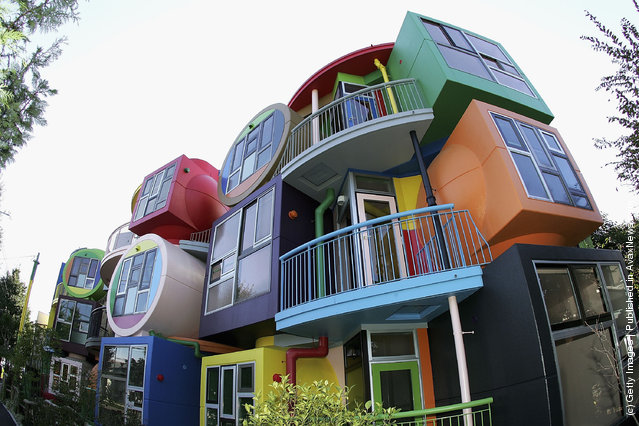
Concept Design Home Reversible Destiny Lofts MITAKA: In Memory Of Helen Keller By Reversible Destiny Foundation and Shusaku Arakawa

“The Reversible Destiny Lofts – Mitaka (In Memory of Helen Keller) is a nine-unit multiple dwelling. It was first completed example of procedural architecture put to residential use. These lofts reflexively articulate the residents’ operative tendencies and coordinating skills essential to and determinative of human thought and behavior; which means to say, the lofts manage, by virtue of how they are constructed, to reveal to their residents the ins and outs of what makes a person, in this case the resident. This is the same set of tendencies and skills to which Arakawa and Madeline Gins gave diagrammatic form in their decades-long research project The Mechanism of Meaning”. – Wikipedia

Photo: The exterior of the concept design home “Reversible Destiny Lofts MITAKA: In Memory of Helen Keller” is seen on October 27, 2005 in Tokyo, Japan. (Photo by Koichi Kamoshida/Getty Images)
Details
30 Nov 2011 11:58:00
Sign Language Alphabet Doodles By Alex Solis

Have you ever been interested in the sign language? Surely you’ve always wanted to learn the art of sending a message using just your hands. To help people achieve this goal, Alex Solis has taken a photo of a hand showing each letter of the alphabet. However, this has been done many times before, which is why Alex decided to make each of the photos more interesting by placing little drawn animals and creatures onto each photo. Thanks to these cute little drawings the pictures become very endearing and memorable. All the little creatures blend in seamlessly into the pictures thanks to their well-chosen poses. This project, created by Alex Solis, is very unique and useful, allowing anyone to quickly remember all the listed hand gestures. (Photo by Alex Solis)
Details
08 Jan 2015 14:28:00
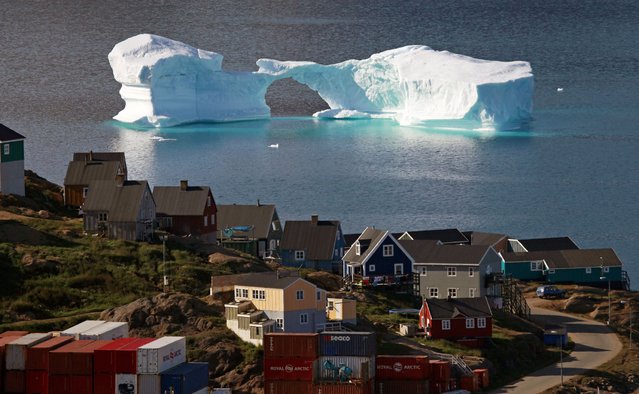
File photo of an iceberg floating near a harbour in the town of Kulusuk, east Greenland August 1, 2009. The United Nations 19th Climate Change Conference (COP19) will take place November 11-22, 2013 in Warsaw. The main goal of the talks with almost almost 200 nations assembled, is to lay the foundation for the new global climate agreement, aiming at further emission reduction, which is to be signed in 2015 in Paris and be launched in 2020. (Photo by Bob Strong/Reuters)

It's taken roughly five months, but a massive iceberg has separated from Antarctica's Pine Island Glacier. According to NASA's Earth Observatory, the estimated size of this iceberg, named B-31, is around 660 square kilometres (33 km long by 20 km wide) – a city-sized block of ice that has slowly migrated away from the continent, and is now floating out to sea. Take a look at some massive icebergs afloat in the oceans. Photo: File photo of an iceberg floating near a harbour in the town of Kulusuk, east Greenland August 1, 2009. (Photo by Bob Strong/Reuters)
Details
27 Apr 2014 07:47:00
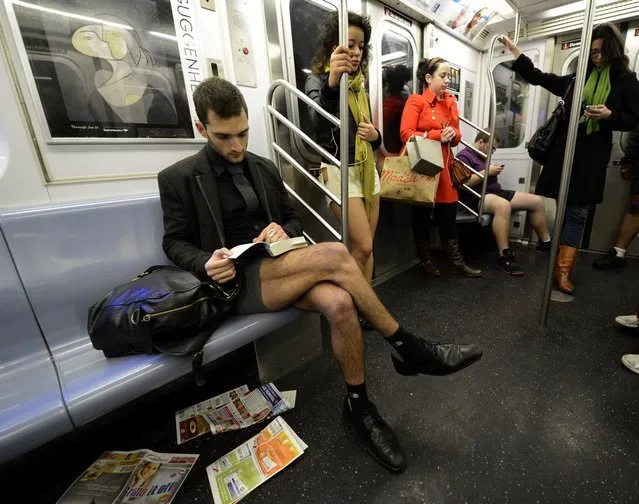
Some riders in the New York City subway in the underwear as the take part in the 2013 No Pants Subway Ride January 13, 2013. Started by Improv Everywhere, the goal is for riders to get on the subway train dressed in normal winter clothes (without pants) and keep a straight face.  AFP PHOTO / TIMOTHY A. CLARY        (Photo credit should read TIMOTHY A. CLARY/AFP/Getty Images)

Pantless people stand on a subway platform on January 13, 2013 in New York City. Thousands of people participated in the 12th annual No Pants Subway Ride, organized by New York City prank collective Improv Everywhere. During the afternoon winter event, participants boarded separate subway stops and removed their pants, pretending that they did not know each other. The event, refered to as a “celebration of silliness” is designed to make fellow subway riders laugh and smile. (Photo by Timothy A. Clary/AFP Photo)
Details
14 Jan 2013 11:03:00
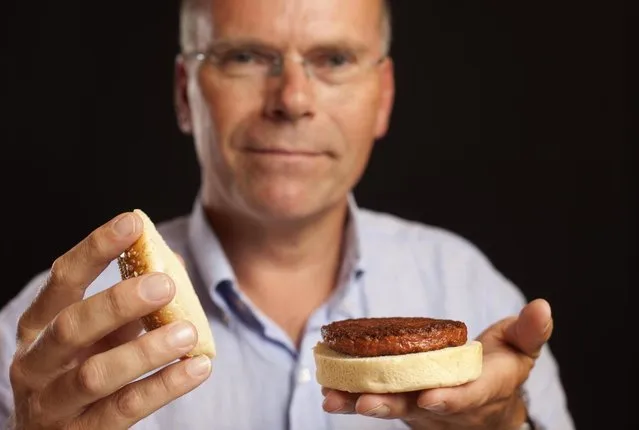
In this handout image provided by Ogilvy, a burger made from cultured beef, which has been developed by Professor Mark Post of Maastricht University in the Netherlands (pictured) is shown to the media during a press conference on August 5, 2013 in London, England. Cultured Beef could help solve the coming food crisis and combat climate change with commercial production of Cultured Beef beginning within ten to twenty years. (Photo by David Parry via Getty Images)

In this handout image provided by Ogilvy, a burger made from cultured beef, which has been developed by Professor Mark Post of Maastricht University in the Netherlands (pictured) is shown to the media during a press conference on August 5, 2013 in London, England. The in-vitro burger, cultured from cattle stem cells, the first example of what its creator says could provide an answer to global food shortages and help combat climate change, was fried in a pan and tasted by two volunteers. The burger is the result of years of research by Dutch scientist Mark Post, a vascular biologist at the University of Maastricht, who is working to show how meat grown in petri dishes might one day be a true alternative to meat from livestock.The meat in the burger has been made by knitting together around 20,000 strands of protein that has been cultured from cattle stem cells in Post's lab. (Photo by David Parry)
Details
06 Aug 2013 08:48:00


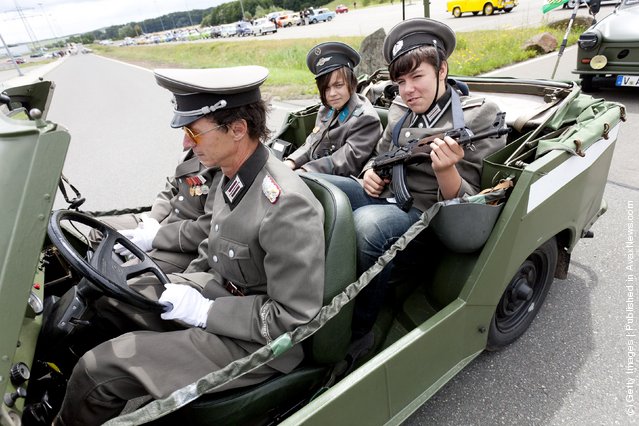
“The Trabant is a car that was produced by former East German auto maker VEB Sachsenring Automobilwerke Zwickau in Zwickau, Sachsen. It was the most common vehicle in East Germany, and was also exported to countries both inside and outside the communist bloc. The main selling points was that it had room for four adults and luggage in a compact, light and durable shell and that it was fast (when introduced) and durable. With its mediocre performance, smoky two-stroke engine, and production shortages, the Trabant is often cited as an example of the disadvantages of centralized planning; on the other hand, it is regarded with derisive affection as a symbol of the failed former East Germany and of the fall of communism (in former West Germany, as many East Germans streamed into West Berlin and West Germany in their Trabants after the opening of the Berlin Wall in 1989). It was in production without any significant changes for nearly 30 years with 3,096,099 Trabants produced in total”. – Wikipedia

Photo: Enthusiasts weared in uniforms of the former eastern german army trive in a military Trabant car as fans and owners of East German-era Trabant cars gather at the 2011 International Trabantfahrer Treffen (International Trabant Drivers Meeting) on June 26, 2011 in Zwickau, Germany. The Trabant, also known as the Trabi, was among the main cars produced in communist East Germany and built by VEB Sachsenring Automobilwerke in Zwickau for 30 years until 1989. Today the car has cult status for many followers and one company, IndiKar, is even seeking to revive the brand in a modern, electric version. (Photo by Carsten Koall/Getty Images)

Details
27 Jun 2011 12:21:00